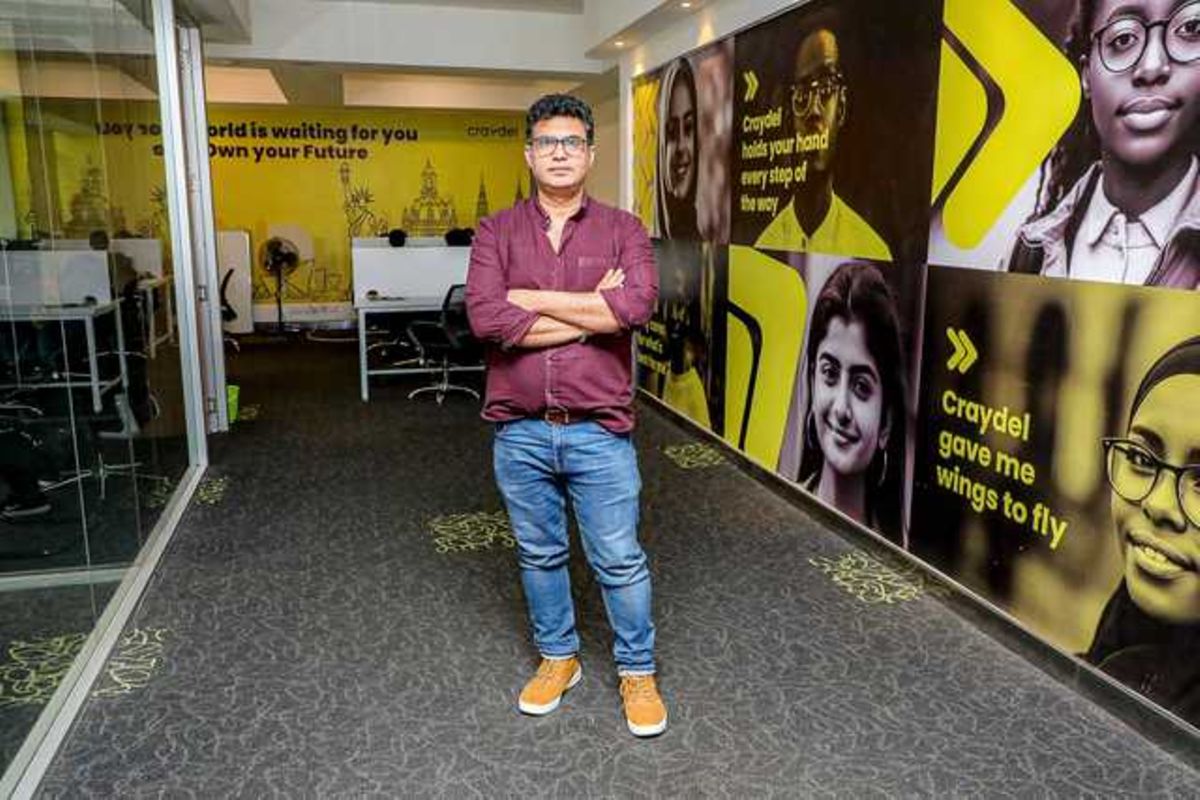
Manish Sardana walked away from a lucrative corporate career at the height of the Covid-19 scourge, resigning from global advertising giant WPP after seven years in Kenya.
He had risen through the ranks of the WPP-Scangroup network to become managing director for Africa, earning what he describes as “expat-level salaries” at a time when millions around the world were clinging to their jobs.
“During Covid, I thought to myself, what am I doing with my life?” he recalls asking himself. “I had all this experience and talent, and I felt like I was wasting my time building marketing campaigns for large organisations.”
So he quit, even without a business plan. “People kept asking me what I was going to do next. I told them I didn’t know. But if I waited until I had a perfect plan, I would never leave.”
The idea that would become Craydel emerged soon after, prompted by a suggestion from his wife. Sardana spent weeks researching startup opportunities in Africa until one day, while scrolling through lists of business ideas online, she told him: “Why don’t you go back to education? You’ve always been passionate about it.”
Growing up in a lower-middle-income family in India, Sardana enjoyed teaching mathematics and economics in his early working years. He later moved into technology, e-commerce and marketing, founding ventures and later joining WPP. However, he says that education remained his true passion.
So in 2021, Sardana launched Craydel, a Nairobi-based education technology start-up he describes as a “Booking.com for higher education.” The company helps students find, compare and apply to universities worldwide, aiming to solve what Sardana calls “information asymmetry” in admissions.
The problem, he argues, is not just about choice but trust. Fake study-abroad and overseas job agents remain a major issue in Kenya, with scammers conning desperate students and parents out of millions of shillings. The Commission for University Education has publicly blacklisted numerous illegal recruitment agencies. “The university admissions ecosystem is riddled with information asymmetry, fragmented guidance and incentives that often favour institutions over students,” Sardana says.
Craydel was founded with former WPP-Scangroup colleague John Nguru and investment professional Shayne Premji, who has worked with various institutions, including the IFC.
The early years were far from smooth. Universities showed little willingness to pay for student leads. “Towards the end of 2022, we realised we didn’t really have a business,” Sardana recalls. Their breakthrough came when the company pivoted to international university recruitment.
Unlike traditional agents, whose earnings depend on sending students to specific institutions, Craydel sought to build a student-first marketplace. “Our thesis was simple,” he says. “If agents serve universities, who is serving students?”
Since then, the company says it has matched more than 25,000 students with universities and enrolled over 1,000 learners. Europe has emerged as one of the fastest-growing destinations among African students, with Germany attracting increasing interest. Nursing, engineering, computer science and business management are among the most sought-after courses.
Difficult adjustments
But the journey has come at a high personal cost. As savings dwindled, Sardana and his family were forced to make difficult adjustments. “My children were in fancy schools. We couldn’t afford them anymore,” he says. “We had to completely lower our lifestyle.” At one point, Craydel’s monthly operating costs reached about Sh1 million while revenues remained negligible. Ten months into the venture, the company had burned through nearly Sh13 million.
“My wife watched our savings disappear and would ask me every month, ‘Are you sure you want to keep doing this?’” Sardana recalls. By the time the startup secured its first major external funding at the end of 2021, he had invested more than $200,000 (Sh25.9 million) of his own money. “It’s a choice you have to make as an entrepreneur. Pocket that money or put it back into the business to scale it. Even now, my salary is 25 percent of what I earned in corporate life.”
Sardana insists the gamble was worth it. He believes the pandemic exposed the fragility of education systems worldwide and accelerated demand for transparency in admissions.
“Going to school is not just an academic experience. It is also a social experience,” he says.
“My view was that eventually children would want to go back to physical classrooms.”
That conviction led him to focus on exploring opportunities for in-person higher education rather than online learning platforms.
To date, Craydel has raised about $3 million (Sh388.5 million) from venture capital firms and angel investors, according to Crunchbase. The company is not yet profitable, as much of its turnover has been reinvested in regional expansion. It has already spread to Uganda, Tanzania, Rwanda, Burundi, Nigeria, Zimbabwe, India and Saudi Arabia, with plans to enter Ghana this year.