Fresh hostilities between the United States and Iran have reignited concerns over global energy security, with the International Energy Agency (IEA) warning that renewed conflict could derail the fragile recovery underway in oil markets.
In its latest monthly oil market report released on Friday, the Paris-based agency said escalating military tensions risk prolonging disruptions to global energy supplies at a time when markets have begun stabilising following last month’s US-Iran Memorandum of Understanding (MoU), reported Al Jazeera.
The warning comes amid a temporary slowdown in military action between Washington and Tehran, raising hopes that diplomatic engagement could resume. However, officials familiar with the situation and quoted by Al Jazeera cautioned that the US military remains prepared to carry out additional strikes should negotiations fail.
According to the IEA, global oil demand is expected to contract this year for the first time since 2020 as the conflict continues to weigh on crude production and exports across the Middle East.
The agency noted that energy markets had shown signs of recovery after the US and Iran inked an MoU aimed at easing tensions. That progress, however, has been jeopardised by the latest flare-up, which has clouded the outlook for both supply and prices.
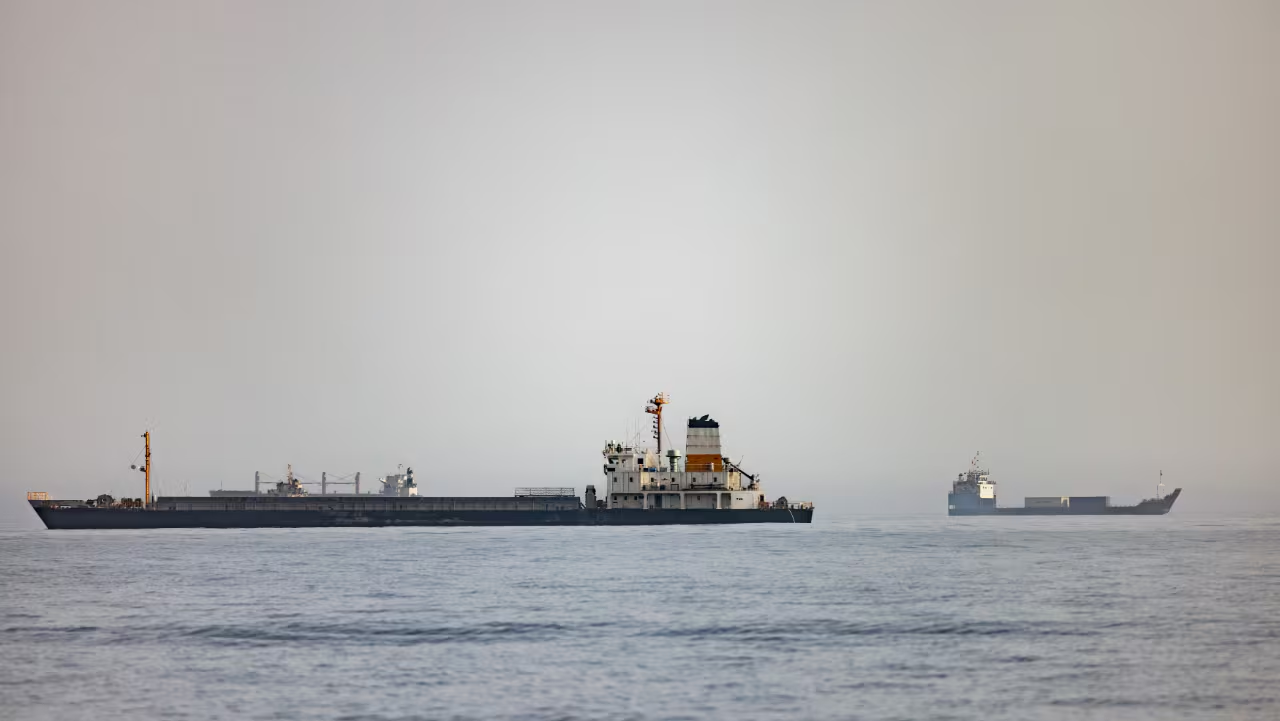
The renewed fighting stems from disagreements over provisions related to navigation through the Strait of Hormuz contained in the agreement. Before the conflict erupted in April following US and Israeli military strikes on Iran, the strategic waterway handled nearly one-fifth of the world’s oil and liquefied natural gas shipments.
In the latest escalation, the US launched powerful strikes on Iranian territory after Tehran attacked three commercial ships transiting the Strait of Hormuz. Washington battered Iran for a straight second day targeting approximately 90 Iranian military targets including air defense systems, coastal surveillance assets, missile and drone storage sites, naval capabilities, and military logistics infrastructure along Iran’s coastline.
Besides targeting Iranian military targets, this time US also attacked civilian infrastructure, such as a railway bridge connecting Iran with China and Russia, on a day Tehran was observing the final funeral procession of it’s late Supreme Leader Ayatollah Ali Khamenei in Mashhad.
The IEA estimates that the effective closure of the Strait of Hormuz disrupted up to 14 million barrels per day (bpd) of crude oil flows, triggering fuel shortages and pushing energy prices higher, with ripple effects across the global economy.
Although the reopening of the strait after the MoU helped lift global oil supply by 4.1 million bpd in June, output remained approximately 9.4 million bpd below levels recorded before the conflict, reported Al Jazeera quoting the IEA report.
Assuming the shipping route fully resumes operations, the agency had projected a global oil supply surplus of 4.62 million bpd in 2027 after forecasting an 860,000 bpd supply deficit for 2026. Those projections are now under renewed pressure as commercial shipping through the strategic chokehold has once again stalled following the latest escalation.
Despite the renewed disruption, crude prices remained relatively stable. Brent crude traded at $76.37 per barrel in early Friday trading, broadly unchanged from the previous session but more than $4 higher than a week earlier.
As per media reports, the relative lull in military operations over the past two days reflects the ongoing diplomatic efforts to restore a ceasefire. According to CNN, US officials in the know of the matter said Washington has adopted a strategy of conducting limited strikes while avoiding sustained escalation in order to leave room for negotiations.
That assessment echoed earlier remarks from a US official quoted by Al Jazeera, who said the US remains committed to dialogue with Tehran and intends to continue technical discussions aimed at securing a long-term peace agreement.
At the same time, US officials reportedly stressed that American forces remain on standby and are ready to launch further military operations if circumstances require.
Regional governments have also intensified diplomatic outreach. According to sources cited by CNN, Pakistan and Qatar are working to facilitate renewed talks between Washington and Tehran.
Iran has reportedly asked Pakistan to convey its willingness to return to negotiations with the US. Diplomatic engagement reportedly included a late-night meeting between Iranian Foreign Minister Abbas Araghchi and Pakistan Army Chief Field Marshal Asim Munir on Thursday.
Meanwhile, several oil-producing nations in the region urged restraint after Iranian strikes earlier this week targeted Bahrain, Kuwait and Jordan.
The Gulf Cooperation Council (GCC) and its member states have repeatedly appealed to both Washington and Tehran to preserve the diplomatic progress achieved under last month’s agreement, despite the renewed exchange of attacks.
The United Nations has likewise expressed concern that the latest violence could reverse recent diplomatic gains, warning that a broader conflict would have severe consequences for regional stability and the global economy.
For now, the IEA’s market outlook continues to assume that a ceasefire can eventually be restored and that shipping through the Strait of Hormuz will gradually normalise. If those assumptions prove incorrect, the agency warned, efforts to rebalance global oil supply and demand next year could face significant setbacks.