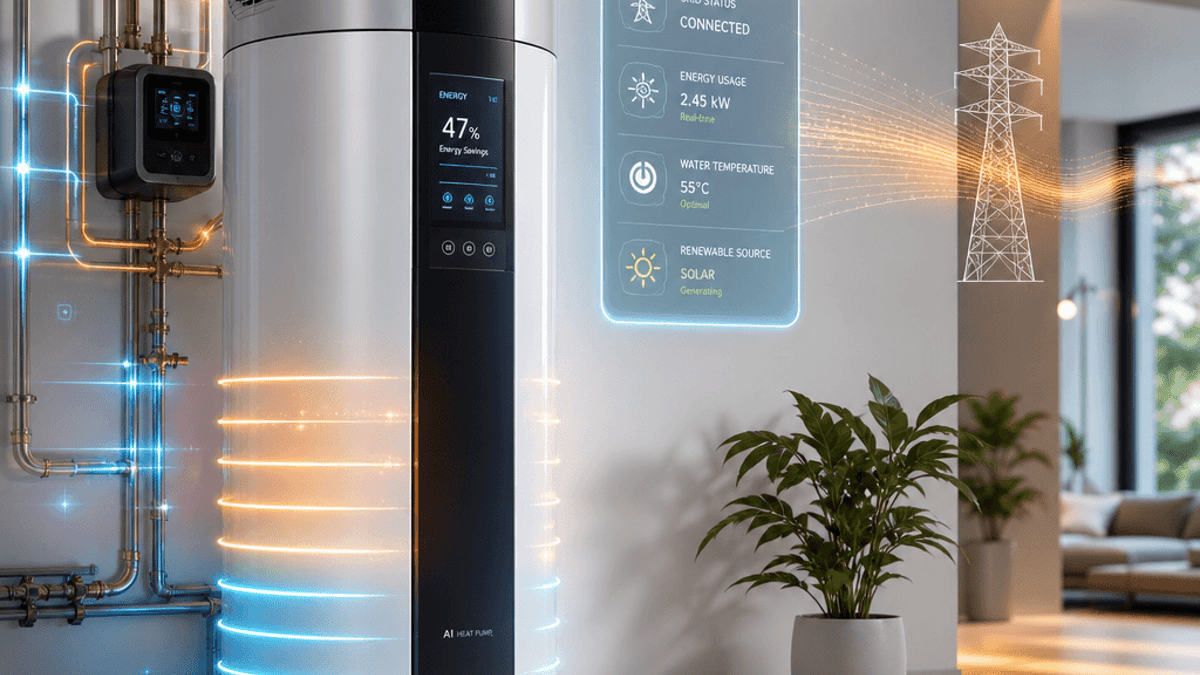
Climate tech startup Reservoir just closed an $8 million funding round to manufacture water heaters that do a lot more than heat water. The company’s AI-powered heat pump systems predict household hot water demand, function as thermal batteries for grid energy storage, and monitor plumbing systems for leaks – turning one of the home’s biggest energy consumers into an intelligent appliance that could help stabilize power grids while slashing utility bills.
Reservoir is betting that the humble water heater – responsible for roughly 20% of residential energy consumption – is ripe for a smart upgrade. The climate tech startup’s $8 million funding round will accelerate production of heat pump water heaters that leverage AI to predict usage patterns, store renewable energy, and act as an early warning system for household leaks.
Water heating represents one of the largest opportunities in residential decarbonization, but traditional heat pump models have struggled with adoption. They’re often bulkier than gas alternatives, can’t always keep up with sudden demand spikes, and don’t offer compelling features beyond energy savings. Reservoir thinks it’s cracked the code by turning the water heater into a multi-functional smart home hub.
The company’s system uses machine learning algorithms to analyze household hot water patterns – when showers typically happen, how much hot water laundry and dishwashing consume, seasonal variations in usage. This predictive capability means the unit can pre-heat water during off-peak electricity hours when rates are lowest and renewable energy is most abundant on the grid. For utilities facing the challenge of integrating intermittent solar and wind power, these thermal batteries could provide crucial load flexibility.
But Reservoir isn’t just selling to environmentally conscious homeowners. The leak detection feature addresses a pain point that costs U.S. homeowners an estimated $13 billion annually in water damage. By monitoring flow rates and pressure throughout the home’s plumbing system, the water heater can alert residents to slow leaks long before they become catastrophic failures. It’s a feature that insurance companies and property managers will likely find compelling.
The $8 million round comes as climate tech hardware startups face a more challenging funding environment than their software counterparts. Building physical products requires substantial capital for manufacturing, inventory, and distribution – costs that don’t scale as efficiently as code. Yet investors are increasingly recognizing that decarbonizing the built environment requires more than just software solutions.
Heat pump technology itself isn’t new, but making it work seamlessly in residential settings has proven tricky. Traditional heat pump water heaters can struggle during periods of high demand, leading to lukewarm showers that sour homeowners on the technology. Reservoir’s predictive approach aims to eliminate those frustrations by ensuring hot water is ready before it’s needed.
The grid storage angle represents perhaps the most ambitious aspect of Reservoir’s pitch. As utilities grapple with the duck curve – that problematic mismatch between when solar panels generate power and when households need it most – distributed thermal storage could help flatten demand peaks. Instead of firing up natural gas peaker plants on hot summer evenings, utilities could tap into thousands of smart water heaters that pre-heated during the sunny afternoon.
This vehicle-to-grid concept has gained traction with electric vehicles, but water heaters offer some advantages. Unlike EVs that might not be home during peak hours, water heaters are always connected to the grid. And while homeowners might be reluctant to drain their car battery for grid services, using stored thermal energy doesn’t impact their ability to get hot water.
The climate tech sector has seen a wave of companies attempting to make home electrification more appealing. From smart thermostats to induction cooktops, the pitch is similar – replace fossil fuel appliances with electric alternatives that offer superior features and connectivity. Reservoir is applying that playbook to one of the last major holdouts in home electrification.
Timing could work in the startup’s favor. Federal tax credits under the Inflation Reduction Act offer up to $2,000 for heat pump water heater installations, bringing the upfront cost closer to parity with traditional gas units. States like California and New York have set aggressive timelines for phasing out gas appliances in new construction, creating a guaranteed market for electric alternatives.
The challenge will be execution. Hardware startups often stumble on manufacturing complexity, quality control issues, or installation headaches that software companies never face. Water heaters need to work flawlessly for a decade or more, and any early reliability problems could torpedo the company’s reputation before it gains traction.
Reservoir’s $8 million raise reflects a broader bet that climate tech hardware can succeed by solving multiple problems simultaneously. The company isn’t just selling energy efficiency – it’s packaging grid flexibility, leak prevention, and smart home integration into an appliance that every household needs anyway. If they can deliver on the manufacturing and prove the technology works at scale, they might just turn the boring water heater into one of the most important pieces of grid infrastructure. Watch whether utilities start offering rebates or demand response programs specifically for these systems – that’ll be the signal that Reservoir’s vision is gaining serious traction beyond the early adopter market.