One commercial transporter who lives in Lagos says he hasn’t had to visit a mechanic for repairs since he took his commercial tricycle (locally known as keke) with persistent engine problems to a service centre run by a fledgling startup known as Swap that ripped out the old piece of junk and replaced the engine with an electric motor.
That’s according to a recent report by TechCabal, which revealed that Swap converted it for free. Now, twice a day, he rides to a battery swapping station in Magodo, swaps a dead battery for a charged one in under two minutes, and gets back to work.
He’s one of just over 300 keke drivers in Lagos who have made the switch, according to Swap, which also claims more than 100,000 tricycles are on a waitlist. That gap signals the state of Nigeria’s embryonic conversion landscape.
Across the country, a patchwork of startups is trying to do something that sounds simple on paper and turns out to be brutally complicated in practice. They are taking fossil fuel engines out of three-wheelers, motorcycles and minibuses and replacing them with electric motors; keeping the body and changing the heart, so to speak.
The economics make sense. Petrol prices in Nigeria have climbed from around NGN 185.00 (USD 0.13) per litre before the subsidy removal in mid-2023 to around NGN 1.3 K (almost a dollar) as of today.
For commercial tricycle riders who buy fuel every single day, the shock was immediate. Swap reports operating cost reductions of 30 to 45 percent for converted tricycles, driven by lower energy costs and the complete elimination of engine maintenance. A converted tricycle running on batteries can generate up to NGN 16 K (11.87) in profit after about 14 trips, with a battery swap costing roughly NGN 3 K (USD 2.23).
But the gap between 300 conversions and a 100,000-vehicle waitlist is where the real puzzle lies.
The conversion playbook
Ecowaka, founded in 2024 by Prince Ojeabulu, offers both brand-new electric tricycles from NGN 2.6 M and conversion solutions for existing petrol-powered kekes from NGN 2.3 M. In March 2025, the company partnered with SiAECOSYS, a global leader in rear axle and powertrain solutions, to advance electric retrofit systems for tricycles. The collaboration combines SiAECOSYS’s engineering expertise with Ecowaka’s local insights to create scalable solutions for high-usage urban transport.
In May 2025, Ecowaka and climate-finance firm Rivy unveiled a flexible financing model using Nigeria’s growing Buy Now, Pay Later market, projected to reach USD 2.61 B by 2030. The partnership began with a pilot deployment of five electric vehicles.
“We are thrilled to partner with Rivy to make electric mobility more accessible,” Ojeabulu said. “By working with Rivy, we are opening new opportunities for drivers, fleet owners, business operators and cooperatives to embrace electric vehicles without financial strain.”
Mataji Express has taken a different route. The company partnered with the National Automotive Design and Development Council to convert petrol-powered tricycles to electric. The converted tricycles operate using five 12-volt, 20-amp batteries generating 1.2 kilowatts of power. Charging costs approximately NGN 270.00 (USD 0.20) to NGN 275.00 under Nigeria’s Band A electricity tariff and provides a travel range of up to 90 kilometres.
Dan Iliya, Mataji Express coordinator, said the motivation was simple. “We import and assemble for now, and we have been licensed by NADDC to import and assemble electric vehicles in Nigeria. We have signed an MOU with our foreign partners to do this with about 40% local content.”
The company has already converted 18 tricycles and is seeking NADDC’s evaluation. Conversion currently costs NGN 1.6 M (USD 1.186 K) per tricycle, but Iliya expects the price to drop as the company increases local production.
Qore, backed by Sterling Bank, is approaching the problem at scale. Launched with Nigeria’s first publicly available EV charging station in Lagos, Qore offers purchase and financing of electric vehicles, conversion of fossil-fuel-powered engines, battery-swapping services and more. Sterling Bank CEO Abubakar Suleiman called the launch “a significant milestone” in powering Nigeria’s transportation sector with renewable energy.
“Qore will revolutionise the very idea of how we power movement by providing clean, sustainable and cost-effective options,” Suleiman said.
The bus problem
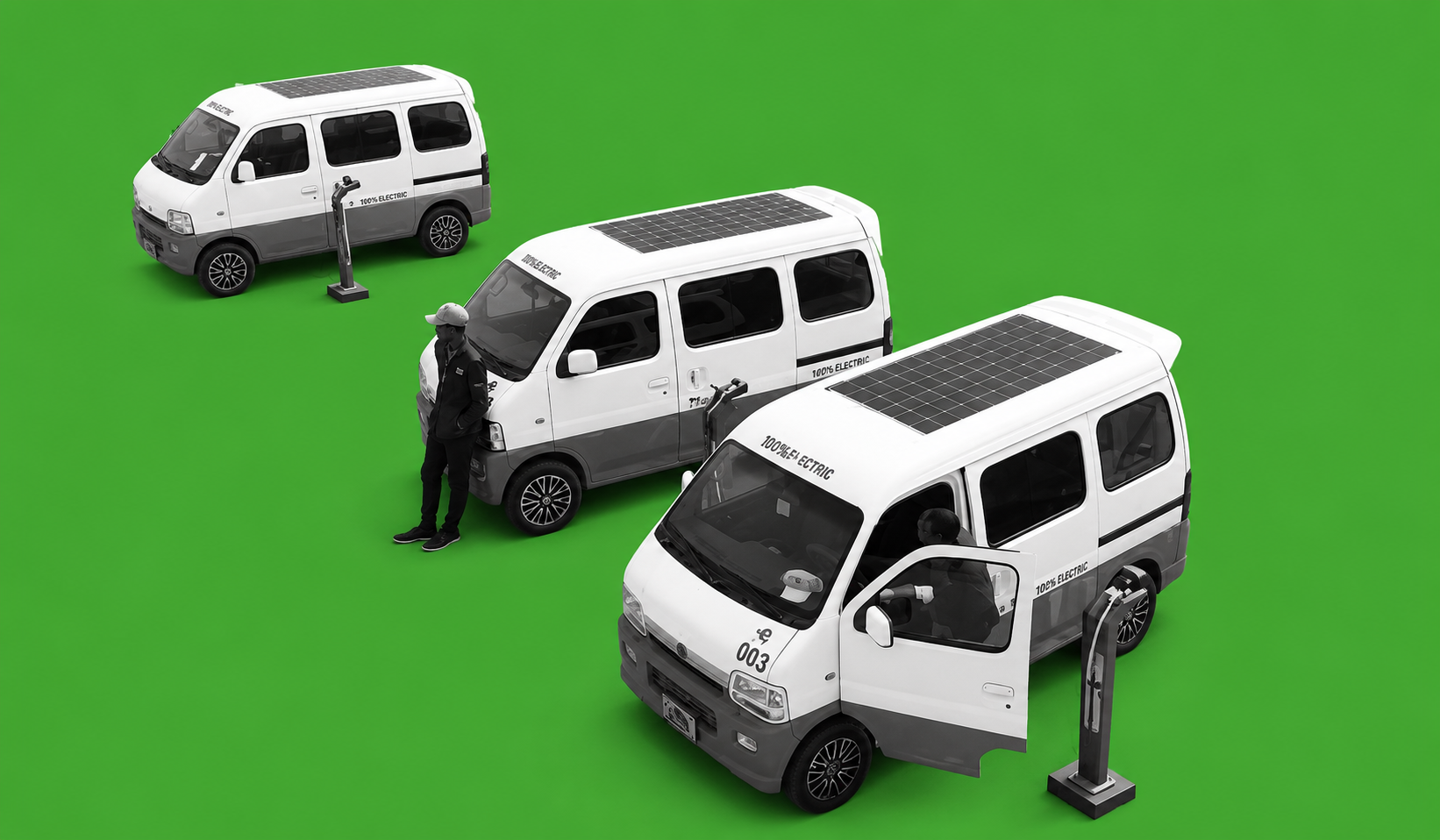
For larger vehicles, the economics shift. Phoenix Renewables, founded by Mustapha Gajibo in Maiduguri, started by converting petrol-powered minibuses into solar-powered electric vehicles. Gajibo dropped out of university in his third year to run the company. His first project was converting internal-combustion engines of commonly used vehicles: seven-seat minibuses and motorised tricycles.
The company now maintains a fleet of a dozen electric minibuses that can cover 150 kilometres on a charge and cost about USD 1.50 to power to full capacity. Gajibo and his cofounder designed a 60-kilowatt-hour solar-powered charging station in Maiduguri. In 2021, they introduced a 12-seat bus built from locally sourced materials with a range of 212 kilometres, chargeable in 35 minutes via an integrated solar system. In a recent test run, the buses transported 35,000 passengers in Maiduguri in one month.
State and local governments are paying attention. In early 2022, the governor of Borno State awarded Gajibo NGN 20 M ( for research and development, plus 15,000 square metres of land for a factory. The federal government has expressed interest in USD 14.8 K) having his company build electric patrol vehicles for the police and armed forces.
But Gajibo’s ambition to roll out 500 units across eight Nigerian cities faces the same constraint that limits every conversion startup in the country.
The infrastructure trap
Electricity is a major constraint. At Swap’s station in Ikorodu, a fast-growing town on Lagos’s northeastern outskirts, the station had been without electricity since January 2026. To charge batteries, the station runs two diesel generators that barely stop. The station serves 150 drivers and charges between 90 and 100 batteries.
To keep batteries available, Swap buys diesel in bulk. At the current retail price of NGN 1.75 K naira per litre, that comes to roughly NGN 487.5 K a day just to keep the batteries charged. Over a 30-day month, that runs about NGN 14.6 M to 19.5 M, reports TechCabal.
It’s a bit of an irony that startups are converting petrol engines to electric motors, then burning diesel to charge the batteries that replace the petrol.
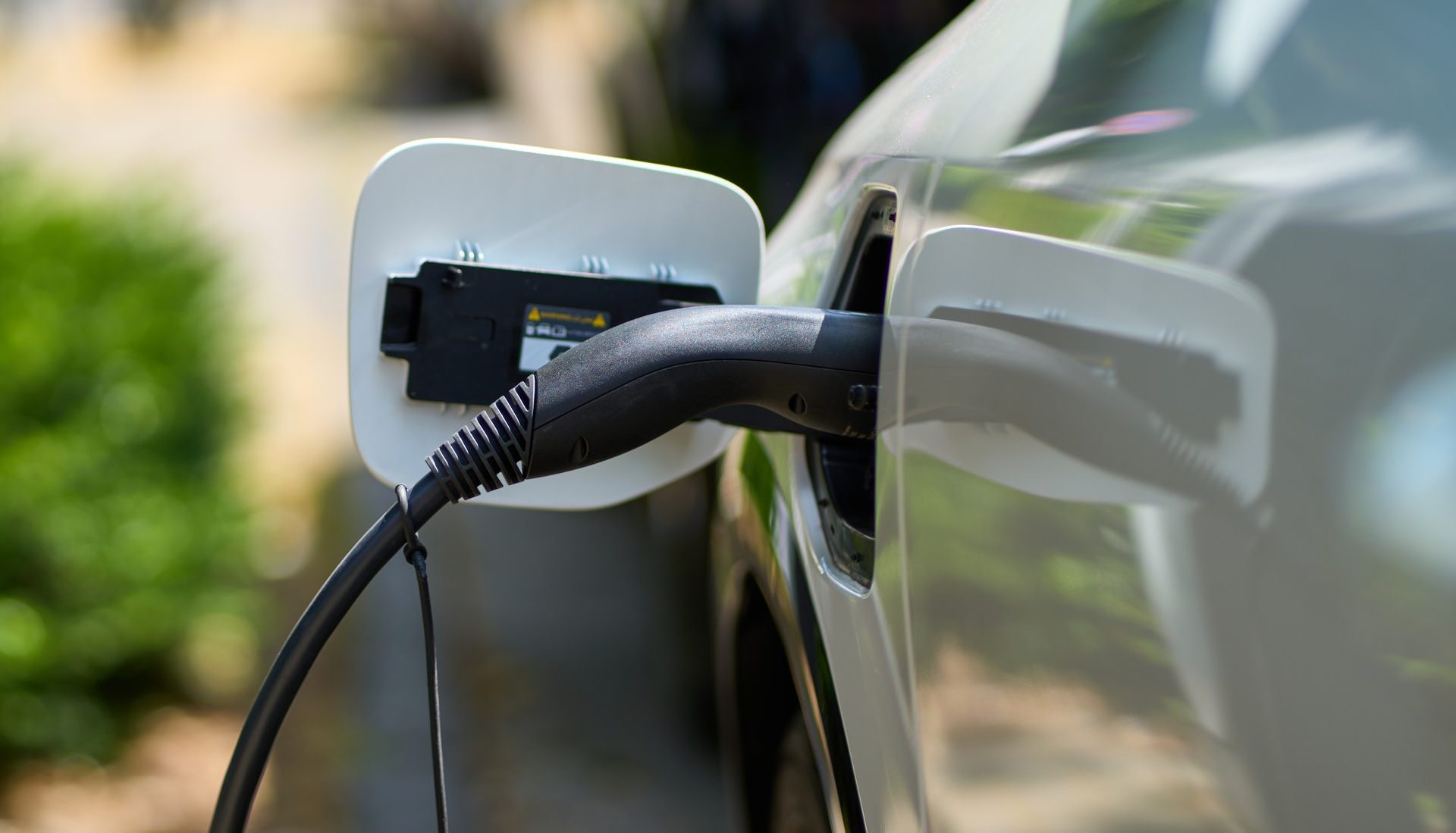
Nigeria’s grid is perennially unreliable. Band A electricity tariffs exist on paper, but in practice, power outages are routine. The startups know this. They are building battery-swapping networks precisely to sidestep the grid. Swap stations exchange a depleted battery for a charged one in under five minutes. VoltTrac Africa, which launched an electric mobility ecosystem in Kano in July 2026, is building solar-powered photovoltaic carport charging infrastructure. Ecowaka’s vehicles offer a five-minute battery swap and 45-minute station charging.
But solar requires sun, batteries require charging, and charging requires power. Until the grid stabilises, the conversion economy seems likely to run on diesel as much as it runs on electricity.
The numbers behind the shift
Nigeria has set ambitious targets. The Energy Transition Plan commits to electric vehicles constituting 60% of the total market by 2050 and 100% by 2060. The government aims to produce 30% of the electric vehicles used in the country locally. NADDC has unveiled national occupational standards for the conversion, calibration and maintenance of electric vehicles.
But the on-the-ground numbers tell a different story. An estimated 15,000 to 20,000 electric vehicles are on Nigeria’s roads as of 2025. Swap has converted just over 300. Ecowaka launched with a pilot of five vehicles. Phoenix Renewables maintains a fleet of a dozen minibuses.
The gap between ambition and reality is a reflection of the scale of the problem. Nigeria has millions of fossil fuel vehicles on its roads. Converting them one by one is painstaking work; each conversion requires a kit, a technician, a battery, a charging point and a driver willing to trust a new technology.
The startups are not waiting for the government to solve the infrastructure problem but are building their own. Swap is positioning its swap stations to serve other EV operators, embedding itself as foundational infrastructure for Nigeria’s broader electrification effort. Ecowaka is building charging and battery-swap stations designed to minimise downtime. Phoenix Renewables is designing solar-powered charging stations.
The conversion economy looks more retrofit than revolution, happening vehicle by vehicle, station by station, driver by driver. It is slow, expensive and dependent on diesel generators in places where the grid has failed. But it is also the only game in town for commercial riders like the one from earlier who has not visited a mechanic since his keke went electric, and for whom it is already working.
Feature Image Credit: DW