![[2026 The CEO of Catholic Kwandong University Early-Stage Startup Package] MASTERPLAN, A company developing a reverse-engineering-based project coding learning platform](https://newsx.io/wp-content/uploads/2026/09/1788951558_2026-The-CEO-of-Catholic-Kwandong-University-Early-Stage-Startup-Package.jpg)
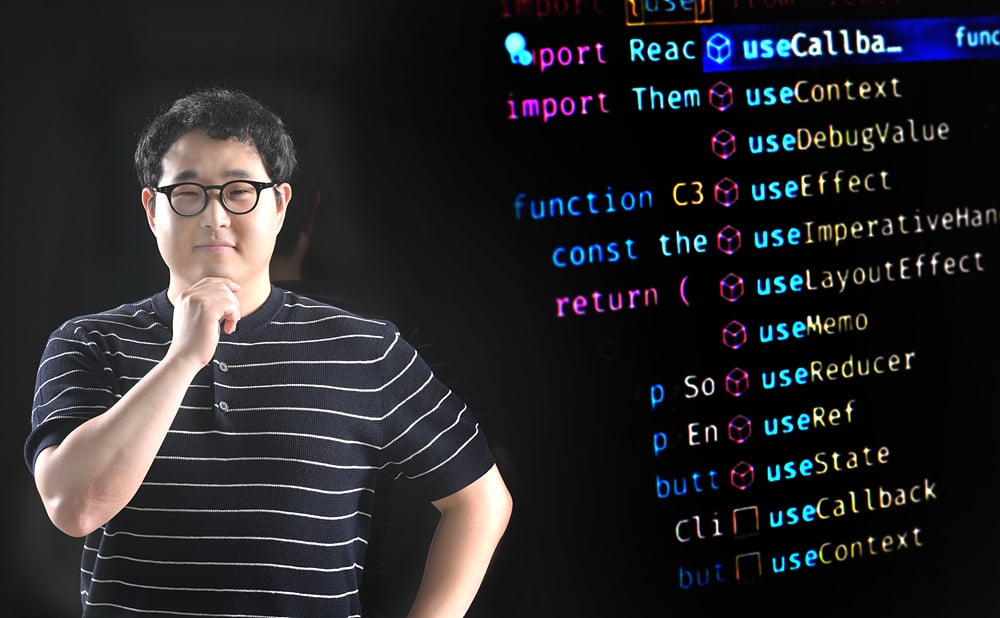

Nadan Jo, CTO of MASTERPLAN
-Developing a platform where users select projects—such as an Instagram clone, a to-do list, or an e-commerce mall—interact with the final product firsthand, and learn through a reverse-engineering approach by tracing the underlying code and architecture.
-Core competitiveness lies in bridging the gap between educational platforms and development tools. The key is empowering users to interact with projects directly, verify the connection between the user interface and the source code, and grasp core principles through the guidance of an AI tutor.
The company’s flagship item is the ‘Reverse-Engineering-Based Project Coding Learning Platform.’ When a user selects a project, such as an Instagram clone, a to-do list, or an e-commerce site, they first interact with the live output directly, then trace back how that interface was constructed through a reverse-engineering curriculum.
“The reason we engineered this service is because the software development environment is shifting at a breakneck pace”, explained CTO Jo. “As of 2026, the adoption rate of AI coding assistants has surpassed 84%, and 51% of developers utilize AI tools on a daily basis. In this climate, a developer’s core competency is moving away from rote memorization of syntax toward AI utilization and architectural design capabilities. However, conventional university lectures or coding bootcamps remain heavily stagnant in syntax-oriented, theory-heavy education. Consequently, while senior developers are exponentially boosting their productivity using AI tools, junior developers face friction because they cannot interpret the generated outputs, which ironically increases their total development time.”
To resolve this critical bottleneck, MASTERPLAN applied the PVL (Pick-Vibe-Learn) model. In this workflow, users Pick a project, grasp its structure by interacting with a live Vibe preview screen, and subsequently Learn the necessary concepts and code. Key technological backbones of the service also include LLM-driven automated curriculum generation and bidirectional mapping technology that connects executable code with the original source code.
MASTERPLAN’s primary edge stems from merging the strengths of educational platforms and actual coding tools. “While existing coding education platforms feature well-structured curricula and lectures, they fall short in providing experiences where users interact with live services and reverse-engineer their structures. Conversely, modern coding tools excel at generating rapid outputs, but it is deeply challenging for a beginner to understand step-by-step why that specific code was generated in the first place.”
MASTERPLAN focuses precisely on this market gap. The core mechanism is allowing users to play with the project, visualize the direct correlation between the UI and the code, and internalize the underlying logic via AI tutor explanations.
Another distinct differentiator is the end-to-end framework leading up to actual service launching. While beginners can generate frontend screens using AI tools, connecting the entire pipeline—including user authentication, APIs, backends, servers, and hosting—remains a massive hurdle. MASTERPLAN is preparing a premium model designed to support learners in scaling their educational projects into fully deployed, live services. In summary, MASTERPLAN differentiates itself as an all-in-one, reverse-engineering learning platform that delivers curriculum, real-time preview, step-by-step code walkthroughs, and deployment/hosting support simultaneously.
Regarding future initiatives, CTO Jo stated, “Our most immediate milestone is to stably launch MASTERPLAN’s open beta service. First and foremost, we intend to perfectly refine the user workflow, ensuring absolute high fidelity as users select a project, interact with the preview interface, comprehend the code architecture, and absorb the core engineering concepts.”
Year of Establishment: 2024
Core Business: Development and operation of a reverse-engineering-based project coding learning platform
Key Achievements: Selected for the 2024 Preliminary Startup Package and completed the program with the highest evaluation rating (‘Excellent’), Achieved approximately KRW 300 million in revenue in 2024, Selected for the 2025 G-Startup Program, Successfully operated the beta service and integrated the AI Assistant feature
reporter jinho lee
[email protected]
Source link