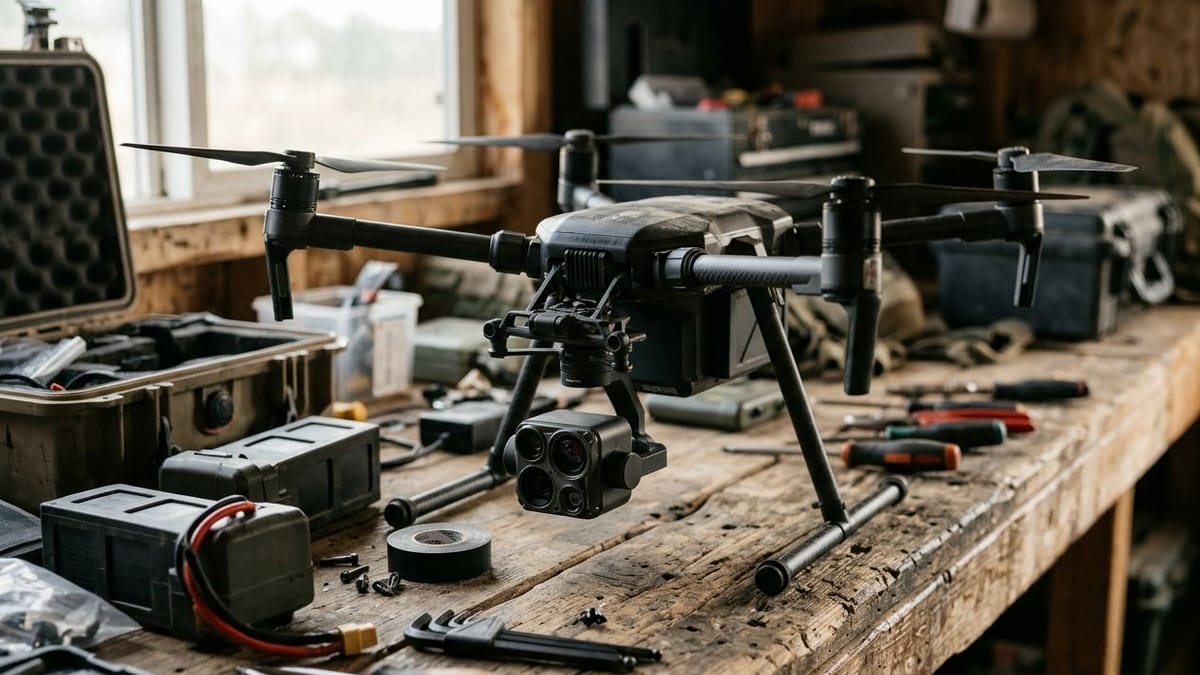
UFORCE, a Ukrainian defense technology startup, has reached a $6 billion valuation as investors bet on military hardware that’s already proven itself in combat. The company’s NEMESIS drones have logged 300,000 combat flights over Ukraine, while its MAGURA autonomous naval vessels have played a role in destroying Russian warships. The valuation marks a watershed moment for defense tech startups emerging from active conflict zones, where real-world battlefield data replaces traditional product testing.
UFORCE has become one of the world’s most valuable defense tech startups without ever pitching investors in peacetime. The Ukrainian company’s $6 billion valuation comes entirely on the strength of what its technology has already accomplished on the battlefield, a stark departure from the traditional defense procurement cycle that can take years of testing before a single unit sees combat.
The company’s NEMESIS drone platform has completed 300,000 combat flights since the start of the Ukraine conflict, generating a dataset that no amount of simulation or testing could replicate. That operational track record is exactly what’s drawing investor attention in an industry where unproven technology often commands billion-dollar contracts based on specifications alone. UFORCE’s drones aren’t theoretical capabilities, they’re combat-proven systems with documented performance data from the most intense drone warfare environment in modern history.
The MAGURA autonomous naval vessels represent an even more dramatic validation of the company’s technology. These unmanned surface vehicles have contributed to the destruction of Russian warships in the Black Sea, demonstrating that relatively inexpensive autonomous systems can challenge traditional naval power. The vessels operate without onboard crews, using AI-powered navigation and targeting systems that have proven effective against heavily defended military targets. For investors evaluating defense tech startups, that kind of real-world success rate is worth more than any PowerPoint deck.
The $6 billion valuation puts UFORCE in rarefied air among defense startups, though the company’s path to that number looks nothing like the typical Silicon Valley trajectory. While companies like Anduril and Shield AI have raised billions based on contracts and demonstrations, UFORCE’s valuation reflects actual combat deployment at scale. The distinction matters in an industry where the gap between prototype and battlefield-ready system can span decades and billions in development costs.
Ukraine’s defense tech ecosystem has become an unexpected hotbed of innovation, driven by necessity and accelerated by the urgency of active conflict. The country’s startups are iterating on drone technology in weeks rather than years, incorporating battlefield feedback in real-time and deploying updates as fast as they can manufacture hardware. That development cycle has produced systems that are battle-tested in ways that peacetime development programs simply can’t match, and investors are taking notice.
The timing of UFORCE’s valuation milestone comes as global defense spending surges and NATO countries scramble to modernize their drone and autonomous systems capabilities. European defense ministries are particularly interested in proven technology that can be rapidly deployed, and UFORCE’s track record makes it an attractive partner for countries looking to build out their own drone warfare capabilities. The company’s technology has already been validated under the most demanding conditions imaginable, eliminating much of the risk that typically comes with defense tech procurement.
The broader defense tech investment landscape has shifted dramatically as the Ukraine conflict has demonstrated the strategic importance of drones, autonomous systems, and distributed warfare capabilities. Traditional defense contractors are racing to catch up with the rapid innovation cycles that companies like UFORCE have pioneered out of necessity. The $6 billion valuation isn’t just about one company’s success, it’s a signal that the defense industry’s center of gravity is shifting toward startups that can move faster and iterate more rapidly than legacy players.
For UFORCE, the challenge now is scaling production to meet demand while maintaining the quality and reliability that made its systems successful in combat. The company will need to balance growth with the operational security concerns that come with being a Ukrainian defense contractor during an active conflict. But with 300,000 combat flights and confirmed naval victories on its resume, UFORCE has already proven it can deliver under pressure that would break most startups.
UFORCE’s $6 billion valuation represents a fundamental shift in how defense technology gets validated and funded. Instead of years of testing and evaluation, the company’s products have been proven in the most demanding environment possible: actual combat. That track record is attracting serious capital at a time when governments worldwide are racing to modernize their military capabilities with autonomous systems. The question now isn’t whether UFORCE’s technology works, it’s whether the company can scale fast enough to meet the demand its battlefield success has created. For defense tech startups everywhere, UFORCE has set a new standard: real-world performance matters more than any pitch deck.