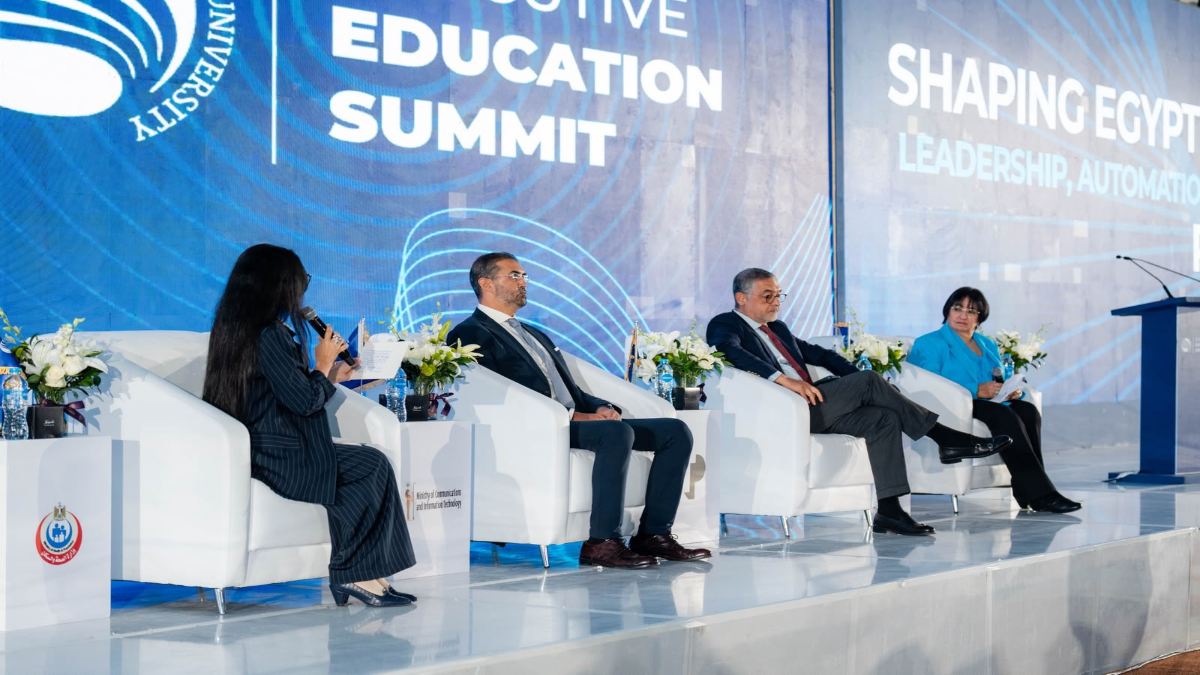
- Experts at the ESLSCA University Executive Education Summit reveal the role of digital transformation, smart payments, and talent development in enhancing the competitiveness of Egyptian companies and addressing market fluctuations.
Egyptian companies are moving to boost their investments in artificial intelligence and fintech as key drivers of growth and competitiveness amid rapid shifts in global markets and changing business models, according to discussions by experts during the fourth edition of the Executive Education Summit organized by ESLSCA University on November 21 and 22, 2026.
During a session titled “From Chaos to Sustainable Growth,” representatives from technology, financial services, and education companies emphasized that building flexible business models and investing in technology and human resources are critical factors in turning economic challenges into opportunities for growth and regional expansion.
Artificial Intelligence Reshapes Commerce and Payments in Egypt
Malak El Baba, Vice President and General Manager of Visa in Egypt, Libya, and Sudan, stated that artificial intelligence is reshaping commerce and digital payment patterns, noting that 91% of consumers in Egypt use artificial intelligence in shopping, while 88% trust its role in fraud protection, according to the “Stay Secure” study.
She added that more than 83% of Egyptian companies plan to invest in agentic commerce over the next two years, reflecting the accelerated adoption of artificial intelligence applications in commercial operations.
She emphasized the importance of integrating payment and financing solutions into the purchasing experience, especially with the growth of commerce across social media platforms and digital gaming, confirming that innovation in financial services requires a secure infrastructure and continuous partnership with regulatory authorities.
Geidea Expands to 100,000 Merchants Through Digital Payments
In the fintech sector, Ahmed Nader, CEO of Geidea, revealed that over five years the company has expanded from a team of 3 to 4 individuals to nearly 1,200 employees, with the number of merchants it serves reaching approximately 100,000 merchants.
He explained that the company has broadened its service scope from point-of-sale solutions to e-commerce, restaurant, and retail services, up to lending and embedded finance powered by artificial intelligence.
He affirmed that developing digital payment solutions and accelerating financial inclusion represent an important driver for corporate growth, particularly for small and medium enterprises, pointing out that balancing growth and profitability requires increasing services and value delivered to merchants.
Egypt Enhances Opportunities for Exporting Technological Services
Meanwhile, Mohamed Tawfik, Managing Director of TP in Egypt and Chief Operating Officer for English-Speaking African Markets, said that investment in technology and specialized talent enhances the ability of companies operating in Egypt to compete regionally and export services to global markets.
He noted that attracting talent in computer science and medical sectors represents one of the most prominent expansion challenges, especially while providing services to clients in the United States and Europe.
He added that the company cooperates with the Ministry of Communications and Information Technology and the Information Technology Industry Development Agency (ITIDA) to address the repercussions of regional tensions and ensure business continuity, alongside developing telecommunications infrastructure and high-speed internet.
Executive Education Keeps Pace with the Technological Skills Gap
Regarding human capital development, Karim El Hennawy, CEO and Secretary-General of ESLSCA University, emphasized that rapid technological evolution forces organizations to retrain leaders and employees, developing strategic thinking and crisis management skills.
He explained that the COVID-19 pandemic and remote work accelerated shifts that were expected to occur by 2030 and 2040, turning them into a reality within three to four years, which has reinforced the importance of practical skills and the ability to adapt to labor market changes.
In turn, Omar El Shenity, Founder and CEO of Qaf Education, said that organizations need to transition from reactive management to flexible operating models based on data and proactive planning, amid continuous changes in labor market needs and its trend toward specialized disciplines.
Executive Education Summit 2026
The fourth edition of the ESLSCA University Executive Education Summit is held on November 21 and 22, 2026, with the participation of more than 1,200 participants, 60 speakers, and 50 partners, under the auspices of the Ministries of Industry, Higher Education and Scientific Research, Communications and Information Technology, and Health and Population.
The summit discusses the future of leadership, management, and organizational development amid technological and economic transformations, with the participation of a number of companies and institutions operating in the technology, financial services, telecommunications, and industrial sectors.
Read the article in
