Meta has recently introduced Muse Spark, a new artificial intelligence (AI) model that marks an early step in its push towards what it calls “personal superintelligence”.
The model, developed by Meta Superintelligence Labs, is designed to handle multiple types of inputs, including text and images, while also using tools to complete tasks.
According to a recent blog post by Meta, Muse Spark is the first in a planned family of models aimed at building AI systems that can better understand users and assist with everyday tasks in a more personalised way. It can run multiple AI agents at the same time, allowing it to handle more complex problems.
Muse Spark is now available through Meta’s AI platform and app, with a limited API preview being rolled out to selected users. The introduction shows the change Meta was planning with its AI strategy, as the company moves beyond standalone tools towards more integrated systems that can support entire workflows.
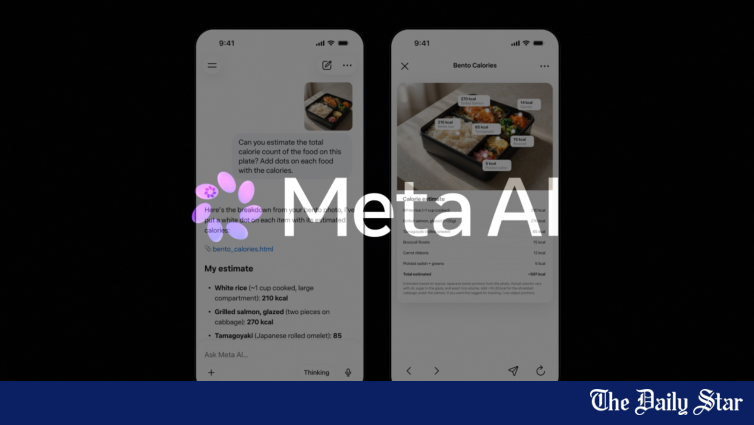
Meta said Muse Spark can be used for a range of everyday applications, including analysing visual information, helping users troubleshoot problems and creating interactive content. The company also highlighted health as a key focus. According to Meta, it worked with more than 1,000 physicians to improve the model’s ability to provide accurate health-related information. The system can generate simple visual explanations, such as showing nutritional details of food or how muscles work during exercise.
Meta added that improvements in its training methods have made the model more efficient. According to the company, Muse Spark can achieve similar performance to earlier systems, including Llama 4 Maverick, while using less computing power.
Alongside Muse Spark, Meta introduced a feature called “Contemplating mode”, which allows multiple AI agents to reason in parallel. The company said this improves performance on complex tasks and makes the system competitive with advanced models developed by Google and OpenAI. The feature will be rolled out gradually on meta.ai.
In a post on Threads, Meta’s CEO Mark Zuckerberg wrote, “Looking ahead, we plan to release increasingly advanced models that push the frontier of intelligence and capabilities, including new open source models. We are building products that don’t just answer your questions but act as agents that do things for you. I am optimistic that this will support a wave of creativity, entrepreneurship, growth, and health.”