
Longevity clinic software specialist will discuss AI’s growing role in clinical decision-making at The Longevity Show this week.
Reya.ai, the longevity clinic software company founded by Samir Mitra, has been accepted into NVIDIA‘s Inception program, a global initiative that provides technical resources, computing support and business development opportunities to selected AI startups.
The news comes as artificial intelligence continues to move from the margins of longevity medicine into everyday clinical practice. Rather than focusing on drug discovery or laboratory research, Reya.ai has positioned itself at the point where clinicians, patients and increasingly complex health data intersect – a space that many believe will play a critical role in the future of preventive and personalized care.
Longevity.Technology: Data is not the same as insight. Longevity medicine has spent the better part of a decade learning that lesson, as biomarkers, wearables, imaging and genomics piled up faster than any clinician could meaningfully process them. AI’s growing role in the sector reflects a simple reality: the information is already there; what is missing is the infrastructure to act on it. For companies like Reya, the opportunity sits at the clinical interface – not in the laboratory, not in the pipeline, but in the consulting room, where complexity either gets resolved or gets handed back to the patient as confusion. An NVIDIA endorsement warrants kudos and lends credibility; the more interesting test, as ever, will be whether the technology demonstrably improves care.
From data to decisions
Reya.ai develops AI-powered software platforms designed for longevity, wellness and preventive care clinics, with tools intended to help practitioners manage and interpret increasingly complex health information. The company’s platform integrates with electronic medical record systems and is designed to support clinical workflows rather than replace them. Acceptance into NVIDIA’s Inception program gives the company access to technical expertise and accelerated computing resources as it continues to develop and deploy its AI-powered longevity agents.
Speaking to Longevity.Technology, Mitra painted a picture of clinics already straining under the weight of their own data – longitudinal biomarkers, wearable streams, imaging, genomics, lifestyle signals – with practitioners struggling to interpret it meaningfully within the time and resources available. The solution, as he sees it, is not faster analysis but a fundamentally different kind of infrastructure.
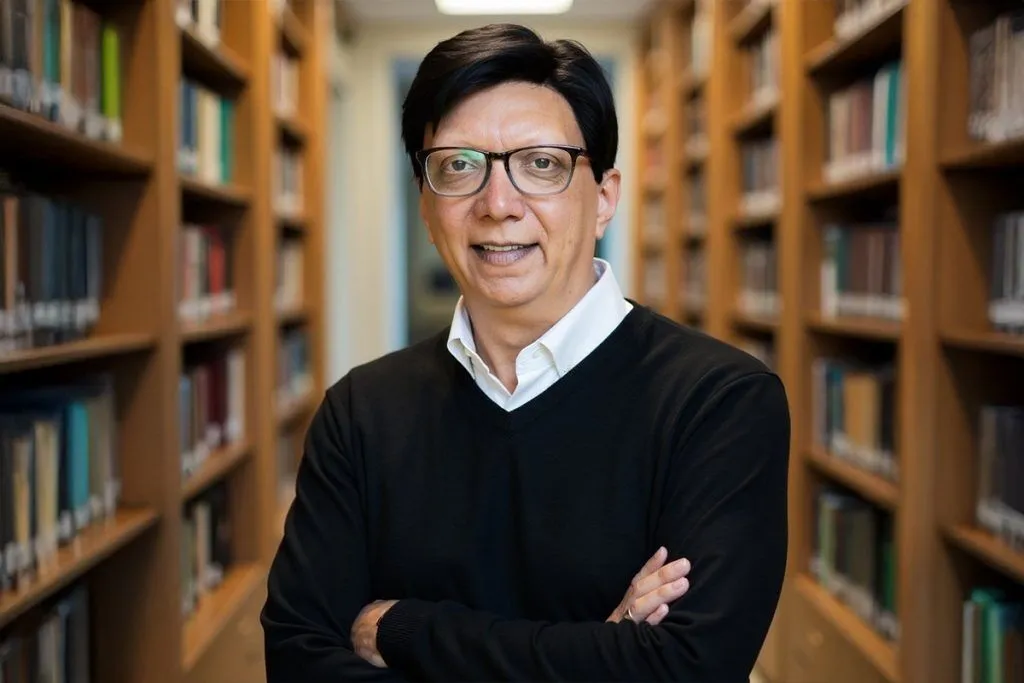
“We need a Longitudinal Intelligence layer that goes beyond real-time interpretation and insights,” he told us, “to an Agentic AI form that performs actions for various stakeholders involved, with supervised human-in-the-loop where needed.”
NVIDIA’s accelerated computing stack, he argued, makes that kind of processing viable at scale – moving, as he put it, from “systems of records to systems of action.”
The challenge for longevity clinics is not a shortage of information – it is the opposite. Richer datasets mean more variables to weigh, more signals to distinguish from noise, more decisions to make before the consultation even begins. That cognitive load falls on the clinician; AI, at its most useful, is simply a way of redistributing it.
AI comes to the consulting room
The NVIDIA news arrives at a particular moment. Across healthcare, questions of AI governance and clinical accountability are hardening from philosophical concern into regulatory pressure – and the longevity sector, with its unusually data-rich patient profiles, sits squarely in the crosshairs.
On Friday, at Day 1 of this week’s Longevity Show, Mitra will join a panel titled Guardrails to Guidance: How AI Will Shape Clinical Decisions, examining how AI is shifting from decision-support tool to something rather more ambitious: a system capable of synthesizing clinical, imaging and genomic data into personalized care recommendations. Where that leaves human oversight is, to put it mildly, an open question.
Mitra is clear-eyed about the wider context. Having lived through the early days of both the internet and mobile waves, he is reluctant to overstate what longevity’s moment means in isolation.
“We need to be humble that longevity happens to be accelerating while we are in the midst of a much broader and larger transition to the AI age,” he told us. What that transition means for the sector, though, is significant: longevity, he believes, will become one of the most data-intensive and AI-driven verticals in healthcare – and having NVIDIA’s ecosystem begin to engage with it, however early, is a signal worth taking seriously.
“It’s always been my desire to bring forth the best of technology to help the longevity community accelerate its impact more broadly to millions,” he added. “Every single improved healthspan is so worth it.”
The human in the loop
The questions Mitra will discuss with the panel on Friday are ones the sector can no longer defer. Longevity clinics sit at an unusual intersection – diagnostics, preventive medicine, personalized care – generating data streams that would have been difficult to imagine a decade ago. Making sense of that information, and doing so safely, is no longer a future problem.
Visitors to The Longevity Show will be able to meet the Reya.ai team on the exhibition floor, where the company will be showcasing its approach to AI-enabled longevity care.
The Longevity Show opens its doors on 26–27 June 2026 at Tobacco Dock, London. Tickets for all tiers are now available at www.longevityshow.com.