Across energy, defense, space and applied AI, deep tech startup infrastructure is moving out of the lab and onto the factory floor. The startups building it are no longer trying to prove that the physics works. They are proving that it can be manufactured, shipped and financed at scale.
The next phase will be defined by who controls the bottlenecks. In AI data centers, that means power and cooling, while munitions and robots depend on factory capacity. Companies applying AI to mortgages and insurance depend on domain expertise. As AI infrastructure bottlenecks take focus, investors and governments are backing builders that vertically integrate, put their own capital at risk and turn one-off projects into repeatable products.
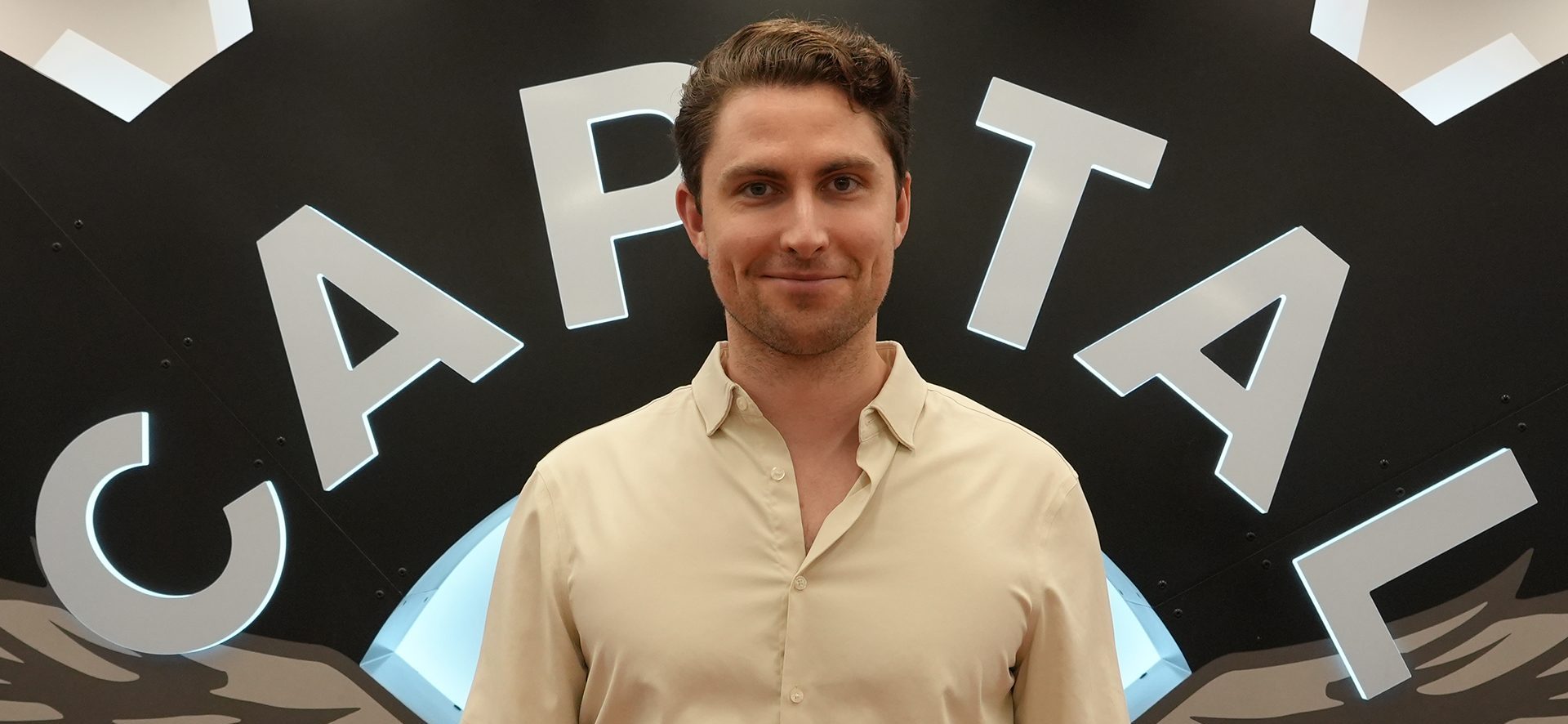
“If you’re trying to deploy many gigawatts per year of nuclear, you’ve got to turn it from being a project into being a product,” said Matt Loszak (pictured), co-founder and chief executive officer of Aalo Atomics Inc. “That’s really what we’re doing for the first time for nuclear.”
Loszak and other industry experts spoke with theCUBE Research’s John Furrier at theCUBE + NYSE Wired: F1 Capital Factory event in Austin, Texas. The interviews covered deep tech startup infrastructure related to two-phase cooling, mass-manufactured nuclear reactors, solid rocket motors, satellite communications, defense investing and AI agents in lending and insurance.
Here are seven standout insights from the event:
1. Aalo mass-manufactures nuclear reactors that ship on the back of a truck.
Large nuclear plants take 10 to 20 years to build, which is far too slow for the data-center buildout. Aalo instead designs around one constraint: the most powerful reactor that fits on the back of a truck. Its reactors use liquid sodium as the coolant and off-the-shelf fuel, so they need no backup power to stay cool during a shutdown, Loszak noted. The company turned on a full-scale prototype reactor two and a half years after its founding, after spending about $100 million. It is now moving into a 1 million-square-foot factory designed to produce 100 reactors a year. Each commercial pod of five reactors and three turbines delivers about 50 megawatts, and the near-term goal is reaching full power for a Crusoe data center.
See theCUBE’s full coverage.
2. Two-phase cooling frees power for compute as AI racks near a megawatt.
Accelsius LLC uses two-phase cooling, in which a fluid turns to vapor at the chip, to remove heat that single-phase water systems increasingly cannot handle. Racks that drew 10 to 30 kilowatts a few years ago now run at 600 kilowatts and are headed to a megawatt, according to John Hewitt, CEO of Accelsius, and Josh Claman, executive chairman and founding CEO. The approach takes water out of the data center and frees power for compute. Claman estimated that this is worth about $60 million in added revenue for every 100 megawatts. Sovereign AI systems and inference pods placed in corporate basements also need self-contained, low-maintenance cooling, and the company has built a modular product line for each of those uses.
Check out theCUBE’s complete interview.
3. Solid rocket motors shift from performance at any cost to affordable mass.
Conflicts in Ukraine and the Middle East have shown that Western estimates of the missiles and munitions needed for a war were off by orders of magnitude. That has pushed the industry from performance at any cost toward affordable mass. X-Bow Systems Inc. builds the solid rocket motors that power those munitions, and rocket-assisted takeoff motors for Group 3 and Group 4 drones are now its hottest product, explained Jason Hundley, founder and CEO of X-Bow. The company has more than 500 employees and opened its first factory this year, which Hundley described as the first new technology factory at scale in its industrial base. It is on a path to more than $1 billion in annual revenue within two years. Its next systems will be built autonomy-first, shrinking a seven- or eight-step supply chain to one or two steps.
Watch the full interview from theCUBE.
4. Defense investors bet that factories, not prototypes, decide physical AI’s winners.
Marlinspike Partners LLC invests in dual-use defense technology companies that sell to both commercial and government customers, betting that the winners of physical AI will be the builders. Startups can build prototypes in California, but scaling up requires the land, opportunity and supportive government found in Texas, emphasized Jude Akpunku, senior associate at Marlinspike. Portfolio companies tackle that manufacturing bottleneck directly. Foundry Robotics Inc. is designing a factory floor where robots build other robots, and Layup Parts Inc. makes composite parts on an automated floor. The firm also backs JetZero Inc., a blended-wing-body aircraft developer with Air Force contracts that expects to cut fuel costs by 50% and fly in the fourth quarter of 2027.
Don’t miss the full interview on theCUBE.
5. AI agents learn from mortgage lenders’ top closers.
Borrowers who submit a lead online can wait 21 to 40 hours for a lender to reach out, even though the first lender to respond usually wins the loan. AIVI LLC connects those leads faster and then studies loan officers’ calls to learn what the top 20% of closers do differently, so agents can automate those habits. That was the approach highlighted by Giorgio Mihaila, co-founder and CEO of AIVI, and Akshay Lazarus, an advisor to AIVI. The next step is bots dealing with bots: when Mihaila had an AI agent shop 100 lenders for a home equity line of credit, only 13 responded. The self-funded company is aiming for $10 million in annual recurring revenue next year.
Hear the full story on theCUBE.
6. Sovereign demand pushes CesiumAstro’s satellite pipeline to $53B.
CesiumAstro Inc. builds communications infrastructure for space, from semiconductors and active phased-array payloads to complete satellites. Its pipeline has grown from about $6 billion a year ago to $53 billion in named opportunities as governments back sovereign satellite networks for both national security and broadband, shared Kenneth Smith, chief financial officer of CesiumAstro. On Oct. 1, the company launched Element, which it calls the first fully turnkey active phased-array satellite. It also acquired fabless chip designer Jariet Technologies to secure the advanced chips its payloads require. CesiumAstro received a $10 million grant from the Texas Space Commission last year, and it envisions AI routing traffic between satellites and the ground on its own.
Catch the complete conversation on theCUBE.
7. Landlord insurer Steadily lifts engineering throughput 300% with AI.
Steadily Inc. insures about 300,000 of the 20 million rental properties in the U.S., mostly for small landlords who own one to three homes. AI gains were modest in 2024, but newer models now deliver about 300% higher throughput per engineer than two years ago, according to Darren Nix, co-founder and CEO of Steadily. Because insurance is regulated, a human approves every important decision, with AI preparing work that is correct about 85% of the time. Voice AI takes claims mainly after business hours, when callers do not expect a person. Steadily doubled this year to about $600 million in annual premium with close to 300 employees. Nix estimated that three years ago, a company at this scale would have needed two to three times as many people.
Watch theCUBE’s full sit-down.
Photo: SiliconANGLE
Support our mission to keep content open and free by engaging with theCUBE community. Join theCUBE’s Alumni Trust Network, where technology leaders connect, share intelligence and create opportunities.
- 15M+ viewers of theCUBE videos, powering conversations across AI, cloud, cybersecurity and more
- 11.4k+ theCUBE alumni — Connect with more than 11,400 tech and business leaders shaping the future through a unique trusted-based network
Founded by tech visionaries John Furrier and Dave Vellante, SiliconANGLE Media has built a dynamic ecosystem of industry-leading digital media brands that reach 15+ million elite tech professionals. Our new proprietary theCUBE AI Video Cloud is breaking ground in audience interaction, leveraging theCUBEai.com neural network to help technology companies make data-driven decisions and stay at the forefront of industry conversations.