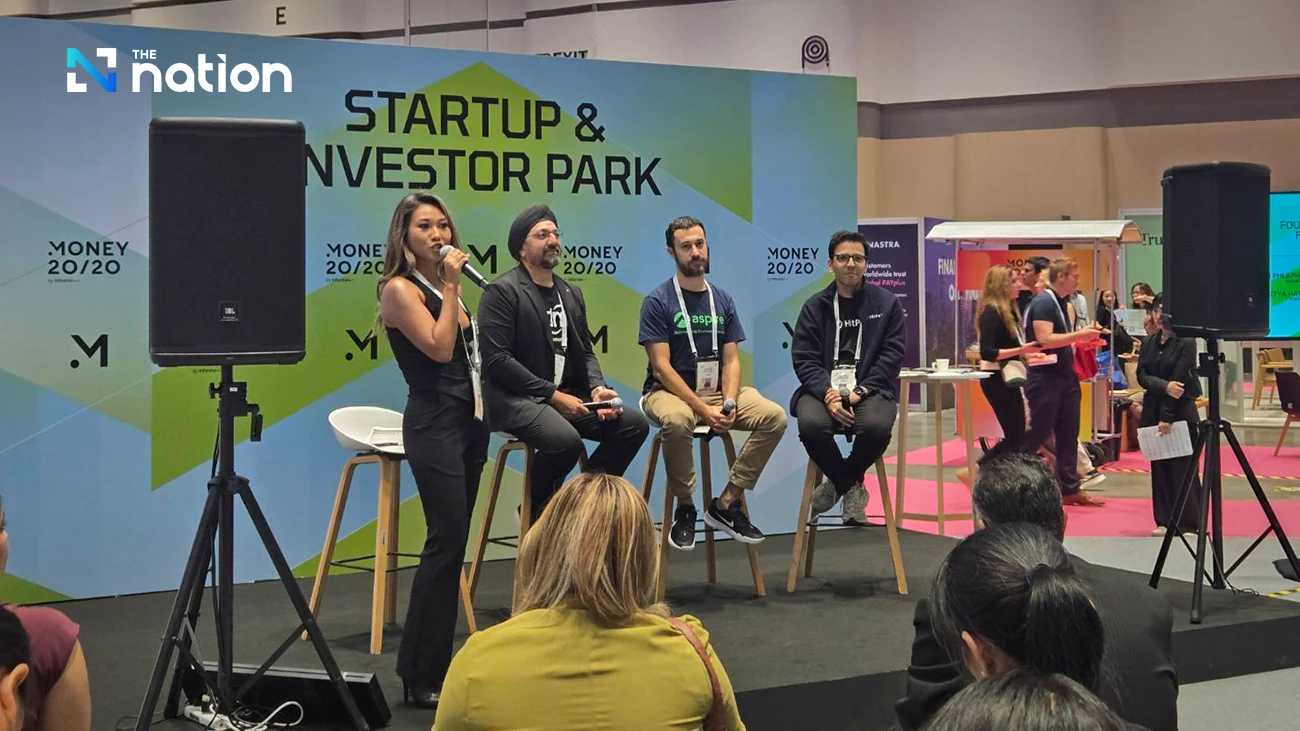
Planning horizons of two to three years — covering licensing, operations, organisational build-out, and go-to-market — are entirely normal in fintech, he said, even if they feel alien to the startup mentality.
“It’s a planning timeline that sometimes goes into the multi-year, which is very rare for a young company to have. We learned the hard way — we were trying to go very fast and it doesn’t work that much.”
The second principle is modularity. Aspire now builds its product platform in a way that separates a centralised core from a localised layer that can be adjusted for each market. Roughly 80 per cent of the product is built and maintained centrally, with the remainder adapted to local requirements.
“It allows the company to talk the same language instead of localising 100 per cent,” Baronchelli explained.
The third principle is operational simplification through AI tools — not for customer acquisition or product innovation, but to strip away the redundant administrative work in risk management and compliance that once made multi-jurisdiction operations feel near-impossible.
This benefit, he was quick to note, applies primarily to companies that have already achieved meaningful scale.
Haripurkar added that managing patience is not solely an internal challenge — it extends outward to investors, employees, and every other stakeholder in the business.
“It’s not only us learning about patience. It’s about us educating everyone else about patience as well.”
Aswin put it most bluntly of all: “If you’re impatient, being a fintech leader is a long job. In summary, it’s just not going to happen.”

Trust: built in years, lost in minutes
Perhaps the session’s most sobering segment concerned trust — specifically, how long it takes to build it and how swiftly it can be undone.
Haripurkar spoke at length about the challenges of serving small and medium-sized enterprises, a segment he described as “brutal.”
Unlike enterprise clients, who tend to absorb occasional service failures with relative equanimity, SMEs react with immediate churn and, increasingly, with complaints filed directly to regulators.
“If you delay their payout, they’re not only going to complain to us, they’re going to complain to the regulator,” he said.
After a decade of operations, HitPay has earned a reputation it protects zealously — and Haripurkar was explicit that it could not be manufactured quickly. “We don’t take it for granted.”
Baronchelli’s prescription for accelerating trust was blunt: earn it through word of mouth by simply not letting clients down.
“If someone trusts you and tells another person that you are a trustworthy business, you immediately have an acceleration.”
Beyond that, he acknowledged, the industry demands time above all else. Moving people’s money, he said, is a business where trust develops over a decade, sometimes longer, and where customer stickiness often reflects not loyalty so much as the sheer difficulty of finding an alternative provider.
Aswin reached for a more poetic analogy. “It’s like saying, can I have a great bottle of wine that is not a couple of years old? It’s impossible, in my opinion.”
The honest limits of AI
Asked whether artificial intelligence could lower customer acquisition costs and ease fintech’s perennial growth struggles, the panel offered a notably restrained assessment.
All three panellists use AI internally — across marketing, compliance, sales, and operations — and Aswin credited AI-powered digital marketing tools with significantly reducing DeeMoney’s acquisition costs and enabling more targeted outreach to specific customer communities.
But the consensus was unambiguous: AI can make the process of acquiring a customer marginally more efficient; it cannot make an untrustworthy or poorly fitted product attractive.
“Adopting AI does not mean that customer acquisition becomes easy,” Haripurkar said. “A merchant or a customer only signs up if they trust the platform. AI doesn’t solve for that.”
Baronchelli was similarly measured, suggesting that the real benefits of AI-driven cost optimisation are realised only once a business has found product-market fit and achieved a degree of scale.
In the earliest years of a company’s life, the priority is not optimising operations but discovering whether the product belongs in a given market at all — and for that, he said, AI offers little help as yet.
What kills a fintech startup?
The moderator closed the formal session with a sharp challenge: one word each to name the single biggest “killer” of fintech startups.
The responses were as distinct as the speakers themselves, proving that while many outsiders point to regulation as the primary hurdle, industry insiders identify a far broader range of fatal factors.
Haripurkar cited “incompetency” as the leading threat. Baronchelli identified “adaptability”—or rather, the lack of it.
He argued that startups often fail when they lose the iterative mindset required in an industry where change is the only constant.
“You think you’re going to start something, and it’s ABC, but six months later it’s XYZ,” he noted. “Your brain starts to experience cognitive dissonance… but I imagine this happens every single year.”
Aswin, given the final opportunity to elaborate, returned to a theme he had championed throughout the day: that founders who chase valuations over fundamentals rarely survive the “long, grinding timelines” that fintech demands.
It was, in essence, the thesis of the entire session—that building a fintech company in Southeast Asia is an exercise in sustained discipline, institutional humility, and a willingness to forgo the shortcuts that simply do not exist in this industry.