A year ago, the dominant narrative about Latin American startups was bleak: hundreds of companies with real traction, paying customers, and validated models were stranded between seed and Series A — operationally alive but strategically paralyzed, burning runway with no clear path to growth capital. The metaphor of the walking dead felt apt. Today, that metaphor requires revision, not because the structural problem has been solved but because its shape has changed in ways that demand a more precise diagnosis.
Latin America’s venture capital ecosystem raised US$4.1 billion across 681 rounds in 2025, a 13.8% increase over 2024 and the first meaningful rebound after three consecutive years of post-2021 correction. Series A grew 9.3% to US$773 million. Late-stage and growth funding surged 14% year over year, with 1Q26 accelerating even further — late-stage capital jumped 158% compared to 1Q25. On the surface, the crisis appears to be receding. Beneath the surface, a more complex and arguably more dangerous dynamic has taken hold.
The Recovery Is Real, But Narrow
The 2025 rebound was driven almost entirely by larger check sizes, not broader deal activity. Deal count fell 1.9% to its lowest level since 2017, even as total capital increased. The average ticket grew 16%, from US$5.2 million to US$6.1 million. Capital concentrated dramatically: Brazil and Mexico captured 78.5% of all venture dollars, and the top ten rounds alone accounted for nearly 30% of all capital deployed in the region. Two Mexican fintechs — Plata, and Klar — drove those headline numbers.
This is not a recovery, it is a selection event. Investors are not deploying broadly; they are doubling down on proven performers and withdrawing from the middle. For the vast majority of Latin American startups that are not yet category leaders with institutional-grade governance and repeatable unit economics, the capital environment in 2025 was functionally indistinguishable from 2024. The ecosystem looks healthier in aggregate precisely because its winners have grown larger, not because more companies are advancing through the funding stack.
The Walking Dead Problem
The original thesis — that startups with genuine traction cannot bridge the gap to Series A — remains structurally valid. Series A grew a modest 9.3%, across only 72 deals for an entire region of 650 million consumers. Meanwhile, pre-seed funding collapsed 40% in capital and 39.4% in deal count, falling to its lowest level since 2018. This means the pipeline feeding future Series A candidates is shrinking precisely as the bar to clear that threshold rises. The ecosystem is not healing at the base, it is thinning.
The metrics bar that Series A investors require has not relaxed. Revenue expectations remain at US$3 million ARR or higher, with three-to-five times year-over-year growth expected. The median time between seed and Series A continues to exceed twenty months across the region. Founders in Colombia, Chile, Argentina, and Peru — markets with smaller absolute capital pools — face these same bars on much thinner seed rounds, in lower purchasing-power markets, without the geographic or sectoral tailwinds that Mexico City’s fintech hub currently enjoys.
The comparison with the United States sharpens the picture. US startups raised US$21 billion in Q1 2025 alone. US seed-to-Series A graduation rates, already depressed from 31% in 2018 to roughly 15% today, remain significantly above what Latin America’s structural disadvantages permit. If Silicon Valley — with deep institutional capital, active exit markets, and sophisticated LP bases — produces a 15% graduation rate, Latin America’s equivalent figure likely sits closer to 10% or 11%, based on regional differentials documented over the prior cycle.
Exit Markets
One genuine improvement deserves recognition. Exit activity in 2025 reached US$4.9 billion, the third-best year on record for the region. In early 2026, PicPay completed its Nasdaq IPO — the first Brazilian tech listing in nearly four years — signaling a tentative reopening of public market access. M&A activity has picked up as corporate acquirers become more systematic, and corporate venture capital expanded its footprint meaningfully, moving from opportunistic participation to more disciplined early-stage investment.
However, these exits remain concentrated among scaled companies. For the median Latin American startup stuck between seed and Series A, improved conditions at the top of the market do not translate into near-term confidence at the growth stage. Early investors in 2021-vintage funds are still working through portfolios where companies raised at inflated valuations and cannot access follow-on capital. Until those portfolios clear, capital recycling into new Series A investments remains constrained. The exit window has opened, but entry requirements are stricter than ever.
The New Rules of the Game
Capital in 2025 and 2026 is not allocated on narrative, it is priced on execution. Investors require demonstrable unit economics, clean governance, and repeatable go-to-market before committing to Series A. Seasoned founders command a disproportionate share of available dollars; first-time founders in less-favored geographies face a fundamentally different probability distribution. Corporate venture capital’s expansion partially compensates for this, giving B2B founders a viable alternative path through commercial traction before approaching institutional investors. Revenue-based financing and venture debt have also matured, letting capital-efficient founders extend runway without diluting at unfavorable valuations.
The Path Forward
The walking dead problem will not be solved by waiting for a funding supercycle. Investors must commit to serious local Series A capital. Institutions, development finance organizations, and family offices must step into the structural gap that global funds vacate during downturns. Without a deeper local LP base, the region will remain cyclically dependent on international risk appetite.
Founders must internalize that seed capital in Latin America is increasingly likely to be the only institutional equity they raise. Building to profitability — or to a revenue base that makes the company acquirable — is not a fallback. It is the primary strategy. Companies achieving US$1.5 to US$2 million ARR with strong retention and positive contribution margins are more fundable today than higher-revenue companies with deteriorating unit economics. The bar has shifted from growth-at-all-costs to growth-with-discipline, and the founders who survive will be those who internalized that shift early.
More Honest Accounting
What Latin America’s ecosystem actually produces — and what it needs to produce more of — are durable, capital-efficient businesses that solve genuine problems at regional scale. The 2025 rebound confirms that capital is available for those companies. It also confirms that capital is increasingly unavailable for companies that are merely growing. The gap between those two categories is structural, not cyclical, and it will not close without deliberate action from investors, founders, and institutions alike. The conditions that create walking dead startups have not been resolved, they have simply become more selective in whom they trap.
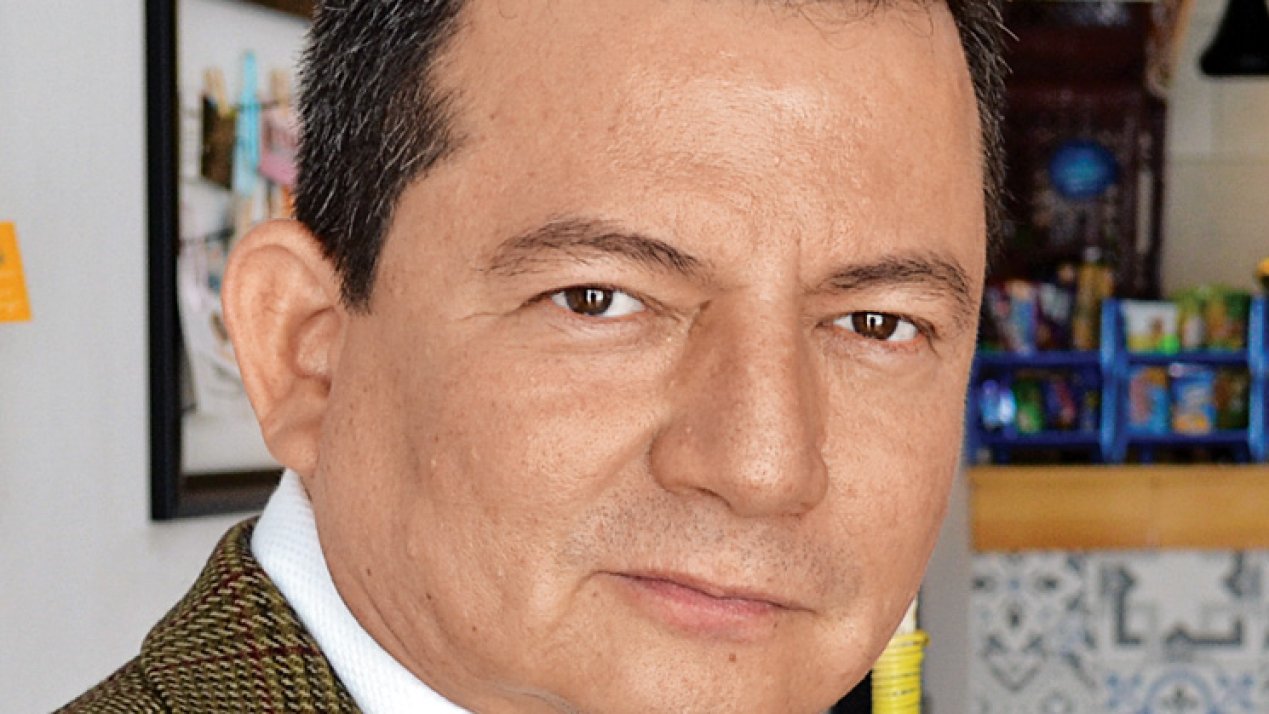
Luis Hernández Alburquerque is a pioneering force in Corporate Venture Capital and innovation infrastructure across Latin America. With over 30 years building emerging businesses, structuring investment funds, and commercializing transformative technologies, he founded Scale Radical — a corporate venturing-as-a-service platform serving 30+ leading brands — and serves as managing partner of AIDA Ventures, an early-stage fund deploying capital into fintech, logtech, and enterprise SaaS infrastructure startups throughout the region.