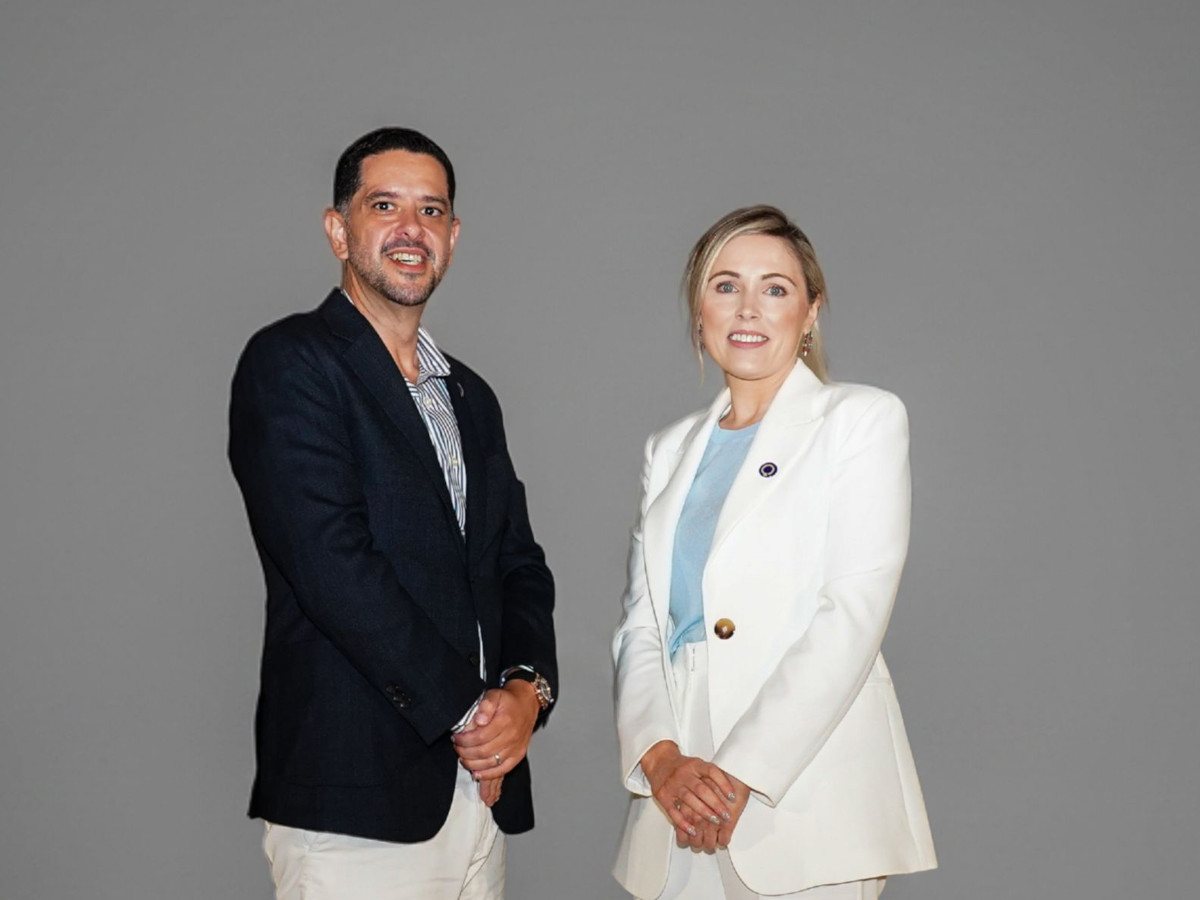
Qashio’s Lydia Foott discusses finding her way to the right career and navigating Ireland’s fintech space.
“I’d always wanted to work in tech,” explained Lydia Foott, the co-founder and COO of Dubai-based fintech Qashio. Growing up in her native Cork, she found the majority of adults in her sphere were involved one way or another in the technology industry and she naturally assumed she would follow suit.
She told SiliconRepublic.com, “I originally wanted to become a tech journalist because I loved seeing how technology could solve real problems in innovative ways.” After graduating during the ‘Great Recession’ and seeing how hiring in the technology space was limited by economic strife, she made the decision to move to Dubai, where she worked as a teacher and completed her master’s degree simultaneously.
“At the same time, I continued applying for tech roles. The transition from teaching into tech was difficult,” she said.
“Breaking into the industry without experience was challenging, especially as a woman without local experience. Fortunately, I got a lucky break and never looked back.”
While luck is one element of Foott’s experience, there was also a lot of hard work and skill building; to that point, she credits many of the people-centric skills she has found useful in tech as having been developed during the early days of teaching and working.
In 2024, an old colleague of hers, Armin Moradi, approached her with an idea for a fintech company and thus Qashio was born. Of her venture into the world of entrepreneurship and technology, Foott said, “Looking back, it’s funny how I went from admiring tech companies to helping found one myself”.
Ireland’s fintech scene
In late 2025, Qashio announced plans for a $19m expansion, identifying Dublin as the base of operations for the company’s European headquarters.
“For us, choosing Ireland was a no-brainer,” said Foott. “Aside from the personal connections both myself and Armin have to Ireland – I am Irish and Armin worked for Oracle in Dublin before moving with them to Dubai – the calibre of talent available in the Irish market we saw as unmatched by any other location.
“The Irish government, via IDA Ireland, have also offered unique support to Qashio. The IDA engaged with us at a key point in our expansion journey and we were really impressed by the range of support services offered to us, which really helped to seal the deal for Ireland as our European base.”
Future plans include the creation of Qashio Labs, which will serve as an R&D facility focused on developing the Qashio platform and driving innovation across the industry. Initially, there are plans to onboard 50 employees in the Dublin office and a planned satellite office in Cork. Roles will be available in sales, customer support and technology.
In anticipation of the potential challenges, Foott explained that as is the case with many businesses running today, fintechs are operating in a state of near constant uncertainty, driven largely by major economic pressures, geopolitical instability and increasing costs. Companies are also struggling amid rapid technological change and the increasing pressure to adapt quickly to AI, she said.
“Because fintech companies sit so closely to consumer spending behaviour, they are often among the first to feel the impact of economic shifts. When costs rise, consumer behaviour changes immediately. Spending on non-essential purchases drops and fintechs can see those changes reflected in transaction volumes almost instantly.”
For Irish businesses specifically, Foott is of the mind that one of the most effective ways to navigate uncertainty is to implement stronger financial controls and facilitate greater data visibility. It is also critical for fintechs in the process of building and scaling to prioritise security, she said.
“In my opinion, one of the most misunderstood aspects of building and scaling a fintech company is the importance and complexity of security. Before founding Qashio, I assumed the hardest challenges would be product-market fit and sales. What I quickly realised is that, in fintech specifically, security and compliance are absolutely critical.
“If you want to scale successfully in fintech, you need to invest heavily in security, compliance and the right expertise from the very beginning. Hiring the best industry specialists and obtaining the necessary certifications is essential to building long-term trust and credibility.”
Future of fintech
Looking to the not-too-distant future, Foott is excited about what she believes to be untapped potential in the fintech space, including the possibilities being created by artificial intelligence.
“Many companies that consider themselves modern and innovative still rely heavily on manual processes that waste both time and resources. Even the shift from cash to cards was only the beginning,” she said.
“The infrastructure behind financial technology is incredibly fascinating and with AI entering the space, the possibilities are endless.”
She concluded: “I think one of the most exciting things about fintech right now is that we are still incredibly early in the journey. The pace of innovation is accelerating rapidly, particularly with AI, and the companies that succeed will be the ones focused on solving real operational problems for businesses.”
Don’t miss out on the knowledge you need to succeed. Sign up for the Daily Brief, Silicon Republic’s digest of need-to-know sci-tech news.