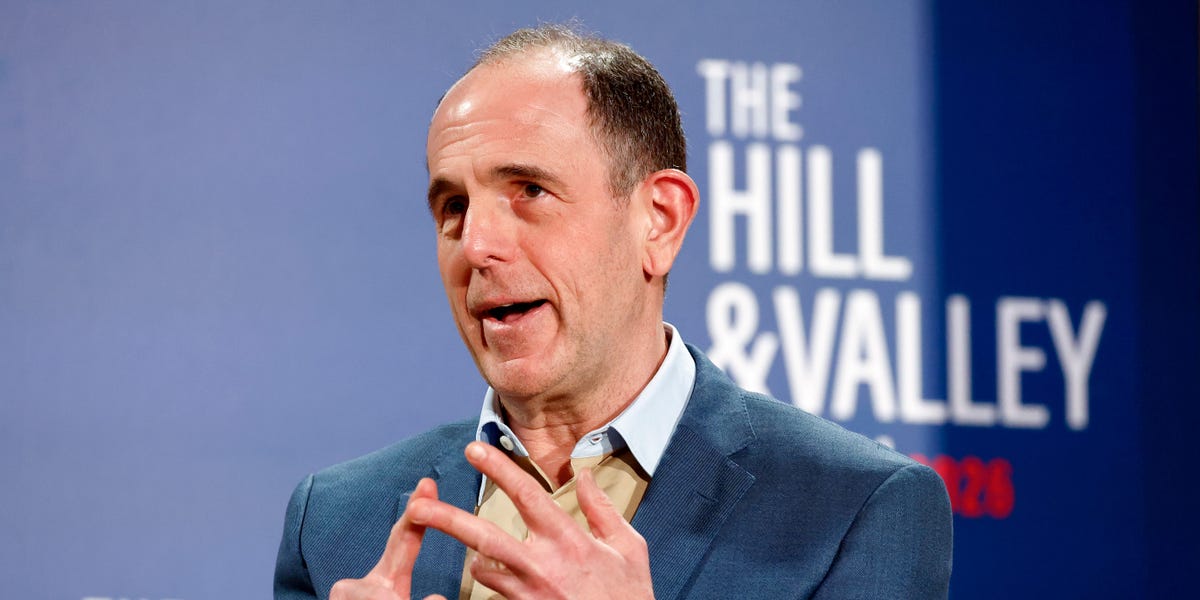




“We saw the gig economy [rise] over the last 10 years,” said Jason Syversen, founder and chief executive at SportsVisio, a startup that analyzes amateur sports events with AI. “Next we’re going to see the entrepreneurship economy, because the barriers to entry to starting a business and the amount of capital required have just been reduced by orders of magnitude,” he said at a Wednesday morning event at the offices of startup backer Venture Lane in downtown Boston.
Kim Walsh, an early employee at HubSpot, said she was working on a health care app last year when a software developer told her it would cost $200,000 and take six months to code. Instead, she used AI tools from Swedish AI coding firm Lovable to build a working prototype in a few days. The experience convinced her to join Lovable’s sales team at its new office in Boston.
Lior Div, cofounder and chief executive of cybersecurity firm 7AI, said no human at his company has written a line of software code in months and people in various roles across the company are writing their own apps.
“The lines are blending,” Div said at an event on Tuesday held in the three-story atrium of Klaviyo’s financial district headquarters. “Our head of product is writing software, the lady that’s responsible for customer success, she’s writing software.”
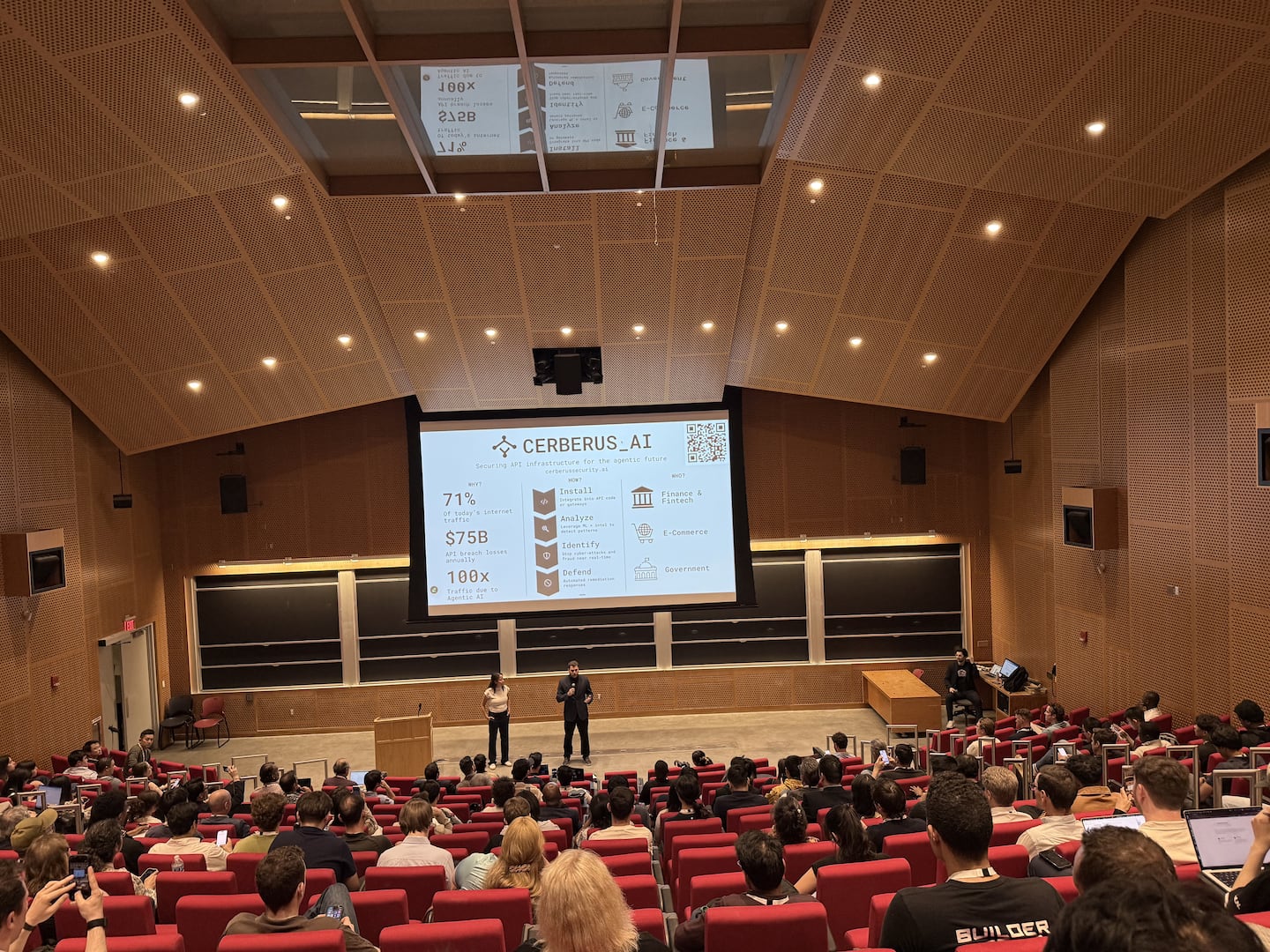
An event Tuesday night at MIT’s Stata Center auditorium attracted dozens of investors filling the red cushioned seats to hear short pitches from startups backed by TNT, an accelerator for early stage companies coming out of Harvard and MIT. Most were fueled by AI.
Edmond Douglass, founder and chief executive of Lupa Robotics, bounded on stage in a blue baseball cap to pitch how his startup is collecting data from humans performing physical tasks in order to train AI models to operate robots.
“The future of robotics will not be won by the company that builds one perfect robot,” Douglass, who dropped out of Harvard to work on his startup, said. “The future will be won by the company that makes intelligence portable across every robot and builds the universal platform for physical intelligence.”
After watching Douglass, I grabbed an Uber and crossed the Charles River to see Daniel Lee, cofounder of wearable startup Lumia, making his pitch in a more formal setting — the private dining room of French fine dining restaurant Rochambeau in the Back Bay.
After a dinner that featured steak frites and crispy duck breast, Lee showed off his company’s $249 sensor-laden earrings that can measure body temperature, blood flow, and other health metrics more accurately (he claims) than wrist-based wearables.
Lee wore Lumia’s sensor on an ear cuff, since he doesn’t have pierced ears. But he’s promised coworkers he’ll pierce his ears after the company achieves its next revenue milestone. “It’s coming soon, really soon,” he said.
Still, as AI makes it easier than ever to start a company, startups will have to emphasize other aspects beyond software features to stand out, Div noted.
“Now we’re talking about the level of service, consistency, the founder vision, the way that [we] are interacting internally and with customers,” he said of 7AI.
The strategy reminded him of how the top restaurants stand out to win Michelin stars. “So now we’re building a three-star Michelin cyber company,” he said. “It’s a mindset that’s not in the tech world.”
🚗 Mass. rideshare drivers just became first in nation to unionize after yearslong push. Read more from Globe contributor Bryan Hecht.
💼 Boston cybersecurity startup 7AI is going on a hiring binge. Read more from tech reporter Aaron Pressman.
🏛️ R.I. attorney general sues Kalshi, Polymarket alleging prediction market operators skirted sports betting laws. Read more from Rhode Island reporter Christopher Gavin.
🏦 AI banking startup Catena Labs in Boston raised $30 million in a deal led by a16z crypto and Acrew Capital and including Breyer Capital, General Catalyst, and IDG Capital.
🖨️ 3D-printing company Markforged in Waltham is being acquired by Minnesota-based Stratasys for $42.5 million from Nano Dimension, headquartered in Israel. Nano bought MarkForged for $116 million last year.
📚 Edtech company Skillsoft in Boston is selling its instructor-led training business to a unit of private equity firm Enduring Ventures for an initial payment of $10 million plus possible future additional payments.
⚡ Energy equipment maker GE Vernova in Cambridge is acquiring Canada-based Robotech Automation. Terms of the deal were not disclosed.
🩺 Health tech company Outcomes4Me in Boston acquired Geno.Me based in Milwaukee and Realyze Intelligence in Pittsburgh. Terms of the deals were not disclosed.
👋 Quantum computing software firm Zapata Quantum in Boston said two of its cofounders had rejoined. Zapata hired Yudong Cao, former head of quantum at BCG X, as chief technology officer and Jonathan Olson as vice president of strategy and operations.
📝 Edtech company Skillsoft in Boston hired Ron Kisling as chief financial officer. Kisling previously was CFO at Fastly and Fitbit. Current CFO John Frederick is retiring.
🏘️ Real estate tech firm Tour24 in Boston hired Cara Athmann as chief product officer. Athmann previously worked at Cardinal Group Companies, RevGen Partners, and AIMCO Communities.
✝️ In a sweeping manifesto, Pope Leo XIV called for robust regulation of artificial intelligence and for its developers to work for the common good rather than profit.
📍 Chicago-based communications tech company Motorola Solutions opened an AI and resilience software hub in Boston.
How I Choose Which Cloudflare Employees to Replace With AI (Wall Street Journal)
I wore Google’s Fitbit Air for a week, and it gives the Whoop a serious run for its money (ZDNet)
AI Agents Plunged the Tech World Into Chaos. Here’s Exactly How That Happened (Wired)
👋 Thanks for reading. We’ll be will be back next Wednesday.
❓ Have a tip? Email Aaron at [email protected].
✍🏼 If someone sent you this newsletter, you can sign up for your own copy.
Aaron Pressman can be reached at [email protected]. Follow him @ampressman.
Source link