

For most consumers, financial services begin with a familiar brand. A bank issues the loan. A telecom operator offers the mobile wallet. A fintech launches the app. What customers rarely see is the infrastructure underneath.
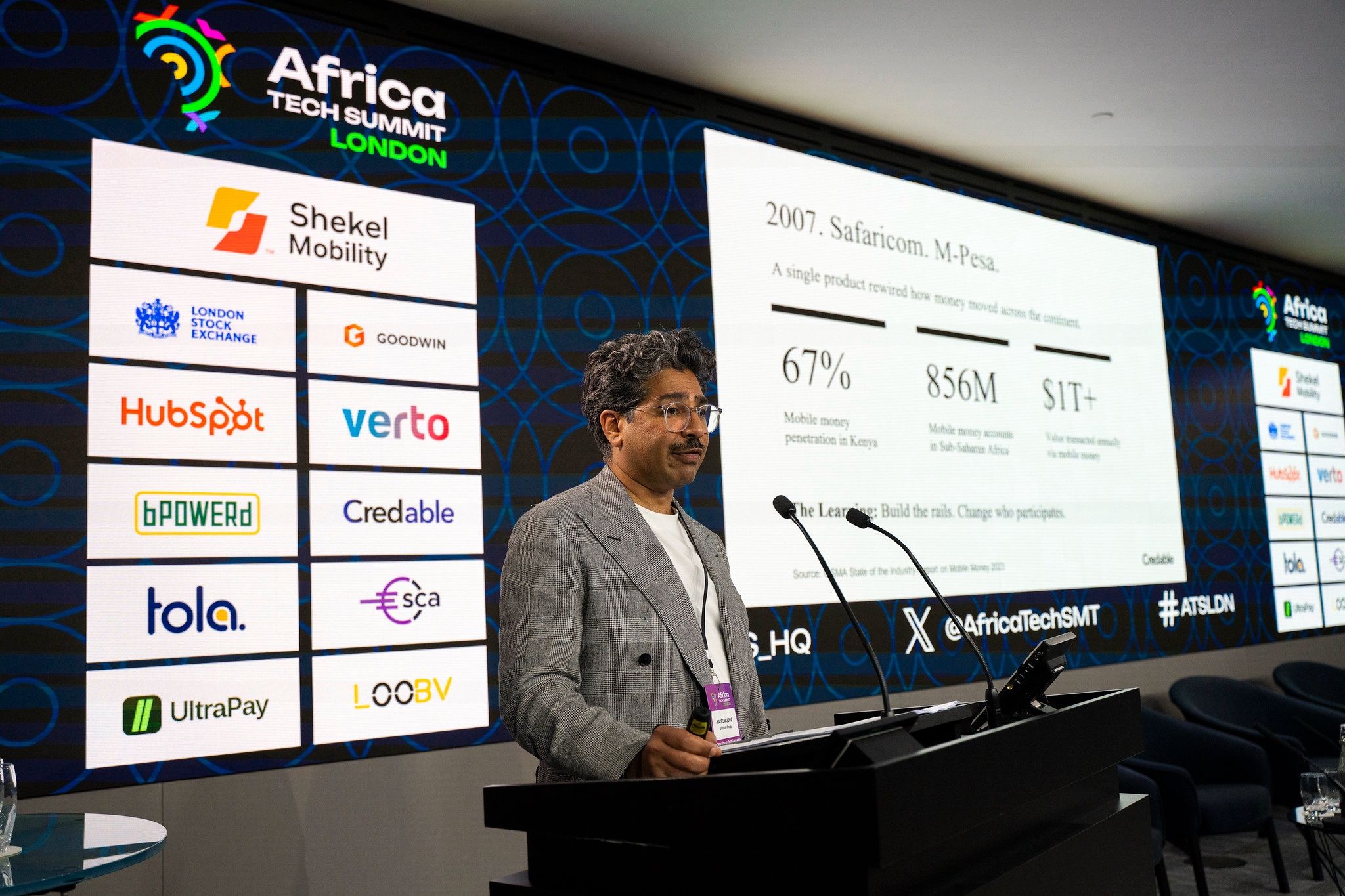
That makes the rebranding of Credable to _able more significant than it first appears. The Dubai-headquartered company, whose technology powers lending and savings products used by more than 40 million customers across Africa, is positioning itself as part of a growing class of businesses building the infrastructure layer behind modern financial services.
The name change is the headline. The larger story is the rise of companies that operate behind the scenes while becoming increasingly important to how credit, savings, and other financial products reach consumers.
The Fintech Most Consumers Have Never Heard Of
There is a good chance many Africans have already interacted with technology built by _able without knowing it.
The company works with organisations including M-PESA, Airtel, Access Bank, and Diamond Trust Bank. Rather than building a consumer-facing financial brand, it provides the systems that enable partners to launch and manage lending and savings products.
This is why the company can reach tens of millions of customers while remaining relatively unknown outside financial services circles.
Consumers interact with the front-end brand. Infrastructure companies operate in the background.
That distinction is becoming increasingly important across African fintech.
Why Credable Became _able
When the company launched in 2021, its primary focus was helping financial institutions expand access to credit through technology and data.
Over time, however, management concluded that credit was not the industry’s primary constraint.
Infrastructure was.
According to CEO Nadeem Juma, the company came to believe that while capital providers, customers, and distribution channels already existed, the systems connecting them remained fragmented.
That realization changed how the business evolved.
What began as a credit-enablement company expanded into a platform providing infrastructure, intelligence, and portfolio management to banks, telecom operators, fintechs, and other financial institutions.
The new name reflects that broader role.
Credable was built around assessing who could access credit.
_able is built around enabling financial access at scale.
The Real Battle for African Finance Is Moving Behind the App
For years, much of Africa’s fintech conversation focused on consumer-facing applications.
The most visible companies competed for users, transactions, and market share.
Increasingly, however, competition is moving deeper into the technology stack.
Banks, telecom operators, fintechs, marketplaces, and digital platforms all want to offer financial products. Building the required infrastructure internally can take years and require significant investment in technology, compliance, underwriting, collections, and risk management.
Infrastructure providers reduce that complexity.
Instead of building entire financial systems from scratch, institutions can deploy products using external platforms that provide the operational foundation.
In many ways, companies like _able are becoming the pipes carrying financial services across digital ecosystems.
From Payment Rails to Credit Rails
The company’s rebrand is rooted in a broader belief about where African financial services are heading.
The last decade of financial inclusion was largely defined by payments infrastructure.
Platforms such as M-PESA and Airtel Money transformed how money moves across the continent, bringing millions of people into the digital economy and creating new channels for financial services. Mobile money helped solve a fundamental problem: moving money quickly, digitally, and at scale.
Juma argues that the next challenge is different.
The issue is no longer whether people can transact digitally. It is whether they can access formal credit and savings products through those same channels.
“Capital exists. Demand exists. Distribution exists,” he said when announcing the company’s rebrand. “What remains is the infrastructure required to enable them responsibly and at scale.”
That view reflects a growing belief among infrastructure providers that the next phase of financial inclusion will be defined less by payments and more by the systems that connect capital to customers.
Connecting Capital to Customers
One of the most interesting aspects of _able’s model is that it sits between two groups that traditionally struggled to connect efficiently.
On one side are capital providers:
- Banks
- Development finance institutions
- Credit funds
- Institutional investors
On the other side are distribution channels:
- Mobile money operators
- Fintechs
- Superapps
- Marketplaces
- Financial institutions
- Savings groups
_able provides the technology, risk models, operational infrastructure, and portfolio management systems that connect those two sides.
Rather than operating primarily as a lender, the company acts as an intermediary layer that enables capital to reach customers through existing distribution networks.
This approach allows financial products to scale through channels that already have customer relationships and transaction activity.
As the company describes it, telecom operators often have customers but not lending capital. Banks have capital but not always the most effective digital distribution. Fintechs may have ambitious products but lack scale. Infrastructure providers sit between those groups and help coordinate the system.
How _able Facilitated $650 Million in Loans
One of the most notable figures associated with the company is the more than $650 million in loans it has facilitated across African markets.
Equally notable is how it achieved that scale.
Unlike traditional lenders, _able does not primarily deploy large amounts of capital from its own balance sheet. Instead, it coordinates capital providers, distribution partners, underwriting systems, and portfolio management processes.
The result is a model that can facilitate significant lending volumes without resembling a conventional lending institution.
It is a structure increasingly common in financial infrastructure businesses, where technology and operational systems become more valuable than directly owning the customer relationship.
The company says its platform now reaches more than 40 million customers across Kenya, Tanzania, Uganda, Mozambique, and Zambia.
From Credit Scoring to Financial Infrastructure
The company’s platform ambitions now extend well beyond digital credit.
Its infrastructure supports credit products, savings products, cards, and group-based financial services.
The platform includes capabilities such as:
- Core banking infrastructure
- Know Your Customer (KYC) onboarding
- Partner integrations
- Product configuration tools
- Credit decisioning
- Risk management
- Portfolio intelligence
- Collections management
- Regulatory support
Taken together, those capabilities place the company closer to an embedded-finance platform than a traditional lending technology provider.
The transition helps explain why management concluded that the Credable brand no longer reflected the full scope of the business.
Why Banks and Telecoms Are Buying Instead of Building
The growing appeal of infrastructure providers reflects a broader reality facing financial institutions.
Launching digital financial products requires much more than a customer interface.
Institutions need underwriting models, onboarding systems, compliance frameworks, capital management processes, collection systems, and ongoing operational support.
Building and maintaining those capabilities internally can be expensive and time-consuming.
Infrastructure platforms offer an alternative path.
By outsourcing parts of that stack, banks and telecom operators can bring products to market faster while focusing on customer acquisition and distribution.
That dynamic is helping fuel demand for infrastructure providers across multiple African markets.
The Bigger Shift Happening Across African Fintech
The emergence of companies like _able points to a broader evolution in African fintech.
The first generation of fintech growth was largely defined by consumer-facing products and payment rails.
The next phase may be defined by the infrastructure companies enabling lending, savings, and other financial services behind the scenes.
These businesses often attract less public attention than banks, mobile money providers, or fintech apps. Yet they increasingly influence how financial services are built, distributed, managed, and funded.
That is why the rebranding of Credable to _able matters.
It is not simply the story of a company changing its name.
It is the story of a fintech infrastructure provider betting that Africa’s next financial transformation will come from expanding access to credit with the same scale and reach that payments infrastructure brought to moving money.
Go to TECHTRENDSKE.co.ke for more tech and business news from the African continent and across the world.
Follow us on WhatsApp, Telegram, Twitter, and Facebook, or subscribe to our weekly newsletter to ensure you don’t miss out on any future updates. Send tips to [email protected]
Source link