

The market for venture capital has grown strongly in the GCC over the past years, buoyed by interest in fintech startups and scaleups. More so than in other markets, early-stage and growing companies are turning to private debt to drive their ambitions forward, according to a new report from Stride Ventures.
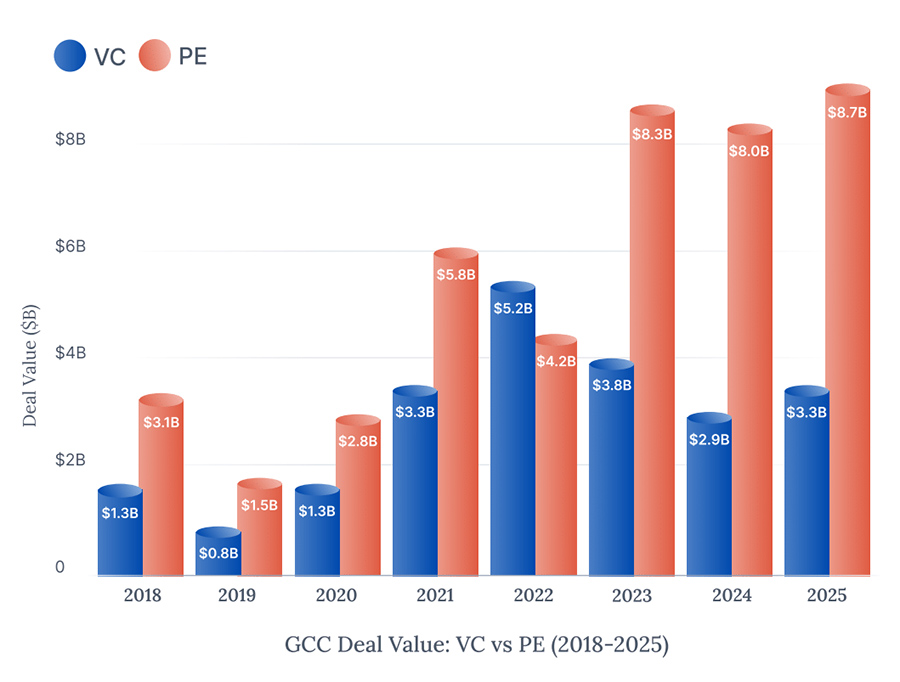
The venture capital ecosystem in the Gulf Cooperation Council (GCC) grew by 14% in 2025 to reach a market size of around $3.3 billion in total funding. That capital was deployed across 541 venture deals, with Saudi Arabia leading in both value and volume ($1.72 billion across 257 deals) and the UAE following closely ($1.5 billion across 231 deals).
Over the longer term, the GCC has exhibited sustained expansion, with venture capital funding growing roughly 2.5x since 2020, representing a 20% CAGR over the past five years. According to researchers, the region’s growth trajectory reflects structural ecosystem maturation in Saudi Arabia and sustained institutional depth in the UAE.
Qatar, while smaller in absolute scale, recorded $59 million across 33 deals, indicating continued ecosystem formation momentum.
Source: Stride Ventures
In 2025, early-stage activity remained robust across Saudi Arabia and the UAE, while the re-emergence of mega-rounds (>$100 million) signaled growing late-stage capital availability. Saudi Arabia alone recorded approximately $571 million in transactions exceeding $100 million, reflecting increasing participation from institutional and sovereign-linked investors and improving scale-stage liquidity.
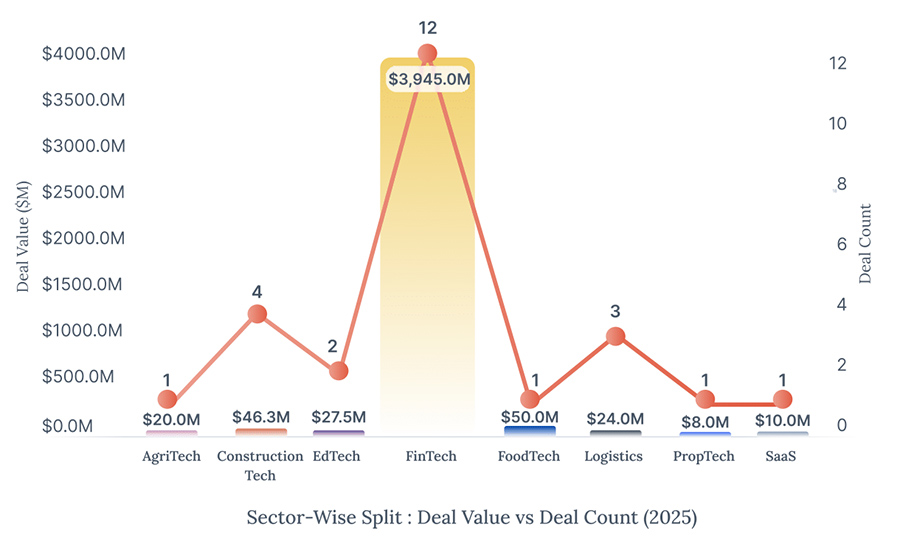
The largest transactions in the region include Saudi Arabia’s Tamara ($2.4 billion), Lendo ($740 million), Deem ($400 million), Erad ($33 million), and the UAE’s CredibleX ($100 million), Kitopi ($50 million), and Octa ($20 million). Sectorally, fintech dominated the market, and beyond fintech, activity was seen in sectors such as agritech, proptech, SaaS, and logistics.
Private debt
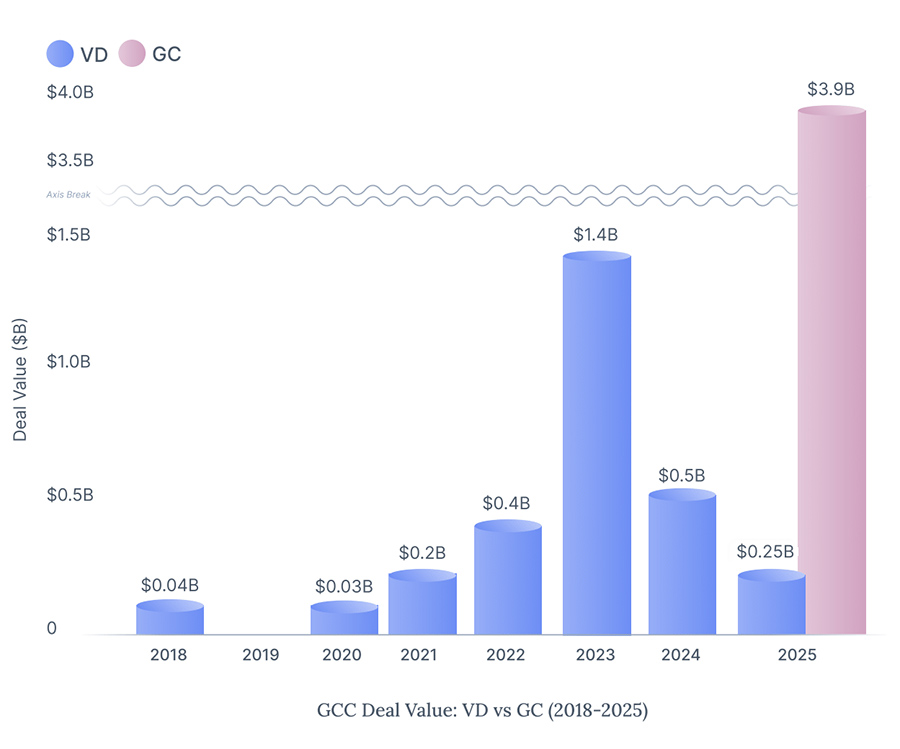
The study from Stride Ventures found that when it comes to financing, startups and scaleups in the GCC (much) more often than in other markets turn to private debt (either venture debt and/or growth credit). In 2025, private debt accounted for 56% of the total private growth capital market, or $4.1 billion of the approximately $7.4 billion market total.
In countries such as the UK, US, or India, the share of venture capital is significantly higher, highlight the authors. This reflects the region’s distinctive financing model, where scale-up funding is increasingly delivered through structured, asset-backed credit channels rather than traditional sponsor-led growth equity.
Source: Stride Ventures
“The strong growth of private debt reflects the rising use of non-dilutive capital to support expansion, acquisitions, lending-book growth, and platform scale in the GCC region,” say the authors in their report.
“The rise of private debt across the GCC is closely tied to sovereign-backed capital, regulatory enablement, fintech expansion, and policy-led scale-up acceleration, which have created conditions where large-ticket structured credit transactions are viable earlier in company lifecycles.”
“Regional financial institutions, including the Public Investment Fund, Jada Fund of Funds, and Sanabil Investments in Saudi Arabia, alongside the UAE’s Mubadala and Abu Dhabi Investment Authority, have supported the expansion of the region’s startup and growth capital ecosystem.”
For comparison purposes, the market for growth capital in the segment above startups and scaleups – private equity – is estimated to be worth around $8 billion to $9 billion annually. This segment is, according to previous research from Bain & Company, dominated by sovereign wealth funds such as the Abu Dhabi Investment Authority, the Public Investment Fund, and the Mubadala Investment Company, alongside institutional capital players.
“Unlike more mature ecosystems where financing often follows a staged progression, the GCC is witnessing parallel deployment of equity and credit, with structured debt integrated earlier in the scaling journey, often from Series A through to pre-IPO,” reads the report.
Source: Stride Ventures
Fintech the market’s anchor
Across private debt transactions, fintech accounts for approximately 95% of total venture debt and growth credit deployment, representing $3.9 billion in cumulative deal value.
“The sectoral distribution of private debt in the GCC underscores a key structural feature of the region’s entrepreneurial financing ecosystem: rapidly scaling venture-backed fintech platforms are accessing institutional credit earlier in their growth cycle, often bypassing the traditional private equity leverage stage seen in more mature global markets,” says the report from Stride Ventures.
How important fintechs are to the region’s startup and scaleup scene was previously also highlighted in a McKinsey & Company report, which found that the sector’s dominance could continue to expand significantly in the coming years.
Source: Stride Ventures
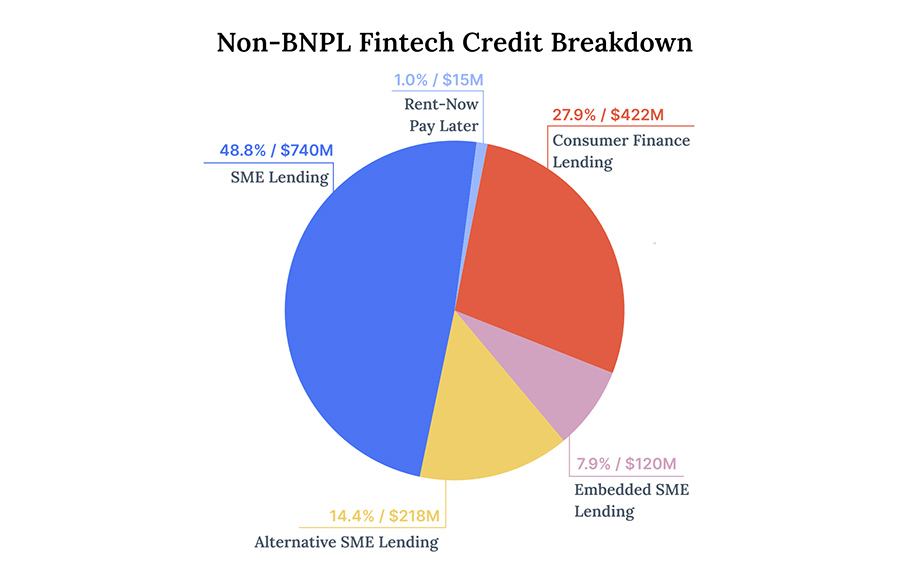
Stride Ventures meanwhile found that excluding BNPL, SME lending platforms represent the largest category of fintech credit deployment. Such platforms typically extend credit to small businesses and rely on warehouse funding or structured facilities to scale their loan books. Consumer lending platforms represent the second-largest segment, reflecting growing demand for digital credit products across GCC markets.
The company that crunched the numbers, Stride Ventures, is a global venture debt and growth credit platform with offices across the GCC and Asia. In the region, the firm is known to have business relationships with ADGM Fund, PIF’s Jada Fund of Funds, and SAB Invest.
Source link