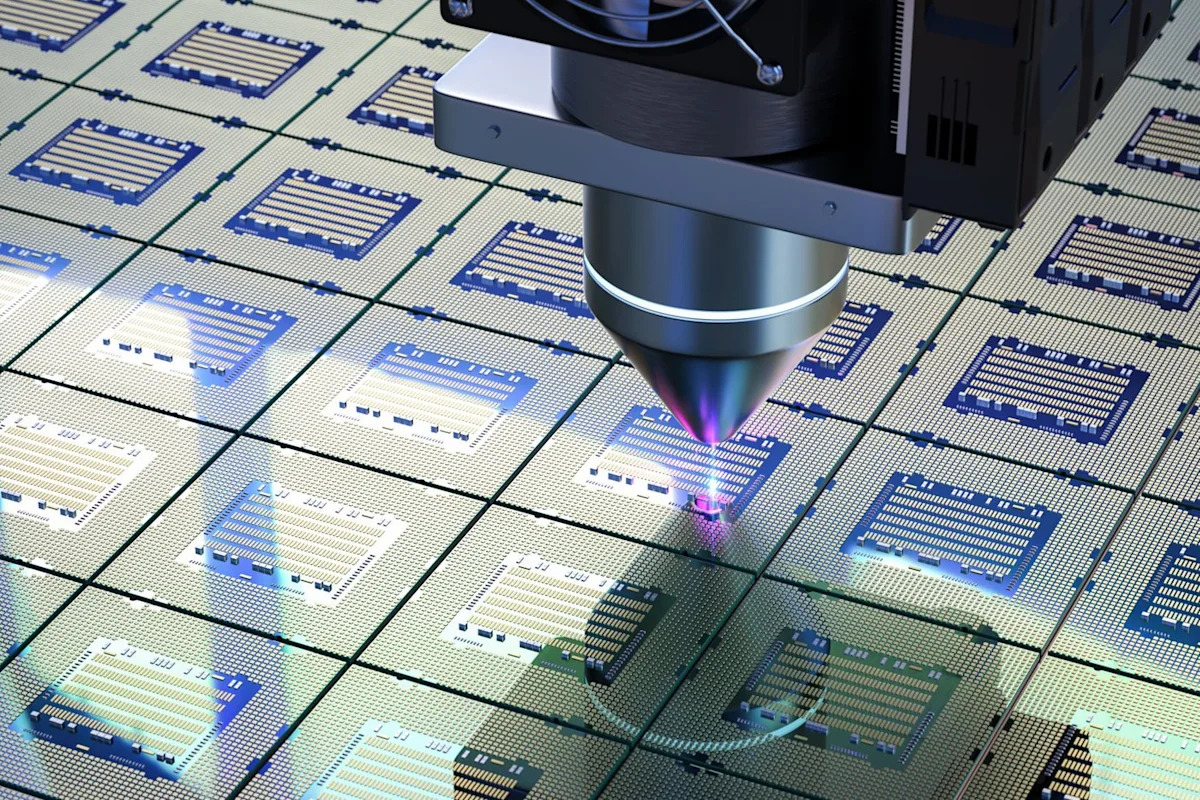
For years, the technology industry’s been working to extract enough performance from silicon to make modern-day artificial intelligence (AI) possible. Now that it’s done so, it’s using that very same AI to discover new materials for a future generation of computer chips.
That’s the big takeaway from the recent fundraising done by start-up CuspAI, anyway. It raised $450 million — valuing the company at $2.6 billion — from a handful of private investors, including Amazon (NASDAQ: AMZN) founder Jeff Bezos’ private venture fund Bezos Expeditions (which also owns Blue Origin, The Washington Post, and more). Chipmakers Nvidia (NASDAQ: NVDA) and Advanced Micro Devices (NASDAQ: AMD) are also developmental partners, along with Facebook parent Meta Platforms (NASDAQ: META).
Missed Nvidia in 2009? This Rare Signal Is Flashing Again. In 2009, a “Double Down” signal flashed for a little-known chipmaker called Nvidia. For the first time in years, that same “Total Conviction” signal is flashing for a company 1/100th the size of Nvidia. Continue »
At first blush, it doesn’t seem earth-shattering; most tech organizations are perpetually working on building a better (proverbial) mousetrap. This is one of those developments, however, worth putting on your radar even if it’s going to take a while to bear any fruit.

Opportunity knocks
It’s not a complicated company. In its infancy, CuspAI was working on cost-efficient carbon capture and more effective water purification processes, both of which start with superior materials designed and tested by AI. The rapid proliferation of AI, however, has also highlighted shortages in its supply chain.
For instance, the International Energy Agency predicts that data centers’ demand for gallium in 2030 could be 10% greater than today’s supply. In the meantime, China controls 99% of the planet’s refined gallium supply, leaving the rest of the world vulnerable to geopolitical tensions.
That being said, several other key elements needed by AI computing platforms, including iridium and tantalum, are also increasingly difficult — and costly — to obtain, limiting the industry’s continued growth.
CuspAI’s artificial intelligence platform can’t create these critical metals, to be clear, or for that matter, procure them. It can, however, virtually identify alternatives that would work just as well, or even develop ways to synthesize a material that, up until this point, has been impossible to synthesize. Work that would normally take years and millions of dollars to complete can now be done in months at a fraction of the cost.