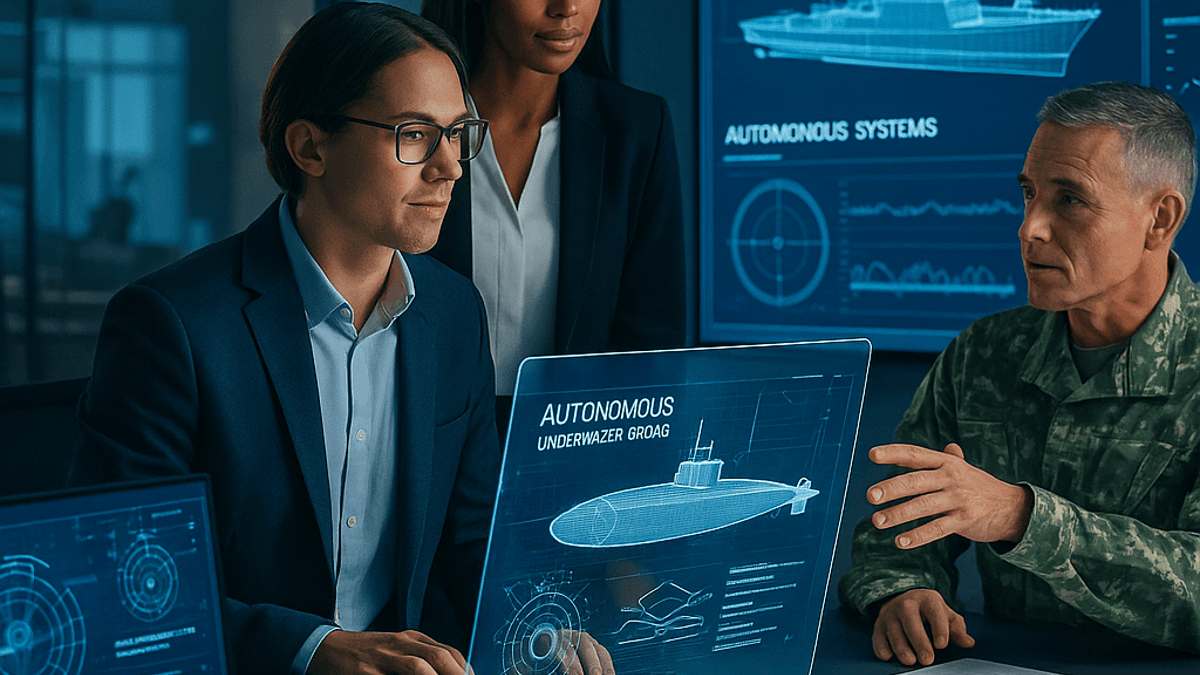
Defense tech startup Anduril just landed a massive $2.9 billion Navy submarine shipyard contract, coming just days after founder Palmer Luckey joined a Pentagon weapons group. The timing underscores how defense tech leaders are rapidly gaining influence in Washington as President Trump pushes military reindustrialization efforts forward.
The defense tech revolution just got a $2.9 billion validation. Anduril Industries, the autonomous weapons startup founded by Oculus creator Palmer Luckey, has secured a massive Navy submarine shipyard contract that positions the company as a serious challenger to traditional defense giants like Lockheed Martin and Raytheon.
The contract announcement comes with remarkable timing – just days after Luckey joined a Pentagon weapons advisory group, highlighting the revolving door between Silicon Valley defense innovators and Trump administration military leadership. This isn’t coincidence; it’s strategy.
Since launching in 2017, Anduril has been methodically building its defense portfolio around autonomous systems and AI-powered military technology. The company’s approach differs sharply from legacy contractors who’ve dominated Pentagon spending for decades. Where traditional firms rely on cost-plus contracts and lengthy development cycles, Anduril promises rapid prototyping and commercial-grade innovation.
The submarine shipyard contract represents Anduril’s largest known deal and signals a fundamental shift in how the Pentagon approaches military procurement. Under Trump’s military reindustrialization push, defense tech startups are gaining unprecedented access to major contracts previously reserved for established players.
Luckey’s recent Pentagon appointment adds another layer to this development. The Oculus founder, who sold his VR company to Facebook for $2 billion before pivoting to defense, now sits at the intersection of Silicon Valley innovation and Washington defense policy. His dual role as Anduril founder and Pentagon advisor creates a direct pipeline between startup innovation and military needs.
This contract win validates the broader defense tech thesis that’s been attracting billions in venture capital. Companies like Palantir, Shield AI, and Epirus have all secured major government contracts by promising faster development cycles and cutting-edge technology. The Pentagon, facing growing threats from China and Russia, increasingly views these startups as essential to maintaining military superiority.
For Anduril specifically, the submarine contract provides the scale and credibility needed to compete for even larger programs. The company’s autonomous defense systems have already proven effective in border security applications, but naval contracts represent a massive expansion of their addressable market.
The timing also reflects Trump’s broader economic nationalism agenda. By awarding major contracts to American tech innovators rather than relying solely on traditional defense contractors, the administration signals its commitment to rebuilding domestic military industrial capacity through private sector innovation.
Investors are taking notice. Defense tech funding reached record levels in recent quarters as venture firms recognize the massive government spending opportunity. Anduril’s contract win will likely accelerate this trend, proving that startups can capture meaningful market share from established players.
What makes this particularly significant is the submarine focus. Naval shipbuilding represents one of America’s most critical defense capabilities, especially as China rapidly expands its naval fleet. By bringing startup innovation to submarine production, the Navy acknowledges that traditional approaches may not be sufficient for future threats.
Anduril’s $2.9 billion Navy contract marks a turning point where defense tech startups transition from promising disruptors to essential military partners. With Palmer Luckey now advising the Pentagon while leading one of its major contractors, the lines between Silicon Valley innovation and Washington defense policy are blurring in ways that could reshape American military procurement for years to come.