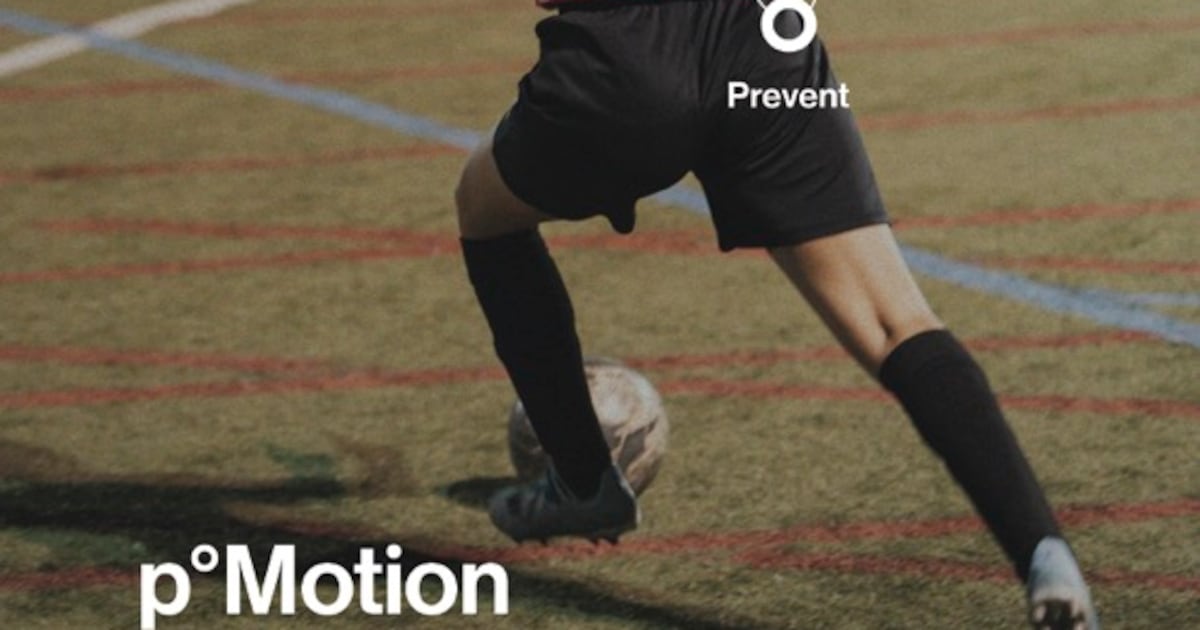
Movement intelligence platform pMotion, built on the expertise of longtime sports medicine practitioner Keith Pyne, is raising a Series A round to further scale its work with elite athletes to the youth and consumer markets.
Cobalt Capital led the seven-figure round with participation from WME Group, Nimble Ventures, Soul Ventures, Canaan Ventures and other strategic investors.
Pyne is a chiropractor and current medical advisor to the Dodgers and Lakers after previously serving as chairman of the Nationals’ medical board and working extensively in private practice. He has treated more than 2,000 professional athletes in his career.
pMotion uses a smartphone to analyze an athlete’s range of motion through a two-minute assessment and then provides feedback to help correct the root cause of an issue, which often originates somewhere else and causes detrimental compensations. Pyne said one pitcher he treated recently lost velocity and movement on his fastball while experiencing lower back pain, but the real issue was a muscle issue in his lower leg.
“Whenever you have dysfunctional range of motion along the kinetic chain, it breaks the system,” Pyne said. “Somewhere you’re breaking neurologically, and you have to change something to get the same process. So you create dysfunctional biomechanics over time.”
When Pyne began working with the Nationals before the 2016 season, they had the second-most injuries in baseball, but 89% were non-traumatic, meaning they were soft tissue ailments that built over time. Those are more controllable, and despite fielding one of the sport’s oldest rosters, the 2019 Nationals had the second-fewest injuries and won a World Series.
“It’s hard to coach somebody that can’t move right,” Pyne said. “Our job is to give you a blank canvas as a coach so that you can paint the perfect swing on top or the perfect throwing mechanics.”
Pyne has an extensive background in baseball, but pMotion is intended for athletes in all sports. He said the patented technology was built while considering neurology, physics and anatomy. The app uses machine learning and AI and is said to be able to identify injury risk up to 18 months before it fully develops and sidelines the athlete.
“We measure each node,” pMotion CEO Jason Woo said. “If we think about our entire body like an electrical distribution pattern, energy is created, and it needs to be distributed. Oftentimes, when it’s unequally or unevenly distributed, that’s where injuries occur.”
Woo was previously president of Next Generation Esports and then held the same role with Evite before joining pMotion in October 2023. He and Pyne indicated that the startup was on the verge of finalizing major youth sports partnerships that will lead to onboarding more than a million young athletes over the next few years. Broader access to the app is expected in 2027.
“While we are going to market in sport — given who many of our investors are, given the pedigree of Dr. Pyne and all the championships they’ve won using this methodology — our broader goal is to be able to take our software platform and make it as accessible as anyone who wants one who has a mobile phone,” Woo said.