The lacrosse ball Dan Soviero began developing in high school eventually became a couple-million-dollar business and the foundation for Signature Athletics. Twelve years later, it is the smallest piece of a company that began moving beyond lacrosse about six years ago with Signature Locker, a print-on-demand uniform and online team-store business built on the company’s AthleTech platform, which could follow Signature into soccer, baseball or almost any other sport.
That put Signature inside the working life of program directors who might already spend 40 to 60 hours a week setting up fields, running practices and working games before going home to handle the business behind them. Uniforms were one place to start, particularly when an order went wrong and the person running the league became the middleman between an angry parent and a vendor.
“You’re handing them out, getting yelled at by the parents because 10% of the orders are wrong when you don’t even have control,” Soviero said, describing a typical vendor arrangement. “Now you have to email the vendor. They have to email the factory. The factory has to — it’s just this horrible loop.”
Signature Locker instead sends customers with problems directly to Signature’s service team, which Soviero said responds within five minutes. Signature says it delivers uniforms in an average of 13 days with a 99.92% order success rate, based on an internal scorecard that tracks 10 error codes across orders, including printing defects, late orders and shipping errors.
Taking uniforms off a director’s plate left plenty more. Some programs deal with 12 to 15 vendors, and Signature began taking over more of that back-office work through its team stores, administrative staff and sponsorship operation. Eventually, it began buying some of the organizations themselves, completing 10 acquisitions so far, according to Soviero, while giving their operators the infrastructure to add age groups, skill levels or sports.
“We’re asking these people to run a small business and open up a laptop and spend another 20,” Soviero said. “Maybe they have 10, 20 hours left in the tank to do what takes most entrepreneurs 80 to 100 hours a week. It’s just not a good design.”
The model now reaches flag football, soccer, field hockey, volleyball, softball and baseball, with roughly 30 full-time employees and another 200 part-time coaches and program workers supporting a business that grew from about $4 million in revenue in 2024 to more than $10 million in 2025. Soviero expects Signature to exceed $15 million this year before additional acquisitions, while another 20 to 30 privately sourced opportunities reach the company each month from operators looking for services or a potential buyer.
Soviero could no longer carry all of that himself. COO and Chief Technology Officer Andy Perry built the company’s technology platform, AthleTech, which runs Signature Locker and the rest of the operation; Soviero’s wife, Madeline Soviero, who directs Signature Sports Camps and serves as COO of the Signature Foundation and Signature Sports Brands, built much of the sports-brands operation; and Director of Marketing Kylee Renouf helped establish the media business. Several employees have stayed seven or eight years, through COVID and Signature’s transformation from a lacrosse-ball company into a business spanning technology, media and sports operations.
“I think any entrepreneur that builds something from the ground up is more than likely their biggest enemy, and they’re the ones that are going to get in the way at every single growth inflection point,” Soviero said. “If you’re not ready to grow and really focus on your limitations and your weaknesses and really, really work on it and build the team around you that can realize a vision like this, it just is not possible without the people.”
More people and more businesses have given Signature additional ways to attack the problem Soviero puts at the center of the company: getting more children into sports and making it less expensive to keep them there. He wants to cut the cost in half by 2030, and some of the money could come from something youth leagues have sold for generations.
The neighborhood pizza shop or insurance agency might write a check to put its name on a jersey, sometimes because the owner’s child plays in the program, but Soviero says those arrangements are becoming less common and often give the sponsor little beyond the shirt. L.E.K. Consulting estimated the U.S. youth-sports market at roughly $40 billion a year in February 2026, while Soviero estimates it spans about 150,000 programs. He believes sponsorship could become a market worth more than $1 billion if somebody had the time to sell it and give businesses more for their money.
“There’s no, ‘We’re going to have a season kickoff at the pizza parlor and the end-of-season team awards at the pizza parlor for every team,’” Soviero said. “Those are the sorts of curated sponsorships that we put together.”
Signature can carry that pizza parlor from the jersey into events and social media, while larger companies can buy across programs and facility naming rights. Some of the money can then support scholarships, free try-sport days and recreational programs rather than leaving registration fees to carry the entire cost, although the company has not provided figures showing how much the model has reduced what families actually pay.
Selling more of those packages required more places to put sponsors. Signature bought the Sport Parent Survival Guide and built publications around it for program directors, investors and travel-sports families, creating a five-newsletter network that Soviero calls the “Morning Brew of youth sports.” He says it reaches about 370,000 subscribers, plus partner publications, with open rates above 50%, giving Signature another place to sell the same sponsor before carrying it onto social media, jerseys, events, facility names or even material packed with an apparel shipment.
The media division generated more than $1 million in sponsorship revenue during its first 12 months, while Signature’s broader media-rights network produces more than 100 million impressions annually across on-field, email, social and video, with 1 billion projected over three years. The network contains what Soviero estimates is about $100 million in sponsorship and advertising inventory at rate-card value.
Signature is now raising as much as $4.28 million through SAFEs, according to a Form D filed Aug. 20 with the Securities and Exchange Commission, giving investors the right to receive equity later rather than issuing shares immediately. With a $100,000 minimum investment, Soviero said the money will finance additional acquisitions and a dedicated sponsorship sales operation around the media business, with several deals already in late-stage discussions when he was interviewed.
Some of those deals involve buying the organization from the same person who coaches the team, runs the league and knows the parents from weekends on the field. Signature allows sellers to take part of their payment as ownership in the parent company rather than cashing out entirely, keeping them invested for roughly another five years while somebody else develops into what Soviero calls “the succession plan to the person who’s going to take over being the community leader when they’re done.” He did not describe a standard transition or role for sellers after closing.
Soviero has looked for the same patience from Signature’s own investors. Private-equity and venture-capital firms have offered the company money, he said, but some institutional investors enter deals expecting to sell or otherwise generate a return within several years. Signature has instead raised largely from wealthy individuals, including former operators who have sold companies themselves, although Soviero did not detail how much acquisition spending comes from that capital compared with company cash, seller financing or other sources.
“We could look like we’re a good fit for that. And we could get the money,” Soviero said. “But if it’s not the right capital stack for where you’re going, for where the mission is for the company, it’s going to lead to misalignment at some point.”
Soviero eventually wants to take Signature outside the United States without building toward a required sale, finding capital that can stay with the company beyond his own tenure and eventually somebody capable of taking it farther.
“I’m not going to live forever,” he said. “I’ve got a good 30 or 40 years in the tank, I think. But I want to find somebody better.”
Getting Off the Field
Finding somebody better has also meant deciding which work Soviero should stop doing himself. He stepped away from regular coaching about 18 months ago after roughly a decade on the field, although occasional events still pull him back — sometimes after Maddie gets him moving before sunrise.
“My wife is a big believer that we should be doing that every single day,” Soviero said. “So I’m constantly reminded by waking up at five, six and traveling across the state to do a free try-sport day.”
“When you see kids go out for the first time and experience a sport, there’s nothing like it,” he said. “You can’t think about yourself. You’re thinking about everybody else on the field.”
Madeline Soviero had spent years on those fields before the two met at the University of Tampa, working across what Dan estimates was roughly a dozen Tampa-area lacrosse programs, helping build three from the ground up and serving as a league president before building much of Signature Sports Brands. She also founded Signature Sports Camps, which now brings about 500 children a year to five-day, four-night overnight sports camps at Eckerd College in St. Petersburg, Keuka College in New York, St. Andrew’s-Sewanee in Tennessee and the White Mountains in New Hampshire.
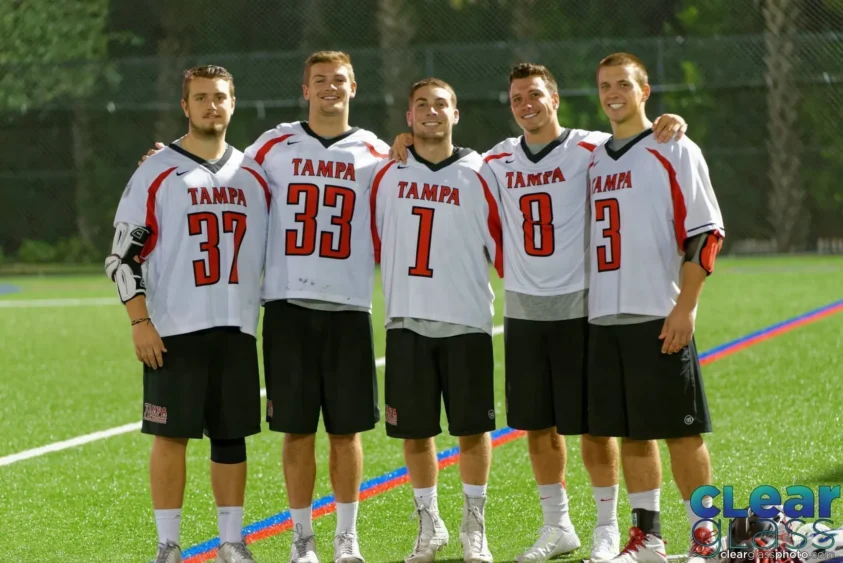
“The thesis was, let’s build the camps that we all wish we went to as kids,” Soviero said. “It’s really geared towards kids falling in love with their sport.”
Dan and Maddie did not always agree on how to get them there. Dan, the more stubborn coach by his own description, tended to push harder and insist on doing things his way; Maddie spent years showing him how differently that intensity could land with a child still deciding whether the sport was fun.
“I’m like a pain-in-the-ass coach,” Soviero said. “I’ve got to do it my way.”
“There’s a way to do it that’s super fun and productive for kids,” he said. “And then there’s a way to do it where it’s intimidating and it’s not fun. And that line is very coachable. It’s very teachable.”
Put a beginner into an AAU basketball practice where everyone else can already dribble and shoot, Soviero says, and the child can feel behind immediately; if the parents never played, they may be just as reluctant to volunteer. Lower the rims, run small-sided games, and bring the parents onto the court, and it matters considerably less that the ball spends half the game on the floor.
Signature has brought that approach into lacrosse through its Carolina operation, including Carolina Lacrosse Association, Team Carolina, Style Lacrosse Club and Carolina Miners, adding 3v3, volunteer-led recreational play alongside free Try Sport Days, scholarships and sponsorships. One Charlotte program grew from roughly 500 children to 1,000 and eventually close to 2,000 over about two years as Signature expanded recreational play, according to Soviero, who said about 80% were first-, second- or third-year players.
As participation grew, Ricky Reyes, who leads Carolina Sports Association, began handing some of the administrative work he had carried alongside the Carolina sports operation to Signature’s larger back office. The hours he got back went into the community instead, giving Soviero a comparison with the years he had measured his own contribution in practices coached, events worked and children reached personally.
“Seeing the work come off of his plate and how much more he’s able to bring to the community — that level of impact is way greater than me going out to a free Try Sports day,” Soviero said. “And it’s a really hard thing to say and a really hard thing to accept.”
Soviero still makes one trip each year through the Signature Foundation, the company’s 501(c)(3) nonprofit, to Jinja, Uganda, where a program built with Andrew Mamawi of Kids Lacrosse Africa has 400 children playing lacrosse year-round, including former participants who have become coaches themselves.
A reading club and volunteer house have grown around the program, and 15 to 20 coaches volunteer to make the trip each year, while Signature works on a broader question that follows the company from Uganda back into its U.S. programs: what changes when money goes into a youth-sports community, and how much depends on what the adults do once the children arrive?
Sometimes the difference is no larger than a referee stopping to explain a penalty rather than simply making the call, or a parent learning to praise a good save or pass instead of screaming about a mistake.
“It’s just misdirected passion,” Soviero said. “They mean well, but there are easy things we could be doing to help these parents and programs.”
![[2026 The CEO of Jeju National University Early-Stage Startup Package] S2E TECH, Revolutionizing Youth Sports with a Proprietary Data-Driven Growth Management Platform](https://newsx.io/wp-content/uploads/2026/09/1788492246_2026-The-CEO-of-Jeju-National-University-Early-Stage-Startup-Package.jpg)