A San Francisco startup that has been building in secret for the past two years emerged from stealth on Tuesday with a five-year research agreement with the Air Force Research Laboratory, putting it inside the government complex that runs the Space Force’s primary commercial technology pipeline.
Lyra Systems signed a Cooperative Research and Development Agreement with AFRL’s SpaceWERX division, the Space Force’s Los Angeles-based innovation arm, to develop and test an AI platform designed to do something no prior defense acquisition tool has attempted: automate the physics of deciding whether a commercial component can actually survive on a military spacecraft.
The company’s founder and CEO, Tanmayi Sai, says she built Lyra around a diagnosis that runs counter to years of Pentagon reform effort. “Funding is not the bottleneck,” she said in the announcement. “The bottleneck is the integration work.”
The Real Problem Is Engineering Logistics, Not Money
Since at least the mid-2000s, the standard explanation for why promising commercial technology never makes it onto military spacecraft has been the “valley of death” — the gap between a startup’s last government research grant and a program of record large enough to justify a production contract. The conventional fix has been more bridge funding: SpaceWERX’s own STRATFI and TACFI programs match SBIR funds with government and venture capital to help startups cross it.
Sai’s platform is premised on a different diagnosis. Even startups that clear the funding gap, she argues, face a second, harder barrier: they cannot demonstrate that their hardware will actually work in concert with a specific spacecraft’s mass budget, power draw, thermal limits, radio frequency environment, structural load path, and software interfaces. That analysis — checking whether a candidate component is physically and electrically compatible with everything else already on board — currently requires senior systems engineers with specific mission knowledge, working largely from documents, emails, and institutional memory. It is slow, expensive, and dependent on people who are both scarce and in demand.
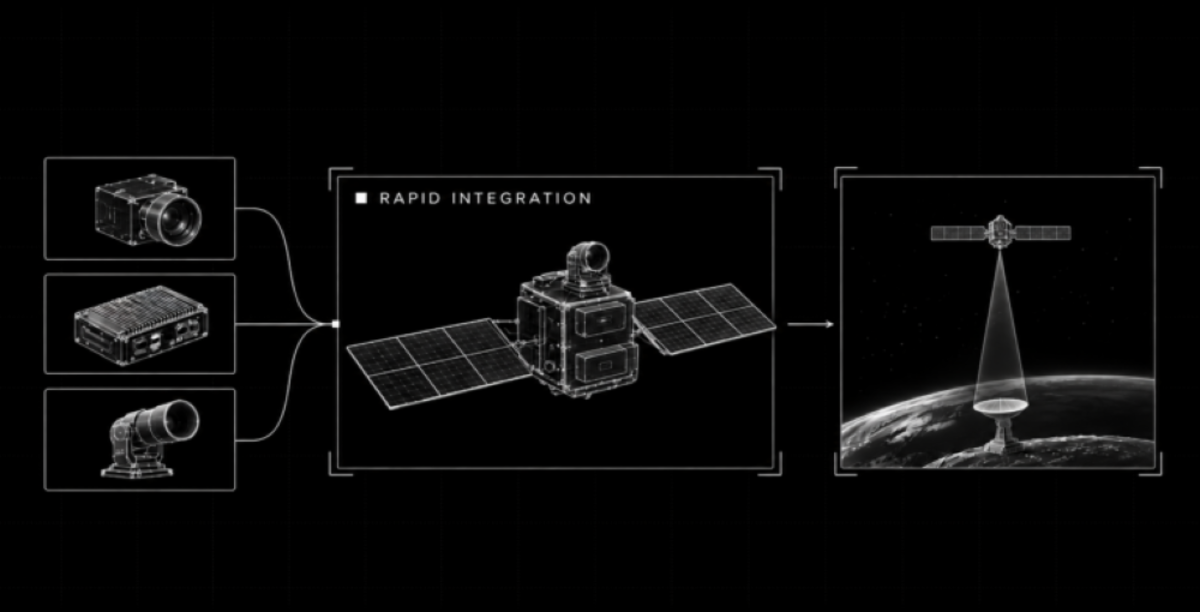
Lyra’s platform replaces that manual constraint-checking with what the company describes as physics-based calculations: structured databases of component specifications and historical mission architectures, combined with AI-driven constraint solvers that can automatically determine whether a given component satisfies a given spacecraft’s integration requirements. The platform also scans the commercial and government component marketplace to actively surface technologies that meet DoD mission requirement sets — a function that, if it works as described, would invert the acquisition relationship. Instead of a startup navigating the bureaucracy hoping to be discovered, the system would find the startup.
The company said it encodes domain expert knowledge and “proven prior work” into the platform so that future missions build on validated integration solutions rather than reinventing the analysis each time.
What the Numbers Actually Show
The pace Lyra is trying to disrupt is not an abstraction. A GAO weapon systems assessment released this past July found that major defense-acquisition programs now take an average of more than 12 years to deliver a capability — and noted that the figure will likely increase. Meanwhile, by the Space Force’s own acknowledgment, adversaries can build and field systems with new technology in roughly three to four years.
The gap has been visible in internal SpaceWERX analysis as well. Marcus Bracey, a senior engineer at SpaceWERX, co-authored a 2025 Naval Postgraduate School paper through the Acquisition Research Program, in which he and colleagues from The Aerospace Corporation concluded that the valley of death persists not simply because funding runs out, but because companies exit SBIR Phase II without the integration credibility needed to compete for programs of record. “What that tells us is we aren’t preparing our Phase II companies well enough to compete for program of record activities,” SpaceWERX Ventures chief Maj. Jareth Lamb told Payload Space separately. Bracey’s presence as a co-signer on Lyra’s CRADA signals that this internal diagnosis has matured into a formal institutional bet.
SpaceWERX has awarded more than 1,106 contracts worth over $897 million since aligning under AFRL in August 2021, operating on a $457 million annual budget with roughly 40 personnel in Los Angeles.
The Flight Heritage Trap
Underlying Sai’s integration-bottleneck argument is a structural problem that has frustrated defense-tech investors and acquisition reformers for years: the circular requirement for flight heritage.
To be selected for a military space demonstration mission, a component generally needs to have flown before. But a component that has not yet been selected for a demonstration mission cannot get flight heritage. The result is a credentialing trap in which the proven record needed to enter the acquisition conversation can only be built by already being inside it.
Lyra’s platform is positioned as a way out of that loop: if the AI can demonstrate — before hardware is committed — that a commercial component satisfies every integration constraint for a specific mission, it creates a physics-grounded substitute for the institutional trust that flight heritage conveys. That substitution, if SpaceWERX and eventual prime contractors accept it, would allow nontraditional vendors to enter the conversation earlier than the current system allows.
What Comes Next
Lyra said it plans to begin vendor calls in the coming months to identify commercial technologies for a first in-space demonstration mission. The five-year CRADA gives the company access to AFRL facilities, data, and personnel without requiring a traditional SBIR grant proposal cycle — a path around the Phase I/II/III gate structure that the valley-of-death literature has criticized as a primary contributor to timeline drag.
The platform remains unproven in production, and Lyra is a company of fewer than 10 employees that has not disclosed investors or financial backing. The physics-based constraint calculations depend on the accuracy of manufacturer-supplied component specifications — a known weak link in the defense supply chain. Whether SpaceWERX will certify the platform’s output as a sufficient substitute for flight heritage, or treat it as one input among many in a traditional evaluation, has not been announced.
What has been announced is that the institution responsible for getting commercial technology onto Space Force spacecraft has formally agreed that the bottleneck Lyra is targeting is worth the five years to find out.
Frequently Asked Questions
What is SpaceWERX?
SpaceWERX is the innovation arm of the U.S. Space Force and a division within AFWERX, based in Los Angeles. Aligned under the Air Force Research Laboratory in August 2021, SpaceWERX connects technology developers with Space Force acquisition programs through funding vehicles including the Strategic Funding Increase (STRATFI) and Tactical Funding Increase (TACFI) programs. Since its alignment under AFRL, SpaceWERX has awarded more than 1,106 contracts worth over $897 million, operating on a $457 million annual budget with approximately 40 personnel.
What is the valley of death in defense contracting?
The valley of death describes the funding gap between a startup’s last government research grant — typically the end of a Small Business Innovation Research (SBIR) Phase II award — and a program of record large enough to justify a production contract. Companies that cannot bridge this gap typically exit the acquisition pipeline even if their technology is technically sound. SpaceWERX’s STRATFI and TACFI programs were designed to bridge this gap with matching funding, but Lyra Systems argues the deeper barrier is not funding but integration credibility: the inability to demonstrate that a component will actually work within the constraints of a specific mission.
What is flight heritage in aerospace?
Flight heritage is an industry term for a documented record of a technology operating successfully in orbit. Prime contractors and program managers typically require flight heritage before selecting a component for a new mission, creating a circular barrier: a component cannot be chosen for a demonstration mission without having already flown, but cannot build a flight record without being selected for a mission. Lyra Systems is positioning its AI platform as a physics-based substitute for flight heritage — demonstrating through calculation that a component can meet every integration constraint before hardware is committed.
How long does military space acquisition typically take?
According to a July 2026 report by the Government Accountability Office, major defense acquisition programs now take an average of more than 12 years to deliver a capability to warfighters — a figure the report said is likely to increase. The Space Force has acknowledged that adversaries can build and field comparable systems in roughly three to four years.
What is a Cooperative Research and Development Agreement (CRADA)?
A Cooperative Research and Development Agreement, or CRADA, is a legal mechanism under federal law that allows a government laboratory to collaborate with a non-federal entity without a traditional procurement contract. Under a CRADA, no cash flows from the government to the company; instead, both parties share facilities, data, personnel, and expertise. For a startup, a CRADA with a federal lab like AFRL bypasses the standard SBIR Phase I/II/III proposal cycle, providing access to government resources and personnel on a faster, more flexible basis.