Bangladesh’s EV revolution does not begin with a shiny showroom launch or a futuristic concept car. It begins somewhere far less glamorous, at a highway tea stop in Comilla, beside a filling station in Kalsi, or inside a cramped room in Mohammadpur where a group of engineering students once dreamed about race cars, batteries, and the future of mobility.
That group would eventually become Crack Platoon Charging Solution Ltd — one of Bangladesh’s earliest and most ambitious EV charging infrastructure startups.
And if their founders are right, the company is not really in the charger business.

When asked about the meaning behind the name, Crack Platoon’s Executive Director Engineer Sumit Kumar Karmoker said it reflects the company’s core values and inspiration drawn from the legacy of the “children of the sun of 1971.” He explained that it is about honouring the generation who sacrificed their lives during the Liberation War of Bangladesh, preserving their memory across generations, and keeping their courage and selflessness alive as a source of inspiration for the nation.
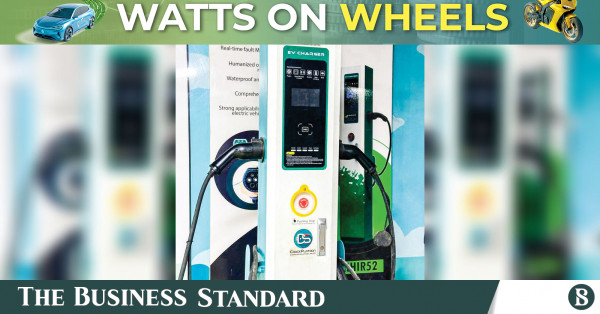
Today, Crack Platoon operates a growing network of EV charging stations across Bangladesh through its platform “ChargeEasy,” an app that lets users locate nearby chargers, navigate to them, monitor charging sessions, and make payments digitally.
He added that they are in the business of removing fear.
Because in Bangladesh, the biggest barrier to electric vehicles is not price. It is not technology. It is anxiety.
“What if I run out of charge?”
That single question hangs over Bangladesh’s EV market like a storm cloud.
The founders of Crack Platoon know this intimately because they are not corporate executives who suddenly jumped into the EV trend after seeing global headlines. They are car enthusiasts, engineers, Formula Student competitors, and hardcore automotive nerds who spent years building race cars while studying at Rajshahi University of Engineering & Technology.
Long before EVs became fashionable in Bangladesh, they were already obsessed with them.
“We used to build Formula Student cars ourselves,” one founder recalled during a long, free-flowing conversation. “Back then we had to source parts from scrapyards, aftermarket suppliers, whatever we could find.”
The team participated in international engineering competitions, including Formula Student Japan, where they interacted with global automotive companies and engineering communities. They learned how the future automotive industry was evolving long before Bangladesh’s market even began thinking about EVs.
Then came the realization.
Bangladesh could import electric vehicles. Luxury dealerships could bring in flashy Chinese SUVs and premium German EVs. But without charging infrastructure, mass adoption would remain impossible.
And so the founders made a decision that sounds almost backwards at first glance: instead of building electric vehicles, they would build the roads beneath the future.
Or more accurately, the chargers beside those roads.
Today, Crack Platoon operates a growing network of EV charging stations across Bangladesh through its platform “ChargeEasy,” an app that lets users locate nearby chargers, navigate to them, monitor charging sessions, and make payments digitally.
The company’s first major commercial charging station was launched in Dhaka Cantonment in collaboration with Dhaka Electric Supply Company Limited and Sumatra Filling Station.
From there, the network slowly expanded outward like veins spreading across the map — Comilla, Chattogram, Cox’s Bazar, Sylhet, Bogura, Rajshahi, and Khulna.
But Crack Platoon’s strategy is not random.
The founders believe Bangladesh’s EV transformation will happen through highways first, not cities.
Their logic is surprisingly simple.
“If you own an EV, you already charge at home,” one founder explained. “The real problem starts when you want to travel.”
That insight shaped the company’s expansion model. Instead of flooding Dhaka with chargers first, they focused on highways — particularly the Dhaka–Chattogram route, the country’s most important corridor.
One of their earliest highway charging stations was set up at Miami Leisure Spot in Comilla, which the company described as Bangladesh’s first highway restaurant charging station.
The idea is rooted in human behavior.
Drivers already stop for tea, food, or washroom breaks during long trips. A modern DC fast charger can replenish most EV batteries from around 30% to 80% in roughly 20 to 30 minutes — almost exactly the amount of time people naturally spend during highway breaks anyway.
And that changes everything.
Suddenly, an EV no longer feels like a city toy.
It becomes a real car.
The founders often describe Bangladesh’s EV problem as a “chicken-and-egg situation.”
People do not buy EVs because chargers are limited.
But investors hesitate to build chargers because there are not enough EVs.
So Crack Platoon decided to absorb part of that early pain themselves.
Rather than waiting for the market to mature naturally, they began pushing infrastructure into existence.
That means investing in charging stations even when short-term returns remain uncertain.
“Many people still don’t invest in charging because the number of EVs is limited,” one founder admitted. “But if the infrastructure never comes, then EV adoption also won’t come.”
The company’s ambitions extend far beyond simple charging poles.
What they are trying to build resembles a full mobility ecosystem.
Their ChargeEasy app is central to that vision.
The founders compare it to how telecom operators once built networks around phones and SIM cards. In their eyes, chargers are just one layer of the business. The real long-term value lies in the software, data, payment systems, energy management, and nationwide integration.
At some point, they believe, multiple charger brands and operators across Bangladesh may eventually connect into unified charging networks — much like mobile operators sharing digital ecosystems today.
That future may sound distant, but signs of momentum are already visible.
Crack Platoon has partnered with several automotive brands, including Mercedes-Benz, MG and GAC.
According to reports, the company aims to deploy around 100 chargers, including high-speed DC units, as Bangladesh’s EV ecosystem expands.
But infrastructure is only one side of the story. The other side is energy.
And this is where the conversation becomes more philosophical.
The founders repeatedly emphasized that EVs are not merely about replacing petrol cars with battery cars. To them, the bigger question is where the electricity itself comes from.
“If you burn fossil fuel to produce electricity and then use that electricity to run EVs, that’s still a question,” one founder explained.
This is why Crack Platoon is also exploring solar integration, hybrid inverters, and energy storage systems.
Some future charging stations may combine grid electricity, solar power, and battery storage together. That would allow stations to continue operating during blackouts or grid failures — an important concern in a country vulnerable to natural disasters and infrastructure disruptions.
The economics also matter.
The founders argue that EVs are inherently more efficient than combustion-engine vehicles.
A traditional internal combustion engine wastes huge amounts of energy through heat and mechanical inefficiency, while EVs convert far more of their energy into actual motion.
They believe Bangladesh, a fuel-import-dependent economy, eventually has little choice but to move toward electrification.
And globally, the shift is already accelerating.
The founders pointed out that at recent Dhaka auto expos, many brands no longer showcased pure internal combustion engine vehicles without at least hybrid technology attached to them.
Even companies historically cautious about EVs are adapting.
The transition, they say, is inevitable.
They often compare today’s EV moment to the historical transition from horses to automobiles.
Back then, people distrusted cars too.
Horses felt reliable. Cars seemed strange, loud, and complicated.
Yet within a few decades, cities transformed entirely.
The founders believe Bangladesh is standing at a similar inflection point today.
And perhaps the most interesting thing about Crack Platoon is that beneath all the business plans, partnerships, charging maps, and policy discussions, the company still feels like a group of car guys chasing a dream.
During the conversation, the founders jumped effortlessly between battery chemistry, racing cars, Tesla collaborations, government policies, Formula Student memories, and highway tea breaks.
At one point, they even joked about how people still call EVs “battery cars” in Facebook comment sections.
But behind the jokes lies a deeper understanding of how technological change actually happens.
People do not adopt the future because of white papers or government speeches.
They adopt it when the future becomes convenient.
When range anxiety disappears.
When charging becomes as normal as stopping for tea.
And somewhere on a Bangladeshi highway, beside a charger humming quietly under the evening lights, that future may already be starting.