As global healthcare systems race to embrace next-generation medical technologies, Hong Kong is positioning itself as an emerging powerhouse for life sciences innovation.
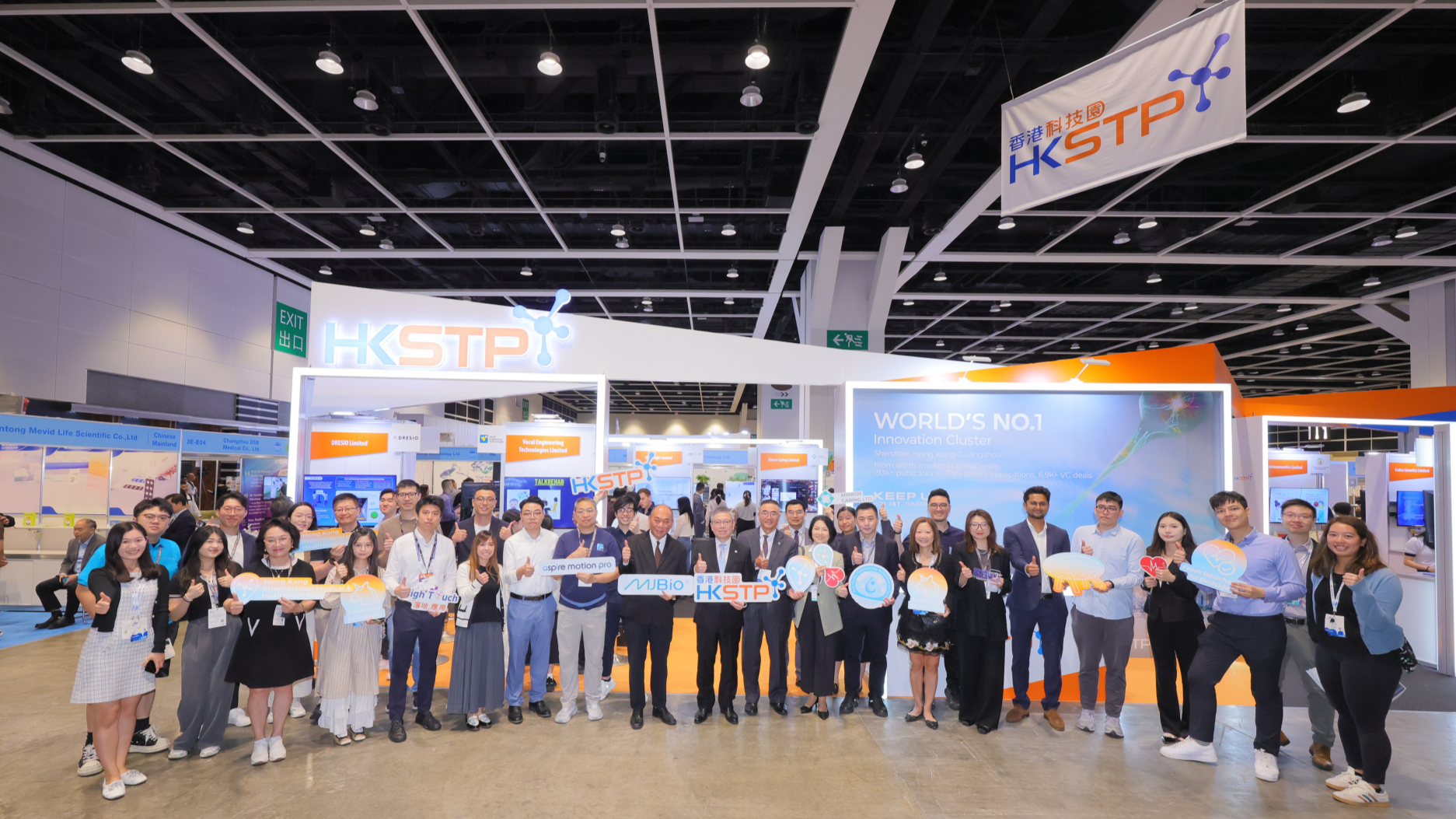
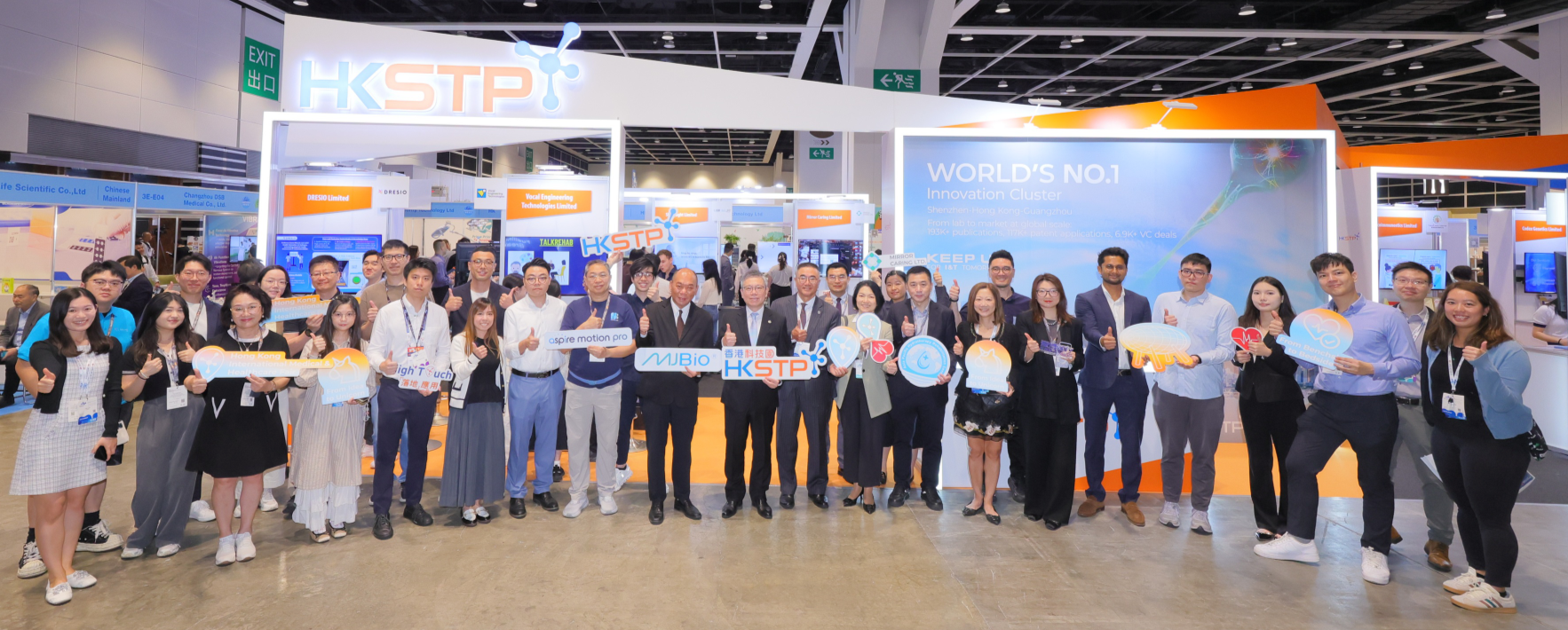
Increasingly, that ambition is being tested not in policy papers, but in operating rooms, clinical trials and drug pipelines. At the Hong Kong International Medical and Healthcare Fair (Medical Fair) and the Asia Summit on Global Health (ASGH)— the special administrative region’s dual flagship events — a new generation of 38 life and health tech companies, supported by the Hong Kong Science and Technology Parks Corporation (HKSTP), showcased their locally developed innovations, which are making a real clinical impact and achieving global commercial breakthroughs.
Among them, 10 companies, including Agilis Robotics, leveraged ASGH as a launchpad to attract investor attention. The Hong Kong-based startup reached a milestone in surgical innovation with the successful completion of the world’s first robotic-assisted en bloc resection of a bladder tumor (ERBT) in collaboration with the Chinese University of Hong Kong in December 2024. Following 10 trials at the Prince of Wales Hospital last year, the company is advancing to a larger cohort of 20 to 30 cases this year. Clinical activities in the Chinese mainland are on track to commence in the third quarter, says Joe Hui Ka-ming, co-founder and chief financial officer of Agilis Robotics.
Compared with conventional ERBT procedures with a cystoscope and a single cutting instrument from one direction, the company’s locally developed endoscopic surgical robotic system uses two highly flexible robotic arms that can simultaneously perform tissue manipulation and dissection in minimally invasive surgeries. The multidirectional movement capabilities allow surgeons to carry out more precise en bloc tumor resections with greater dexterity and control.
As a graduate of HKSTP’s Incu-Bio Program, a four-year incubation initiative designed to accelerate the growth of early-stage biomedical technology startups, Hui sees the funding and investor connections received from HKSTP as critical to de-risk the path from lab to market, and give the startup the breathing room to truly scale.
Another vital enabler for his company’s progress is the Hong Kong Exchanges and Clearing’s launching of Chapter 18A in 2018, which has made the city a prominent haven for ambitious biotech ventures.
“Chapter 18A has created a rare financing pathway for pre-revenue or pre-profit biotechnology companies, provided that clinical-development requirements are met,” Hui says. “This has helped attract sophisticated investors who are backing the science and future of our company before we book our first dollar of revenue.”
According to him, the startup has begun discussions with sponsors, with a road map to take it public in the next two to three years.
GenEditBio brought its groundbreaking gene-editing treatment to this year’s showcase events. The startup made a significant mark with the United States’ Food and Drug Administration clearing its investigational new drug application in January to initiate phase 1/2 clarity trial activities for its first-in-class in vivo genome-editing program for TGFBI corneal dystrophy, a genetic eye disease currently lacking effective therapies worldwide.
The company’s approach aims to permanently remove the toxic protein driving progressive corneal damage through a one-shot, standardized injection, potentially reducing dependence on repeated surgery or transplantation. Early clinical observations from six patients treated in collaboration with the Eye and ENT Hospital of Fudan University have so far shown favorable safety and preliminary signs of efficacy.
Zhu Tian, chief executive officer and co-founder of GenEditBio, says the core breakthrough lies in combining highly precise gene editing with a protein-based delivery system designed to minimize off-target risks. The next frontier, which will also be the startup’s pre-clinical focus this year, is vivo CAR-T therapy, with which it seeks to use targeted genome integration to address some of the safety, durability and scalability issues of existing cell therapy.
The bigger story unfolding, Zhu says, is a “paradigm shift” to vivo gene-editing from ex vivo that essentially transforms once highly personalized, high-cost therapies into affordable, accessible in-body “DNA surgery”.
As a startup born out of HKSTP, GenEditBio benefits from incubation support and funding from the park, which Zhu describes as an important source of potential capital for long-cycle biotech innovation.
“Hong Kong is where our headquarters, talent base and core intellectual property are all rooted. The city offers a rare synthesis of academic excellence and capital market depth, effectively combining the manufacturing might of the Chinese mainland with international credibility,” Zhu says.
“With our IP anchored in the SAR and our data strategy designed for global development, the city gives us a significant head start,” she adds.
Hong Kong-based META Pharmaceuticals is pioneering a new frontier in autoimmune disease treatment, developing what it believes to be the world’s first-in-class oral small-molecule LDHA inhibitor — a breakthrough that could redefine how millions of patients are treated globally.
The company’s lead program targets inflammatory bowel disease (IBD), a fast-growing “disease of affluence” with which existing drugs deliver only around 30 percent placebo-adjusted clinical remission — a striking unmet need in a multibillion-dollar market.
“We are not iterating on existing therapies. We are introducing an entirely new mechanism,” says Xianyu Anjin, co-founder and chief technology officer of META Pharmaceuticals. “By targeting the metabolic roots of immune dysfunction, our oral therapy aims to offer patients a fundamentally better option — more effective, safer, and far more convenient.”
The company leverages AI technologies supported by leading Hong Kong-listed AI drug discovery company XtalPi to accelerate molecular optimization, compressing years of traditional trial-and-error into months, while maintaining the rigor of a fully built-out research and development road map — from target validation and toxicology through CMC and clinical planning — established from day one.
Xianyu sees Hong Kong as uniquely positioned to power this global ambition. “Hong Kong’s research and development standards, regulatory mindset and industry language are already deeply aligned with global norms. In many cases, the discussion is not about how to address the Chinese market specifically, but how to design products capable of entering the global clinical system. That perspective is embedded naturally within Hong Kong’s biotech ecosystem,” he says.
He credits HKSTP’s ecosystem as a critical accelerator. “Within HKSTP, we’ve been able to work closely with international universities, professionals with multinational pharmaceutical experience, investors, and translational resources from across the Guangdong-Hong Kong-Macao Greater Bay Area. That kind of high-density innovation network is still relatively rare in Asia,” he adds.
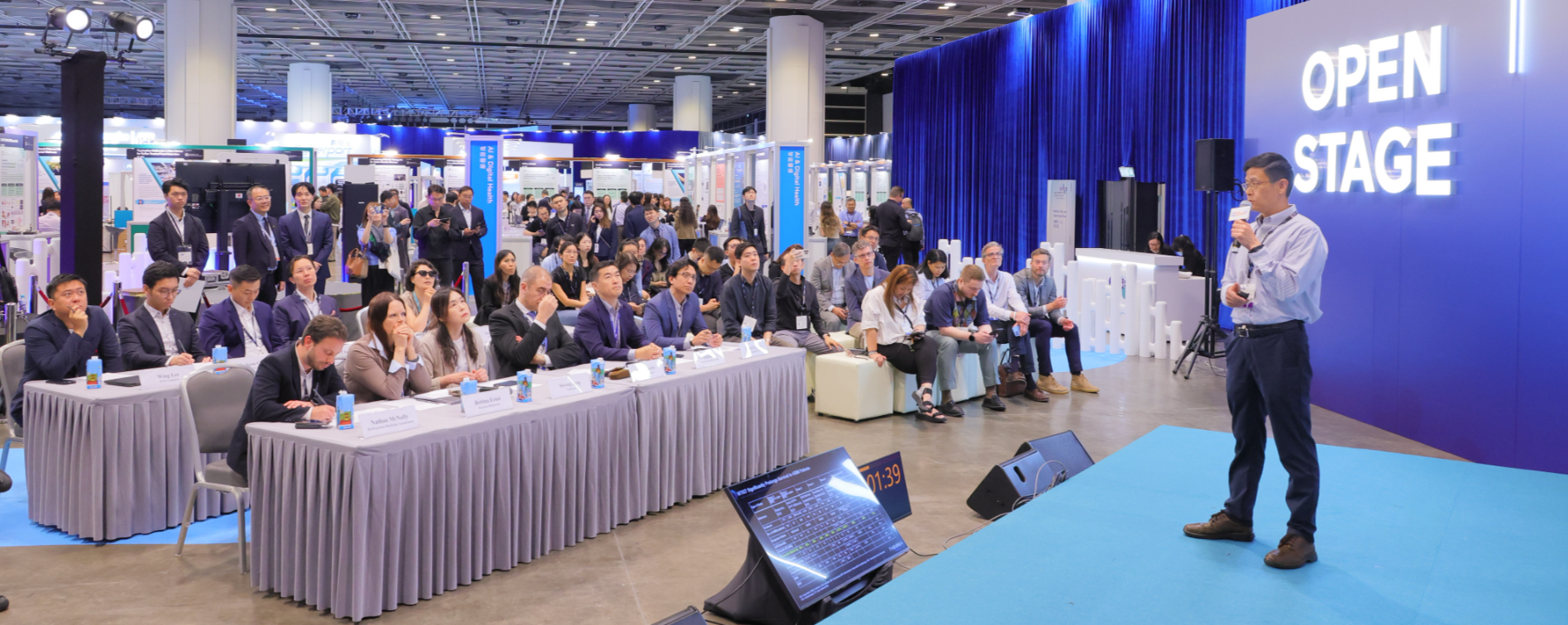
At ASGH, HKSTP went beyond serving as an exhibitor and acted as a true superconnector by hosting the exclusive “Life and Health Technology Innovation Pitch”. During the event, the supported biotech companies presented their breakthrough solutions directly to 12 top-tier global investors. For young biotech firms, funding is not a luxury, but a necessity for survival, HKSTP said. This high-impact session opened doors to international capital, accelerating the translation of lab innovations into real-world applications.
Source link