Every dog owner knows that look, the one that says your pet needs something, but you can’t quite figure out what.
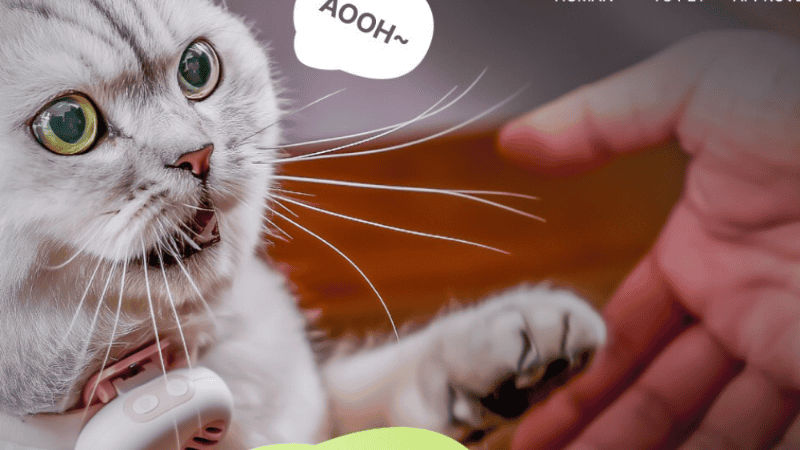
An AI tech startup called Meng Xiaoyi in China says it’s cracked that with a collar called PettiChat that supposedly interprets barks, meows, and body language into short English phrases based on emotional states and behavioral patterns.
The setup is easy enough to follow. You put the collar on your pet, it listens to the noises they make and watches how they move, then it converts all that into words the owner can understand. Meng Xiaoyi says the collar is roughly 95 percent accurate in its interpretations.
However, these claims come solely from the company and have not yet been independently verified
What the demo shows
The company’s promo video on YouTube features a few cats and dogs taking turns wearing the collar. In one scene, a cat glances upward, meows, and the device says, “I wanna play.” Another segment shows a dog barking with the gadget translating it as “I’m hungry.”
According to Meng Xiaoyi, the communication runs both ways. You can speak to your pet through the device, which converts phrases like “Easy, stay calm” into animal-friendly sounds.
The tech behind it
Per the company, the collar combines microphones and motion sensors with AI that processes sound and movement data at the same time. The collar runs on Alibaba Cloud’s Qwen large language model, which was supposedly trained on millions of animal recordings.
On the hardware side of things, the gadget weighs just 27 grams and connects wirelessly to a handheld unit that the owner can hang onto.
The big selling point of the collar is the claimed 95 percent accuracy across more than 20 different emotional states.
Interest in the device appears promising, with the startup reporting over 10,000 preorders and pricing starting at 799 yuan (around $117.59) ahead of its May 30 launch.
Not everyone’s buying it
Despite the upbeat demonstration in the company’s promo video, the reception online has been mixed. On X, skeptics were quick to push back.
“95% accuracy” based on what? A dog can bark at it’s shadow and you ask it a question in a high pitched voice and it will get excited,” one user wrote.
Others questioned the entire premise itself: “I wonder how they proved the “accuracy” – like they asked the pets after, what did you mean back there?,” another added.
And there were a few owners who just didn’t get the appeal. “ngl i dont need an ai to tell me my cat is just judging me. she is very vocal about it already 🙄,” one said.
Another was blunter still: “I already know that the cat is saying she wants more wet food.”
Sources: PettiChat, Kickstarter, PR NewsWire, India Today