Aviation lawyer Amanda Applegate skipped her annual vacation last month as a surge of wealth from AI startups and SpaceX sent a wave of tech investors shopping for private jets, burying her in paperwork for aircraft-purchase agreements.
The attorney, based in Cleveland, Ohio, attributed the rush to a handful of major “liquidity events” in the tech industry. The initial public offering (IPO) of Elon Musk’s SpaceX, whose holdings include artificial-intelligence firm xAI, raised a record $85.7bn for the company and generated unprecedented employee and founder wealth.
Next in line for potential big IPOs are AI companies Anthropic and OpenAI in San Francisco. Venture capitalists, board directors and early employees of SpaceX and other AI companies, along with bankers shepherding anticipated IPOs, are channeling fresh wealth into private aviation, turning it into an early beneficiary of the AI boom. Luxury travel companies are increasingly targeting tech entrepreneurs, reflecting expectations that the sector will spawn a new cohort of billionaires.
“I think there are many more people who can afford to travel privately, and that number seems to grow daily,” Applegate said. So far this year, business at her company, Soar Aviation Law, which handles aircraft purchases and agreements, has jumped 25%.
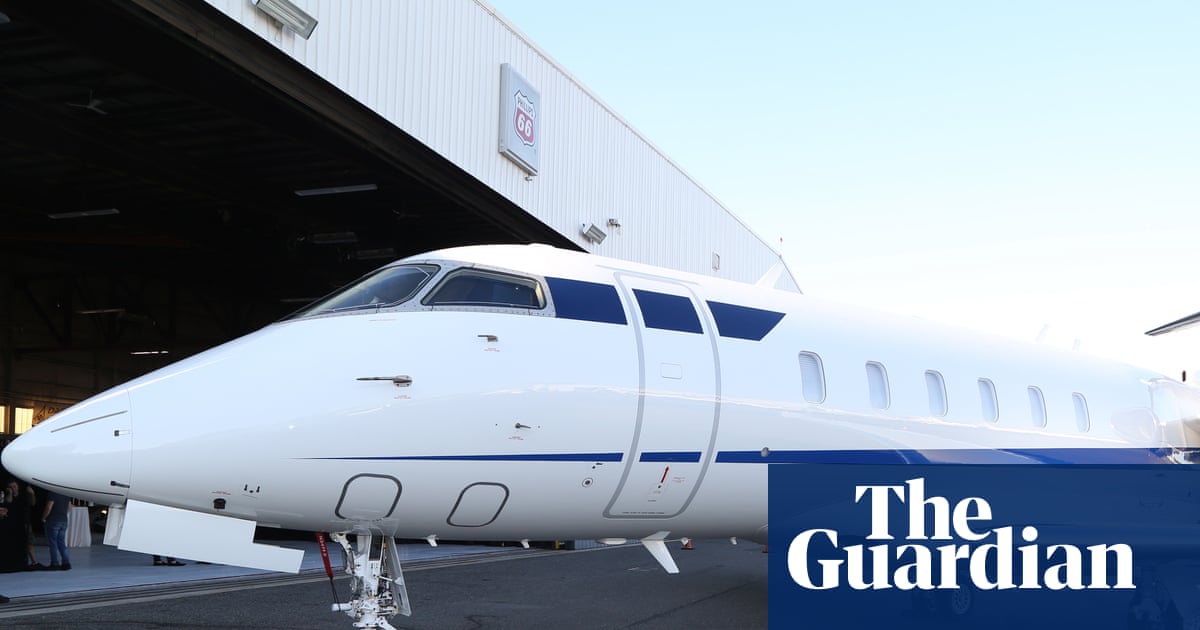
Hourly charter costs can range from roughly $1,500 to $18,500, while buying a jet can cost anywhere from $6m to $70m, depending on the aircraft’s model.
For many, private aviation starts with a membership or shared-ownership program before progressing to aircraft ownership. Data from aviation intelligence firm Jetnet shows that flights through shared-ownership programs rose 11.8% globally in the first five months of 2026, compared with the same period in 2025.
Flights operated by private jet owners climbed 13.4%, underscoring broad demand as frustrations with commercial travel mount. In North America, the industry’s largest market, the increase suggests both established owners taking to the skies more often and newly wealthy buyers making the leap into aircraft ownership.
The spending spree reflects a familiar pattern. Historically, major wealth-creation events – stock market booms, IPOs, mergers – have translated into higher demand for private aviation. Business jet deliveries rose 24% during the dotcom boom, according to Jetnet.
This time, the frenzy coincides with excitement around SpaceX, whose market valuation is about $2tn, and expectations that OpenAI and Anthropic could eventually follow with massive stock debuts.
Private aviation company Flexjet, which offers fractional jet ownership, leasing and memberships that allow customers to prepay for flight hours to fly on demand, has noticed a change.
“Self-made first-generation wealth, like those set to benefit from these tech IPOs, is resulting in a Flexjet customer base that is younger,” said DJ Hanlon, the company’s executive vice-president of sales.
Even before these listings materialize, soaring private-market valuations have left many investors treating future payouts as increasingly certain, prompting some to make large purchases ahead of liquidity events.
“The past six to 10 months, I’ve had a handful of guys that are involved in SpaceX with money burning a hole in their pocket,” said a California aircraft broker who requested anonymity because of client relationships.
after newsletter promotion
A decade ago, technology clients accounted for roughly one-fifth of his business. Today, they represent about three-quarters and are snapping up scarce new, luxury aircraft inventory fast, the broker said, adding: “I have sold planes last year that I could sell for 10% to 15% more today.“
The ultra-rich population is projected to accelerate through 2028, Jetnet said, reflecting the immediate impact of AI windfalls. San Francisco recorded the fastest growth in business-jet flights among major US cities, with traffic up about 11% year-over-year through 14 June, according to WingX, a Jetnet company.
Business jet traffic near Brownsville, Texas, near SpaceX’s launch site, spiked 177%, to 97 flights, during the company’s IPO window, WingX said.
Jet Linx, which offers aircraft management and jet-card memberships, said its business was up 60% year-to-date through May. The company reported especially strong growth in Texas, where jet-card membership sales – which start with a one-time membership fee of $17,500 or an upfront deposit of $250,000 – rose sharply in San Antonio, Dallas and Austin.
“We frankly knew that we would do better year-over-year, but these numbers are far ahead of the expectations we had going into 2026,” Jet Linx’s CEO, Jamie Walker, said.
Charter company Mercury Jets said demand from technology-sector executives has grown by double digits since the start of the year. Following the SpaceX IPO, the company also began receiving inquiries from people who had never flown privately before, said the company’s director of charter sales, Ryan DeBruyne.
“People are starting to spend their money because they know it’s coming,” the California broker said. “I’ve had probably three clients related to SpaceX that are saying, ‘Let’s find something.’”