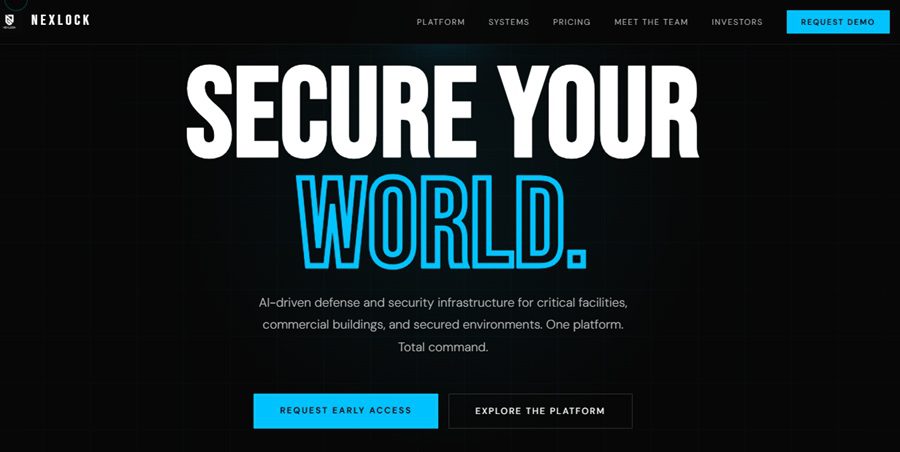
Nigerian startup NeXLock is an AI-integrated security technology company building a unified defense ecosystem for homes, estates, and critical infrastructure.
Founded last year by Ali Khaleel Hassan and Abdallah Sani Yandaki, both of whom are still students in their teens, NeXLock has developed an all-encompassing security product that combines smart access control, AI-powered CCTV surveillance, autonomous drone patrol, and a central command hub, all managed through one proprietary app. And all solar-powered.
“Think of it as transforming independent security devices into a coordinated defense network,” Hassan told Disrupt Africa. “Long-term, we are developing a military-grade intelligence platform targeting Nigerian armed forces and intelligence agencies.”
Nigeria has a US$3 billion annual security market, which is growing at 10 per cent year-on-year, but Hassan said nobody was building the intelligence layer – the software and AI platform – that ties hardware together into a coordinated system.
“Most competitors import and resell foreign devices with no proprietary tech layer. NeXLock is building the ecosystem itself. On the defense side, there is virtually no indigenous Nigerian defense technology company operating at this level. That is the gap,” he said.
Though pre-deployment, the startup has already secured commitment from two residential estates ready to install NeXLock systems across all homes in an initial rollout phase. Hassan said the residential estate and commercial security market would serve as the startup’s entry point.
“Expansion plans follow a clear sequence – Nigerian estates and commercial facilities first, then government and critical infrastructure, then military and defense across Nigeria, and ultimately scaling the defense platform to other African nations facing similar security challenges,” he said.
NeXLock, which will monetise via hardware installation packages as well as monthly subscriptions, is in active investor conversations, targeting an initial raise of between US$50,000 and US$100,000 to fund its first hardware batch and deployments.