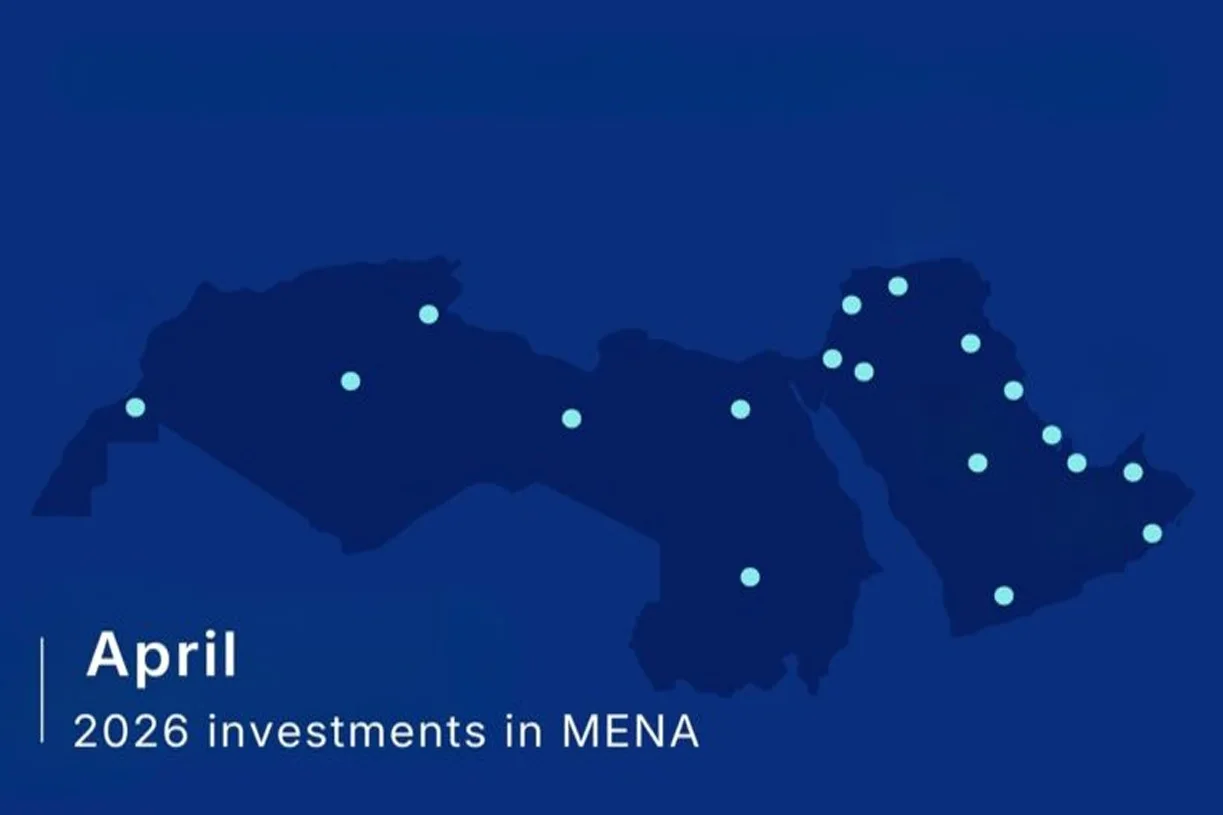
Fez – Startup investment activity across the Middle East and North Africa (MENA) region showed early signs of recovery in April 2026, following a sharp slowdown recorded in March.
Total funding reached $150 million across 27 transactions, representing a strong 211% increase month-on-month, according to Wamda data for April.
However, despite this rebound, the recovery remains cautious, selective, and uneven across the region.
In this changing regional landscape, Morocco failed to maintain the momentum it achieved in March, when it briefly emerged among the leading startup markets in the region.
The country, which had succeeded in overtaking Egypt during the previous month to secure third place regionally, fell back significantly in April, highlighting the challenges of sustaining visibility and competitiveness in a market increasingly dominated by established regional hubs.
A fragile recovery emerges across MENA’s startup landscape
Although investment activity improved overall, the structure of funding reveals that investor confidence remains fragile. Nearly half of the total capital raised in April came through debt financing, which accounted for $80 million across only two deals.
This trend reflects a broader shift among investors toward safer and more structured financing models, as uncertainty continues to shape the regional investment climate.
The rebound, therefore, appears less like a full recovery and more like a controlled and selective return of capital.
Investors are still prioritising risk management, focusing on businesses capable of generating stable and predictable returns rather than pursuing aggressive expansion strategies.
The UAE once again confirmed its position as the region’s dominant startup hub, attracting $78 million through eight transactions, representing more than half of the region’s total funding for the month.
Saudi Arabia followed with $26.2 million raised across seven deals, while Egypt secured a similar amount through five transactions.
Meanwhile, Morocco dropped to seventh place in the regional ranking, generating only $1.7 million through a single transaction.
The country was surpassed not only by the UAE, Saudi Arabia, and Egypt, but also by smaller Gulf markets such as Oman, Jordan, and Bahrain.
Oman ranked fourth with $11 million raised through two deals, Jordan secured $4 million through one transaction, while Bahrain attracted $3 million.
This decline underlines the growing difficulty for Morocco to maintain regional competitiveness at a time when investment capital is concentrating around larger and more mature ecosystems.
It also suggests that Morocco’s strong performance in March may have been more of a temporary opportunity than the beginning of a sustained trend.
Fintech and B2B startups continue to attract investor confidence
Sectoral dynamics across the region further illustrate where investor confidence currently lies.
Financial technology, or fintech, remained the leading sector for the fourth consecutive month, attracting $89.4 million across seven deals.
The sector continues to benefit from strong demand for financial infrastructure and digital payment solutions, which are considered more resilient during periods of economic uncertainty.
E-commerce also made a notable comeback after slowing down in March, securing $19.3 million across four transactions.
Online services attracted $15 million, while food technology startups raised $13 million, maintaining steady investor interest.
Business-to-business (B2B) startups continued to dominate investment flows, raising $95.8 million through 11 deals.
In comparison, business-to-consumer (B2C) companies secured $35.8 million across 12 transactions.
This clear preference reflects a broader regional trend where investors increasingly favour companies with stable enterprise contracts, recurring revenues, and infrastructure-focused business models.
The investment landscape also highlighted the continuing imbalance in startup funding diversity.
Female-led startups returned to the regional funding map after two months of absence, raising $1.5 million through five deals.
However, male-founded startups continued to dominate overwhelmingly, capturing $138.8 million across 19 transactions, while mixed-gender founding teams secured $10 million.
Despite April’s improvement, the broader picture remains challenging.
Regional startup funding is still down 42% year-on-year, while the first quarter of 2026 closed with a 37% annual decline amid continuing geopolitical tensions and cautious investor sentiment.
Analysts increasingly believe that the MENA startup market has not yet entered a true recovery phase.
Instead, investors appear to be adjusting their pace and deployment strategies rather than fully returning to previous levels of risk-taking.
Capital remains available, but it is now directed toward sectors and business models considered more defensive, scalable, and institutionally aligned.
For Morocco, this situation represents both a warning and an opportunity.
The country’s startup ecosystem still faces difficulties in producing enough structured and high-growth projects capable of attracting international capital at scale.
However, the momentum observed earlier this year demonstrates that Morocco possesses potential that can still be developed and strengthened.
To improve its regional position, Morocco will likely need a clearer and more consistent strategy focused on governance, innovation financing, and international visibility.
Strengthening sectors such as fintech and B2B technology, while leveraging international events like GITEX Africa, could help the country reinforce its attractiveness to foreign investors.
Ultimately, April illustrates a regional market that is active again, but operating under new rules. Investors are no longer adopting a “wait and see” approach, but rather a “deploy carefully” strategy.
In this evolving environment, Morocco’s challenge will be to transform ambition into long-term credibility and sustainable investment attractiveness, particularly as questions continue to emerge around the effectiveness and direction of the country’s broader digital and startup strategy under Morocco Digital 2030.