- Mercury has raised $200M at a $5.2B valuation, a 49% step-up in 14 months, as it pursues a national bank charter and positions itself as the financial infrastructure layer for the AI startup surge.
- The San Francisco fintech serves one in three early-stage US startups, hit $650M in annualised revenue in Q3 2025, and has been profitable on both GAAP and EBITDA bases for four consecutive years.
- Capital One completed its $5.15B acquisition of Brex in April 2026, removing Mercury’s closest historical rival as an independent company and leaving the startup banking lane significantly less crowded.
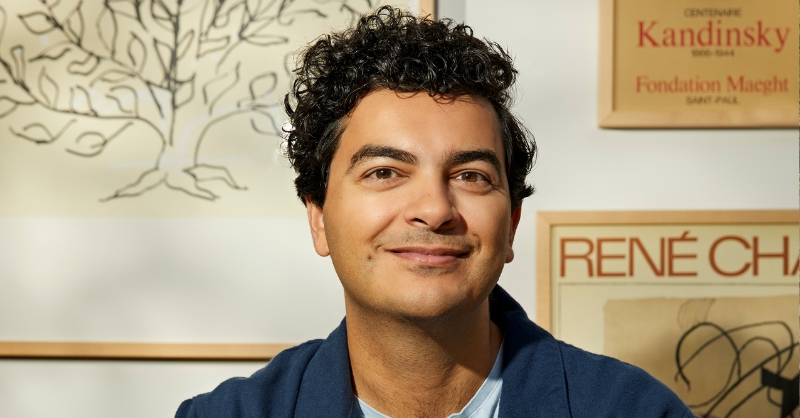
A Pakistani kid who moved to London at nine, studied computer science at Cambridge, arrived in San Francisco on a Y Combinator visa, and spent years watching banks treat his startup customers like an afterthought, Immad Akhund had opened business accounts in three countries before he founded Mercury. He knew exactly what was broken. He built for the person he used to be.
That outsider perspective shaped Mercury’s product from day one. Akhund knew what founders, especially immigrant founders building their first US company, actually needed from a bank: speed, transparency, no minimum balances, no branch visits, no relationship managers who did not return calls. He did not discover this through user research. He lived it. When he sold Heyzap, his mobile developer tools company, to Fyber for $45 million in 2016 and started thinking about what to build next, the answer was the thing that had frustrated him across every company he had ever run.
Mercury, the San Francisco fintech Akhund co-founded in 2017 with Max Tagher and Jason Zhang, has raised a $200M Series D led by TCV at a $5.2B valuation, a 49% step-up from the $3.5B it carried after its Sequoia-led $300M Series C just fourteen months ago. Returning investors Andreessen Horowitz, Coatue, CRV, Sapphire Ventures, Sequoia, and Spark Capital all participated. TCV, the growth equity firm that previously backed Revolut, Nubank, and Netflix, is the sole new entrant, bringing total primary and secondary funding to approximately $700M.
The gap nobody filled?
For two decades, Silicon Valley’s banks were the same banks everyone else used: JPMorgan, Bank of America, Wells Fargo with a startup-branded landing page bolted on. Nobody built the financial infrastructure from scratch for the way founders actually operate: fast, global, API-first, and profitable from day one. That is the gap Mercury has spent eight years filling and the numbers now reflect it.
According to the company press release, Mercury serves 300,000 customers, including one in three early-stage US startups, hit $650M in annualised revenue in Q3 2025, and has delivered four consecutive years of GAAP net income and EBITDA profitability. Q1 2026 saw a 2.5x year-on-year jump in new account applications, tracking almost exactly with the US Census Bureau’s reported 18% surge in new US business formations over the same period.
Akhund has also backed over 100 seed-stage companies as an angel investor, including Airtable, Substack, and Rappi, meaning he has watched more early-stage company formation up close than almost anyone in Silicon Valley. Mercury’s customer list today reads like a roll call of the current AI cohort: Supabase, ElevenLabs, Lovable, Linear, Phantom, Tempo. “AI is collapsing the friction between an idea and a company faster than anything I have seen in my career,” said Akhund. “We are going to see more founders in the next five years than in the last twenty. But legacy banking in 2026 still works the way it did when I started my first company in 2006. I started Mercury because banking should do more than be a vault — it should help customers run the best business possible.”
What Mercury is building?
Mercury is not a bank, it operates as a financial software platform routing business accounts, corporate cards, bill pay, invoicing, and expense management through banking partners Choice Financial Group and Column N.A. What it has built on top of that infrastructure is what 300,000 customers are actually paying for.
Over the past year they moved aggressively beyond core banking. Mercury Insights gives customers real-time AI-driven visibility into finances without external tools. A command-line interface and Model Context Protocol access let AI agents interact directly with banking infrastructure. Also, Mercury acquired Central to add AI-native payroll. And later this year it will launch Mercury Command: an AI assistant that handles banking and financial tasks through natural language prompts.
The most significant move came on April 27, 2026: the Office of the Comptroller of the Currency granted Mercury conditional approval to establish Mercury Bank, N.A. – just five months after Mercury filed the application in December 2025. The charter, once final, unlocks Zelle integration, expanded lending, and direct control over payments infrastructure Mercury currently routes through partners.
The competitive landscape just got simpler
Capital One completed its $5.15B acquisition of Brex on April 7, 2026, absorbing Mercury’s closest historical startup-banking rival into a traditional bank holding company at less than half its 2022 peak valuation of $12.3B.Ramp, valued at $32B in November 2025 and reportedly in talks to raise at over $40B, competes on expense management and corporate cards rather than full banking infrastructure – formidable but structurally adjacent rather than a direct rival on banking. Meanwhile Revolut’s aggressive push into the US market – backed by a $3B raise at a $75B valuation – represents the most credible international threat to Mercury’s founder-banking turf, targeting the same AI-native startup demographic from the consumer side.
The deeper question is not whether Mercury can become a bank – the OCC conditional approval suggests it can. It is whether the company that has spent eight years building financial infrastructure for founders can hold that position as AI tools compress the time from idea to company from years to weeks, producing a generation of founders who have never experienced the friction Akhund spent his career trying to eliminate.