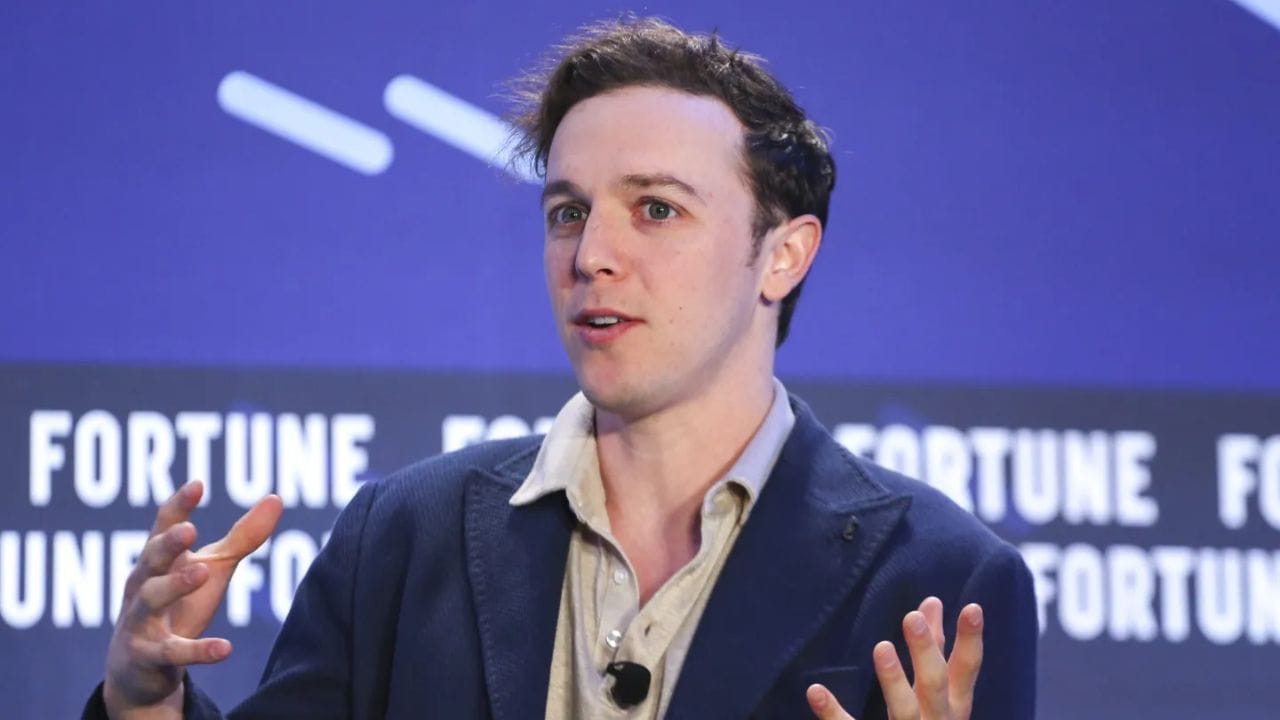
Bolt chief executive Ryan Breslow says removing the company’s entire HR team helped eliminate “problems that didn’t exist” as the fintech startup attempted to recover from years of rapid decline, layoffs and shrinking valuations.
Speaking at Fortune’s Workforce Innovation Summit, the 31-year-old executive defended both the removal of Bolt’s HR function and recent layoffs affecting roughly 30% of the company’s workforce.
“We had an HR team, and that HR team was creating problems that didn’t exist,” Breslow said during a conversation with Fortune editorial director Kristin Stoller. “Those problems disappeared when I let them go.”
The comments come during a turbulent period for the once high-flying fintech company, which has undergone multiple rounds of restructuring after a dramatic collapse in valuation and workforce size.
From $11 billion valuation to startup reset
Bolt was founded by Breslow in 2014 while he was a student at Stanford University.
The company rose rapidly during the fintech boom and reached a reported valuation of $11 billion in 2022. At its peak, Bolt employed thousands of workers and positioned itself as a major player in online checkout and digital payments infrastructure.
However, according to reporting by Fortune, the company’s fortunes reversed sharply after Breslow stepped down as CEO in 2022.
By 2024, Bolt’s valuation had reportedly fallen to around $300 million, representing a decline of nearly 97%.
The company also implemented several rounds of layoffs that significantly reduced headcount.
Breslow returned as CEO in 2025 and described the company’s current phase as operating in “wartime”.
HR replaced with smaller people operations team
While defending the removal of the HR department, Breslow argued that traditional HR structures were better suited to larger, more stable companies rather than startups attempting rapid operational recovery.
According to Fortune, Bolt has since replaced the former HR setup with a smaller people operations team responsible for training and employee support functions.
Breslow said the company needed teams focused heavily on execution and faster decision-making.
He had previously written on LinkedIn that “HR is the wrong energy, format, and approach”, while describing people operations as a structure that empowers managers and streamlines decisions.
At the conference, Breslow also criticised what he described as a workplace culture centred around “complaining” rather than operational delivery.
CEO blames ‘entitlement’ culture for workforce cuts
Breslow said Bolt’s wider workforce problems extended beyond HR.
According to Fortune, he claimed many employees had become too comfortable during the company’s years of rapid growth and heavy spending.
“There’s a sense of entitlement that had festered across the company,” Breslow said, adding that many employees “weren’t actually working hard”.
He said most of those workers “had to be let go”.
After returning as CEO, Breslow reportedly gave employees hired under previous leadership structures 60 days to adapt to a leaner startup-style environment.
However, he said “99%” failed to adapt, leading Bolt to replace nearly its entire leadership team.
The restructuring also involved removing policies previously associated with Bolt’s workplace culture, including:
• Four-day workweeks
• Unlimited paid time off
Breslow said the company needed to return to a “gritty” operating environment focused on survival and execution.
Bolt shrinks workforce while rebuilding operations
Bolt now operates with roughly 100 employees, according to Breslow’s comments at the summit.
The CEO said the smaller workforce is made up largely of more junior employees who he believes are working harder and responding faster to customer needs.
He claimed customers had recently told the company they were receiving the strongest level of attention in years.
The fintech firm currently markets itself as a “One SuperApp to rule them all”, offering services including:
• Money transfers
• Rewards programmes
• Cryptocurrency trading
The company has also faced scrutiny in recent months following rumours that contractors went unpaid and employee wages had been withheld.
Breslow denied those allegations during the Fortune event.
Workplace debates intensify around startup culture
Breslow’s comments are likely to intensify wider debates around the role of HR, startup leadership styles and workplace expectations during periods of financial stress.
Technology companies across the US have spent the past two years reducing headcount, flattening management structures and reassessing employee benefits as venture capital funding slowed and profitability pressures increased.
The discussion has also exposed a growing divide between founders pushing for leaner, high-intensity startup cultures and employees seeking stronger workplace protections, flexibility and people management systems.
For Bolt, the restructuring marks one of Silicon Valley’s more aggressive attempts to rebuild a once highly valued startup after a steep collapse in market confidence.