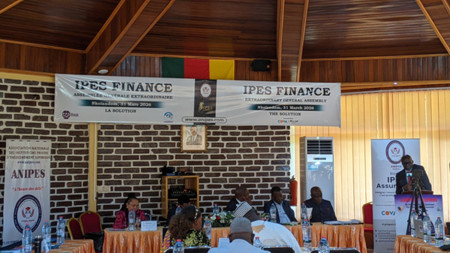
A new microfinance institution designed to fund student-led business projects is moving towards operational launch in Yaounde, with promoters seeking regulatory approval and targeting first disbursements by September 1st. The initiative, known as Ipes-Finance and developed by the National Association of Private Higher Education Institutions (ANIPES), was presented to the Minister of State for Higher Education, Professor Jacques Fame Ndongo, as part of efforts to strengthen entrepreneurship financing within universities and reduce barriers to startup capital for graduates.
The project is currently being finalised at notary level and awaits accreditation from the Central African Banking Commission (COBAC). In the interim, a dedicated financing window has been established at CCA Bank to begin structuring access to funds. The mechanism is built on two operational pillars. The first involves the identification and preparation of student entrepreneurs through a structured pipeline that includes selection by private and public universities, pre-incubation within campuses, and subsequent placement in existing incubators where necessary. This process culminates in regional incubation and certification of the student’s project. The second pillar activates the financing component, where selected and certified projects gain access to credit backed by guarantee deposits made by participating institutions to secure lending operations.
Speaking during the presentation on March 31, Dr. Alphonse Nafack, promoter of a private higher education institution and member of ANIPES’ council of elders, outlined the staged approach linking academic validation to financial access.
“Ipes-Finance is built on a process that ensures that only projects that have gone through selection, incubation and certification can access financing,” he said.
He added that once projects are fully validated, “the second pillar is activated, which is the financing mechanism supported by guarantees from the institutions themselves.”
The initiative introduces a risk-sharing structure between educational institutions and the banking system, designed to address concerns over loan recovery and borrower accountability. Professor Jacques Fame Ndongo raised questions regarding safeguards to prevent defaults or misuse of funds, focusing on the sustainability of the guarantee mechanism. In response, promoters indicated that internal controls and monitoring systems have been incorporated to mitigate financial risk and protect deposited guarantees.
The minister underscored the urgency of operationalising the scheme and linking it to broader national objectives on youth employment and enterprise development.
“I would like Ipes-Finance to become operational quickly, with a dedicated window already functioning. I hope that very soon, student entrepreneurs trained in our universities and business incubation centres can benefit from the support, capacity building and training, and access loans under clearly defined conditions,” he said.
The rollout of Ipes-Finance reflects a broader shift towards structured financing models within the higher education ecosystem, where institutions play a direct role in de-risking credit for early-stage ventures.
According to authorities, the model seeks to address gaps in access to capital that have historically limited the transition from academic training to enterprise creation, by integrating incubation, certification and financing into a single pipeline.
Mercy Fosoh